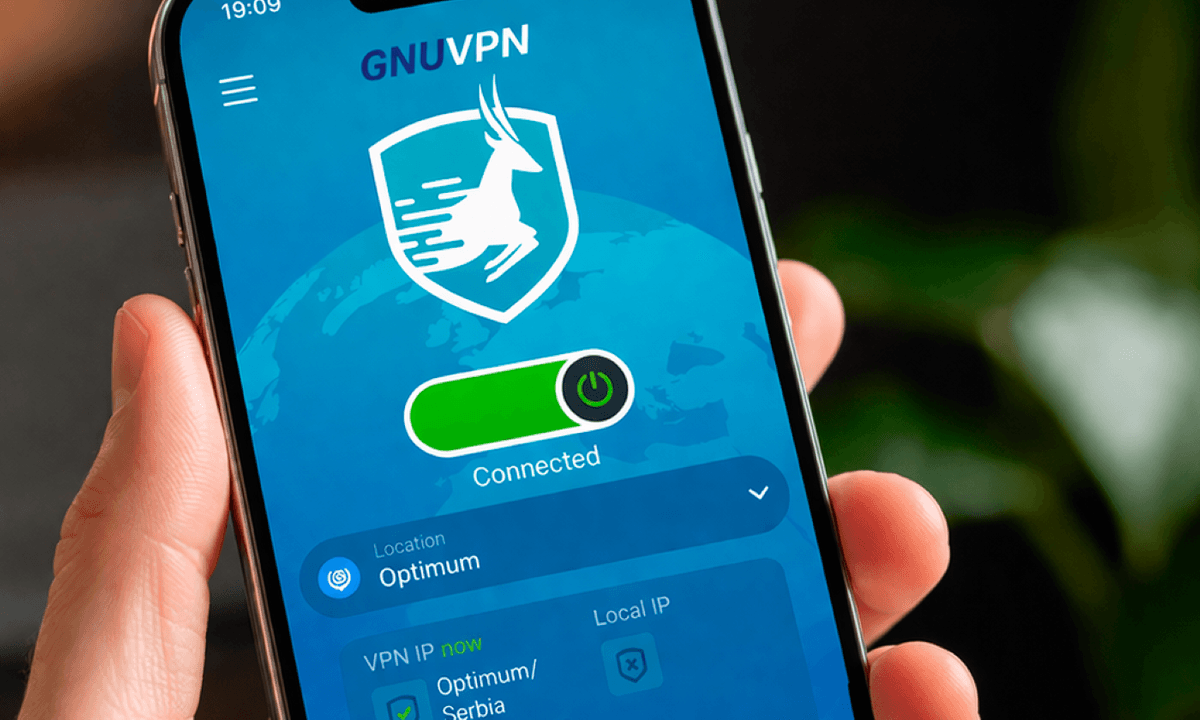
Digital privacy is an increasingly complex subject, but some tools exist to support user protections at home and abroad. Among the most prominent services in this space is the virtual private network (VPN), which reroutes internet connection to a private server that encrypts data before it is sent to the internet service provider (ISP). However, not every VPN is going to meet a user’s needs.
Most of the biggest names in the VPN space are going to do a solid job, but they also tend to feel similar. They include the same feature lists and marketing language, as well as “no logs” promises that tend to come with fine print. However, services like GnuVPN out of Portugal claim not to collect anything. No internet protocols (IPs), timestamps, domain name system (DNS) queries, or even metadata.
Modern VPNs rely on different protocols, each with its own trade-offs. WireGuard is known for its speed and lean codebase, making it efficient for mobile devices. OpenVPN remains a widely supported standard valued for its configurability. SoftEther, less common among mainstream providers, can wrap VPN traffic inside regular HTTPS web activity, which helps it bypass deep packet inspection in countries with heavy internet restrictions. A VPN that supports multiple protocols gives users the flexibility to choose between speed, obfuscation, or compatibility depending on their situation. GnuVPN is one of the services that supports all three—WireGuard, OpenVPN, and SoftEther—alongside IKEv2.
Traveling With Internet Restrictions
When headed somewhere with known VPN blocking, travelers want to know that their connection is going to stay up. Alternative services handle this by adopting lesser-used protocols, ones that leading VPNs ignore. While this might mean a smaller server footprint, and therefore fewer connections, it might offer greater stability.
For users traveling to various foreign locations, support for the SoftEther protocol can be particularly relevant. SoftEther masks VPN traffic as regular HTTPS activity, making it more difficult for filters to block the connection.
Working From Public WiFi Networks
One doesn’t need to be traveling abroad to get use out of a VPN. Remote workers who frequent public coffee shops and co-working spaces might need protection that doesn’t drop when they switch networks. Alternative services leverage lightweight, fast-paced protocols to avoid data leaks. Combined with a kill switch that blocks all traffic when the VPN drops, one can be more confident in one’s security.
Uniquely, GnuVPN offers these services to its free tier. Although its speed and data are limited, basic encryption and browsing on public WiFi should be all one needs. That said, streaming and large downloads may require an investment in the paid plan, which costs around nine dollars per month.
A “No Logs” Claim for Greater Privacy
Although it can be difficult to confirm the veracity of a “no logs” claim, those who take their privacy seriously still look for VPNs that won’t hand over data, because they can’t. Privacy statements are only that, and most alternative services aren’t undergoing an independent audit. For those who care about “no logs” claims, whether journalists, activists, or otherwise, finding the most legitimate claim is key.
One practical consideration for privacy-focused users is the ability to pay anonymously. GnuVPN accepts cryptocurrency payments, including Bitcoin, USDT (TRC20), TRON, and Litecoin. This allows subscribers to avoid linking their payment method, such as a credit card or PayPal account, to the service, adding an additional layer of separation between their identity and their VPN usage.
Shortcomings of Alternative VPNs
Compared to major VPN services, alternative options are almost guaranteed to have a lower server count. Similarly, some of these options may not offer services dedicated to more demanding tasks like streaming and gaming. Additionally, alternatives like GnuVPN have less brand history to look for; in many cases, a brand’s track record can serve as a reflection of its actual privacy policy.
On the other hand, the GnuVPN app is available across all major platforms—Android, iOS, Windows, macOS, and Linux. The Android app has achieved Google Verified status, meaning it has passed an independent security review conducted for the Google Play Store. For users who prioritize mobile privacy, this provides some external validation of the app’s data handling claims.
These strengths and limitations are typical for the category. Alternative VPNs aren’t trying to be the biggest or the best, but to be a service that actually delivers on its claims. For travelers heading to restrictive countries or remote workers operating on public WiFi, or even those who put privacy first, there might be an alternative that caters to that user’s specific needs. Free tiers and trials can be a viable way to test whether a service will work for you.
Investing involves risk and your investment may lose value. Past performance gives no indication of future results. These statements do not constitute and cannot replace investment advice.