Over the past decade, desktop CNC machines and other digital fabrication tools have quietly transformed the way people create. They have enabled industrial professionals, educators, and DIY enthusiasts to craft intricate works with greater precision and consistency.
As a leader in intelligent desktop CNC technology, Makera is lowering the barriers to creation through innovation and user-centric design, empowering more people to turn their ideas into reality with the help of technology.
Common Barriers to Entry
The demand for new CNC innovations has grown, especially in regard to features that make the machines more accessible and user-friendly.
Newcomers to CNC have often been met with complex machinery and programming without many ways of learning how to navigate them effectively, necessitating advancements in CNC technology while retaining the ability to design and prototype custom pieces. Additionally, many desktop fabrication tools are prohibitively expensive, barring many would-be creators from having access to quality machinery.
In keeping with their philosophy of developing tools that are “Created by makers, for makers,” Makera, a tech-forward fabrication company, has stated that “as experienced makers, we recognized the challenges of using CNC tools—the steep learning curve, complex operations, and accessibility barriers.”
Many of these desktop fabrication companies have therefore begun to incorporate novel technologies like AI, tool development, and improved construction materials to cut down on price while still providing accessible options for creativity.
Accessibility Through AI and Smart Machining

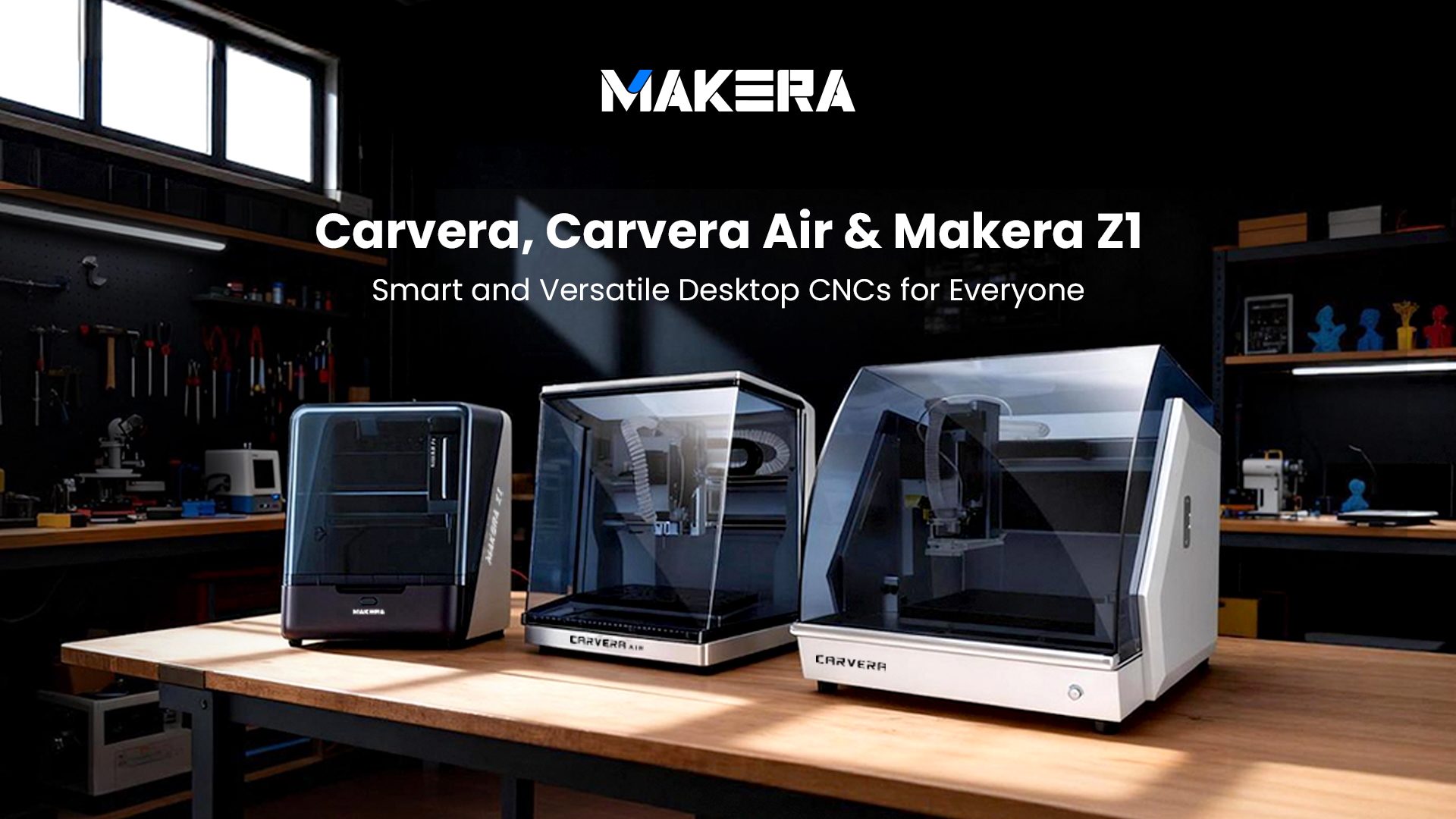
With recent developments in AI come new opportunities to improve existing CNC features. For instance, since Makera invests heavily in R&D and is led by engineers, their upcoming Z1 Desktop CNC offers a Smart Machining Wizard, which the company states is meant to help “provide preset machining solutions such as reliefs, 4-axis, and PCB, and automatically compute and recommend toolpath parameters based on geometric features.”
CNCs are also incorporating AI modeling tools that help with 3D model generation, relief generation, image-to-model processes, and more. These tools are designed to help create models quickly and precisely, cutting down on operating time while still maintaining quality for experienced and inexperienced users alike. Some CNCs integrate their AI with model libraries, giving users the ability to share and receive models from other users.
Use Cases: Educators and Creators
With greater access to desktop fabrication tools like CNC, professionals and hobbyists of all kinds could develop functional and creative projects that may not yet be common in regular CNC use, given its high barrier to entry.
As an example, imagine a scenario wherein an underpaid educator could use CNC machinery to make their own RC models or musical instruments for their students. In making these devices more user-friendly, it might even be possible for the students themselves to learn how to operate them and gain early technological experience.
Meanwhile, artisans and craftspeople could use desktop tools to make jewelry, carve reliefs, and even generate sculptures as part of a creative project. Small businesses could likewise employ these tools to facilitate the production process without needing to break the bank beforehand.
Empowerment Through Technology
Ideally, powerful, smart, and easy-to-use DIY tools should be available to anyone with a vision and the will to make it come to life. While that degree of accessibility isn’t yet a reality, consumer-focused desktop fabrication companies and other innovators are working toward making CNC machinery and similar devices cheaper, easier to use, and more functional than ever so that any user can be the creator they want to be.
Makera’s upcoming Kickstarter launch continues that mission: inviting makers, educators, and hobbyists to explore what’s next in intelligent desktop CNC technology and to support the next generation of accessible design tools.