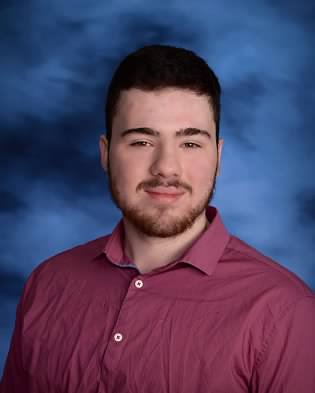
Karthikeya S Parunandi’s career began far from the laboratories where he now architects the core algorithms behind advanced robots and self‑driving cars. From a rural Indian village to premier robotics conferences, his work is defined by tangible, large-scale impact. During his master’s program, he conducted original research that became the foundation for six peer-reviewed papers published between 2019 and 2025 in top robotics and AI journals and conferences, a rare achievement that established him early on as one of the most prolific researchers in learning-based robotics. Today, he works on the decision‑making behind autonomous cars.
Roots of Innovation
As a child, Parunandi grew up far removed from the kinds of highly advanced technological tools he has since come to be associated with. “Technology was scarce in my village,” he says. However, he turned to another source instead: literary references. “Books were plentiful. I devoured texts on science and mathematics, which sparked a curiosity about how machines could learn and make decisions.”
This early, formative curiosity pushed him to earn a place at IIT Guwahati, one of the top Indian engineering schools that only takes in 0.25% of millions of applicants, and later to seek internships abroad at world-class robotics labs, where he would go on to work at KAIST on indoor navigation of drones in South Korea and the University of Twente in the Netherlands where he worked on leveraging multiple drones to repair windmills. These vast and varied experiences demonstrated to him the ways in which autonomy can solve real-world problems and become an invaluable asset. As he describes, “Those early experiences convinced me that robotics and AI were where I could have the biggest impact.”
A Unique Master’s Course
While at Texas A&M University, Parunandi’s research presented a novel contribution by combining two powerful but often separate fields. By blending the worlds of model-based planning and reinforcement learning, he charted new ground in each subsection while still in school. As he says, “Instead of choosing between precise models and trial-and-error learning, my work integrated both. This hybrid approach better enables robots to potentially adapt to real-world uncertainty without sacrificing the efficiency and safety guarantees of traditional methods.” This foundational approach has since been cited by researchers across a range of unrelated disciplines, including thermal management strategy, water distribution networks, and tensegrity robot design, underscoring the broad applicability and cross-domain influence of Parunandi’s methods beyond the core robotics community.
A watershed moment for the work came in the form of a demonstration that allowed Parunandi to showcase how this fusion had the potential to make robots significantly more reliable in unpredictable environments. This work was recognized by the academic community, leading to six papers in just two years, as well as IEEE Robotics and Automation Letters. Even more importantly, the core concepts of this early work have continued to inspire Parunandi and his later industry projects in profound ways.
Carving Out a Niche in Robotic Arms
Parunandi notes that warehouses are inherently unpredictable, which causes traditional motion planners to fail. However, the system he has architected was designed for robustness in these dynamic, cluttered spaces, allowing robotic arms to move with speed and fluidity. This planner’s remarkable versatility became its key advantage; it was so adaptable that it ultimately replaced a suite of legacy, single-purpose planners, becoming the company’s unified motion planning platform for a wide range of applications. As of this moment, his designs have been successfully deployed with over one hundred robots and have demonstrated the ability to improve efficiency in cluttered environments.
For Parunandi, all of this served as a major validation. No longer was his work simply noting theoretical improvements, but it also had real-world results to back up such claims. As he details, “For me, the most rewarding part was seeing a research-driven concept transition into a dependable, large-scale commercial system that solved a key business challenge.”
Autonomous Vehicles
For many companies and individuals, autonomous vehicles have proved to be a difficult issue to crack. After all, city streets are an order of magnitude more complex than warehouses. However, through his work at Cruise, Parunandi is one of the key engineers designing the behavioral planning core of the company’s self-driving cars. His job is to help make the vehicles’ AI safer and more efficient. His work thus far has helped to demonstrate the technology’s maturity and readiness for public interaction. His work was instrumental in advancing the behavioral planner’s ability to safely handle the unpredictable behavior of pedestrians and cyclists in dense traffic, a notoriously difficult edge case. His contributions in this area were a key component in improving the system’s overall robustness, a critical step for demonstrating the safety and reliability required for any large-scale urban deployment. In this way, Parunandi’s work is a reminder that reliability and human-centric design are paramount when deploying AI at this scale.
Additional Roles Provide Additional Insight
Parunandi is also an Associate Editor for IEEE Robotics and Automation Letters and reviews for major conferences and journals. This influences his perspective in powerful ways, as he views these roles as a significant responsibility and an honor. He explains that, “As an Associate Editor for one of the most selective journals in robotics, I am entrusted by the community to identify and champion the most impactful new research. These roles provide a unique vantage point, allowing me to contribute to the field’s trajectory beyond my own direct work and ensuring my perspective is always informed by the broader landscape of robotics research.”
Challenges Overcome and Lessons Learned
From the get-go, Parunandihas faced substantial challenges throughout his career and has worked tirelessly to overcome them every step of the way. Perhaps nowhere is this more apparent than in gaining access to his field of choice in the first place. He details that, “The first challenge was access. Coming from a rural background meant finding my own way into top schools and labs.”
Even after he had a foot in the door, he had to work unbelievably hard to bridge theory and execution. “Robotics is unforgiving; an algorithm that works on paper may fail in messy environments. I addressed this by combining rigorous research with hands‑on engineering and being willing to iterate through failures.”
One of the key lessons he learned from all of this was to “let curiosity guide you.” Parunandi explains that, “It took me from a village to international research labs. Be persistent; none of the systems I’ve built worked perfectly at first. Lastly, innovation often happens at the intersections of disciplines.”
His most impactful work came from blending model‑based planning with reinforcement learning, something that was a direct result of this very curiosity. As such, he reiterates not to be afraid to cross boundaries, because that’s where breakthroughs are often found.
A Bright Future
Moving forward, Parunandi’s plan is to continue architecting safe, scalable, and human-centric AI systems that solve meaningful problems. In the short term, that means continuing to advance the intelligence of self-driving cars and robots. In the long term, he aims to take on greater leadership roles, mentor the next generation of engineers, and help establish industry-wide standards for AI safety and ethics. His ultimate goal is to guide autonomy from a theoretical concept into a trusted and indispensable part of everyday life.
Karthikeya S Parunandi’s journey from a curious reader in a small village to a rare combination of theoretical insight and practical impact. His novel research, the motion-planning systems, and his core contributions have all made him someone to watch within the sector. Through his editorial leadership and ongoing innovation, he continues to contribute to the ever-evolving future of robotics and AI.