
You’re browsing for a new laptop — one has a better processor, another has more RAM, a third says “AI-powered” in bold letters, and you’re not entirely sure what that means. But Amazon has noticed you pausing on that third one, and it has thoughts. The company just launched an AI Store on Amazon.in — a dedicated storefront that rounds up AI-enabled gadgets across categories, from smartphones and laptops to refrigerators and washing machines. So, instead of you wading through spec sheets trying to figure out which “AI feature” actually does something useful, the store spells it out for you.
What the AI store actually is
It’s like a curated filter. Amazon has pulled together devices across eight segments: phones, laptops, TVs, tablets, smartwatches, smart glasses, cameras, and audio, and flagged the ones where AI isn’t just a marketing word slapped on the box. The idea, according to Amazon India’s Director of Consumer Electronics Zeba Khan, is to help customers “navigate a rapidly evolving technology landscape with clarity.” AI specs are confusing, and most people just want to know if the thing will make their life easier.
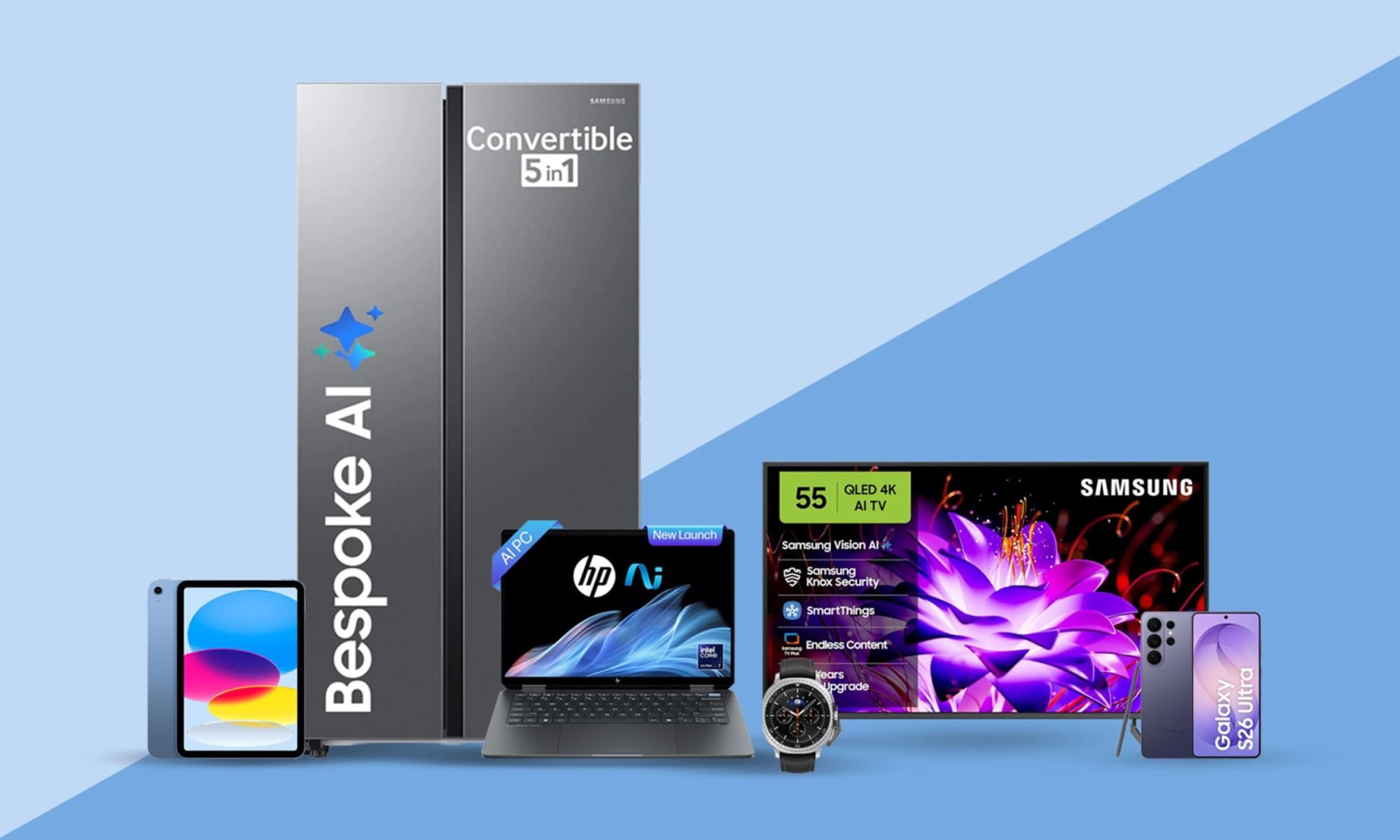
And a few products in the store make a case for themselves. For instance, the Samsung Galaxy S26 Ultra shows up with real-time call translation and AI-assisted low-light photography — the kind of features that sound gimmicky until you actually need them at 11 PM trying to shoot a birthday cake. On the laptop side, the HP OmniBook Ultra and Lenovo Yoga Slim 7x both feature dedicated NPUs (Neural Processing Units), which means AI workloads like video editing and noise cancellation during calls run faster and use less battery. If you work from home and your colleagues have complained about your audio, the Yoga Slim 7x’s AI noise cancellation alone might be enough to justify a look.
The Ray-Ban Meta Smart Glasses, on the other hand, comes with great AI features, too, like hands-free capture, voice-controlled AI assistance. So, technically, the AI store helps you understand what the AI features actually do and whether investing in those products would make sense for you.

It doesn’t stop here. Smart gadgets in your living room and kitchen also have AI-powered features. For instance, the Samsung Vision AI QLED TV upscales content to 4K in real time and adjusts the sound based on what’s happening on-screen. The Apple Watch Series 11 goes beyond step counts into predictive health insights and personalized coaching. Your LG AC learns your cooling habits. Your Haier fridge monitors its own temperature. Your Bosch washing machine figures out how much water it actually needs.
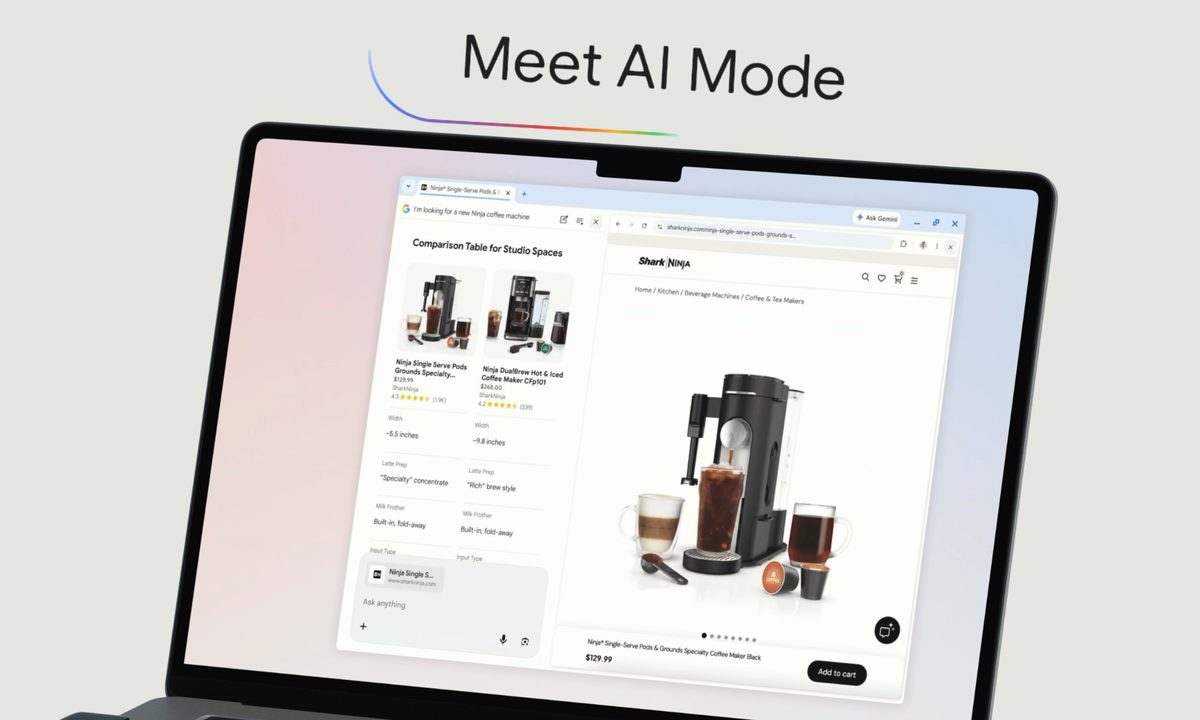
Amazon has also built out a decent layer of AI across the shopping experience itself — a conversational assistant called Rufus to help you find the right product, visual search through Lens AI, a “View in Your Room” feature that places a device in your actual space before you buy, and review summaries that distill hundreds of opinions into something actually readable. It’s a smart pairing. You’re using AI tools to shop for AI tools.
So, what does this really mean for you?
I get why upgrading tech feels exhausting right now. Everywhere you look, it’s AI this, AI that. It’s loud, it’s constant, and at some point, it all starts to blur together. You’re left wondering what actually makes a difference and what’s just there to sound impressive. That’s where an AI Store starts to make sense.

Instead of you digging through endless listings, it tries to bring some structure to the chaos. It’s like a starting point that helps you understand what these features even mean before you decide if you need them. It’s especially useful for people who don’t want to get into the weeds, like our parents, who’d much rather have things explained simply than decode all these technical words. It’s still not a replacement for your own research. You’ll still want to double-check, compare, and make sure something fits your needs. But it gives you a direction, which is often the hardest part.
And if you look at the bigger picture, this move makes sense. Amazon is clearly betting that “AI-powered” will become a deciding factor for buyers.


