  1. Home
  2. Emerging Tech
  3. News

Bacteria could be the secret sauce to keeping your computers cool

Scientists find bacteria can grow thermal materials that outperform current cooling tech.

Add as a preferred source on Google
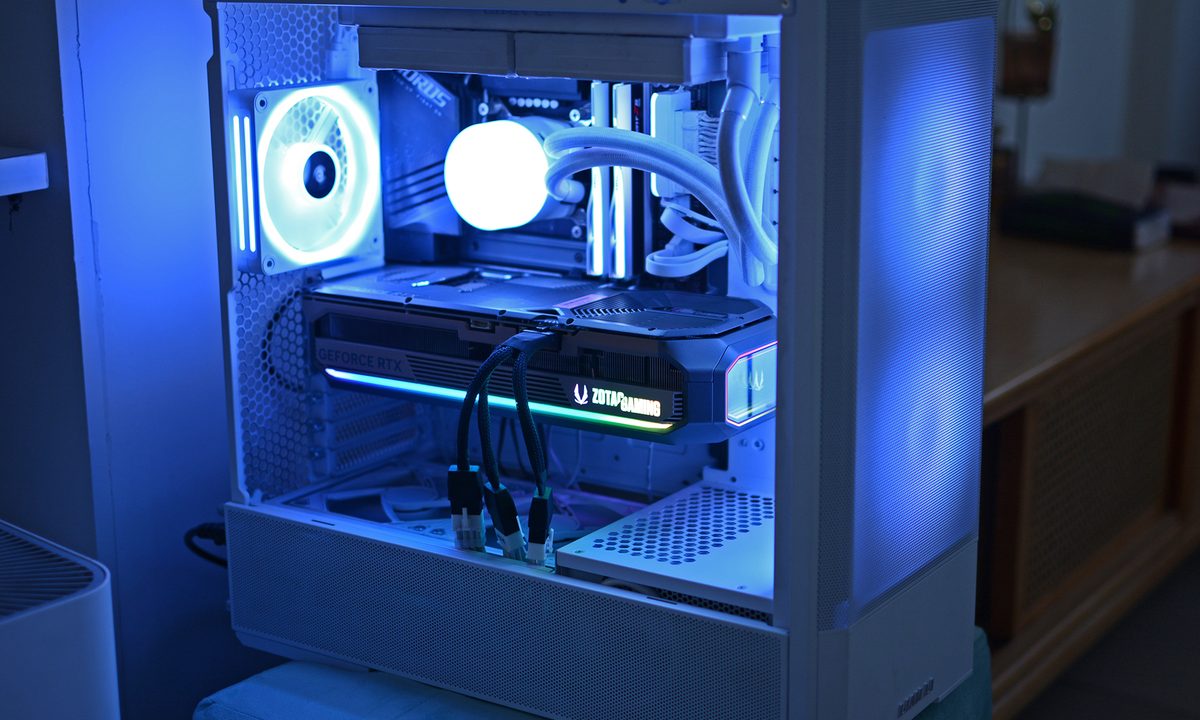
The Zotac RTX 5070 Ti Amp Extreme Infinity plugged into a white gaming PC
Kunal Khullar / Digital Trends

Your PC and laptop runs hotter every year, especially now that AI tools and heavy software push it harder than ever. Heat is a real bottleneck for performance, which is why people have gone to wild lengths to solve it, like strapping an actual ice machine to an RTX GPU. A new study points to a far less extreme fix for this problem, and it involves bacteria (via TechXplore).

Researchers have developed a new way to grow thermal interface materials, the substances that sit between a chip and its cooling system to help heat escape faster. The process involves feeding bacteria sugar and metal ions, letting the microbes build the material naturally instead of relying on traditional chemical manufacturing.

Why scientists are turning to microbes to grow cooling materials?

The process is called synergistic microbial biosynthesis, which basically means using living microbes to produce useful materials. The resulting biocomposite conducts heat 5 to 10 times better than the thermal interface materials currently used in electronics. It also skips the harsh chemicals and extreme heat that standard manufacturing requires, since the bacteria do their work at room temperature in water.

Recommended Videos

These findings were published in the journal Matter, and DARPA has reportedly shown strong interest in this kind of high performance, eco-friendly material, since thermal management is critical for military electronics and energy storage systems.

Where could this technology go next?

The potential here stretches well beyond computer chips. A similar microbial approach is already being explored for recovering rare earth elements, and some of the structures bacteria produce could even work for biomedical uses like tissue engineering.

The biggest hurdle right now is speed, since the current process takes anywhere from a few days to several weeks to produce a finished material. Researchers are working with industry partners to cut costs and speed up production, with an eye on uses in electronics, EV batteries, and drones.

This research is still in its early days, but it points toward an exciting future where the materials cooling your devices are grown rather than manufactured. Until then, you can always rely on the recommended ways to improve your PC’s cooling to keep things running smoothly.


Manisha Priyadarshini
Manisha Priyadarshini is a tech and entertainment writer with over nine years of editorial experience.
Bored of reading papers? This AI tool turns them into TikTok-like videos
PaperTok brings academic papers to people with short attention spans
Head, Person, Face

Academic papers aren't what you'd consider a fun read. For the average person, the dense, long, and field-specific language-filled papers can be quite intimidating to get into. These are usually packaged as PDFs that look like they were designed to test your willpower. A group of University of Washington researchers thinks there may be a better way to get that work in front of regular people. They are turning the papers into short-form videos.

The tool is called PaperTok, and it uses AI to help researchers convert academic papers into short, social-friendly videos. Think TikTok, except the idea is to explain research instead of sharing brain-rotting content. The best part? PaperTok is building a platform around scientists and researchers who are involved in the process, rather than simply using AI to summarize these papers.

Read more
As AI voices get harder to spot, ElevenLabs adopts Google’s SynthID to help you sniff the fakes
Artificial Intelligence

There was a time when spotting AI-generated content was almost a game. Images came with extra fingers, chatbots wrote like overly enthusiastic interns, and synthetic voices had an unmistakable robotic edge. Those days are disappearing fast.

Today, AI voices can laugh, whisper, pause naturally, and even sound emotional enough to fool many listeners. That’s exciting for creators, but it’s also creating a growing trust problem. If you can’t tell whether a clip is real or AI-generated, how do you know what to believe?

Read more
OpenAI just made GPT-5.5 Instant more fun to talk to, and users may actually notice
The company says its most-used ChatGPT model is getting better at advice, decision-making, and everyday conversations.
Man using ChatGPT on a laptop

For years, AI companies have competed by talking about benchmarks, reasoning scores, and coding performance. OpenAI's latest ChatGPT update takes a different approach. Instead of focusing on raw intelligence, the company is making its most popular AI model more enjoyable to talk to.

OpenAI says GPT-5.5 Instant now better understands what users want

Read more