Boston Dynamics — the intriguing robotics company that was bought, financed, and then put up for sale by Google in the space of just two years — just published what is perhaps its creepiest robot-testing video to date.
Posted with the purpose of showing off its new SpotMini robot, the video not only introduces the new rig but also treats viewers to a few of its features and skills (i.e., picking up a glass and putting it in the dishwasher and recycling a soda can). However, it’s the SpotMini’s extra skill set– creepy dancing — that’s literally the stuff of nightmares. But no matter how chilling it is to see a robot get its groove on, it’s hard to look away.
As is typical with most of Boston Dynamics’ videos, the SpotMini reveal starts off with a wide shot of the group’s lineup of mech-slash-humanoid robots in what looks like the lobby of the organization. Among them is a smaller quadruped robot that comes to life and makes its way toward the exit flanked by the original, much bigger Spot.
Throughout the course of the video, Boston Dynamics shows off SpotMini’s many abilities, including crouching underneath a taller robot, navigating through what appears to be a dining room, walking upstairs, and running through a parking lot.

A great way to show off its latest creation, no doubt, but it’s when the team displays SpotMini’s ability to dance — or, whatever it’s trying to pull off — that things get “interesting.”
The bobbing and jiving is one thing, but Boston Dynamics also decided to outfit the robot’s companion retractable arm with a set of googly eyes. As it bends its legs and gets down low, the eerie head just sits there unfazed. Perhaps it’s a test to show off the arm’s stability, but all it managed to do while we watched was give us the creeps.
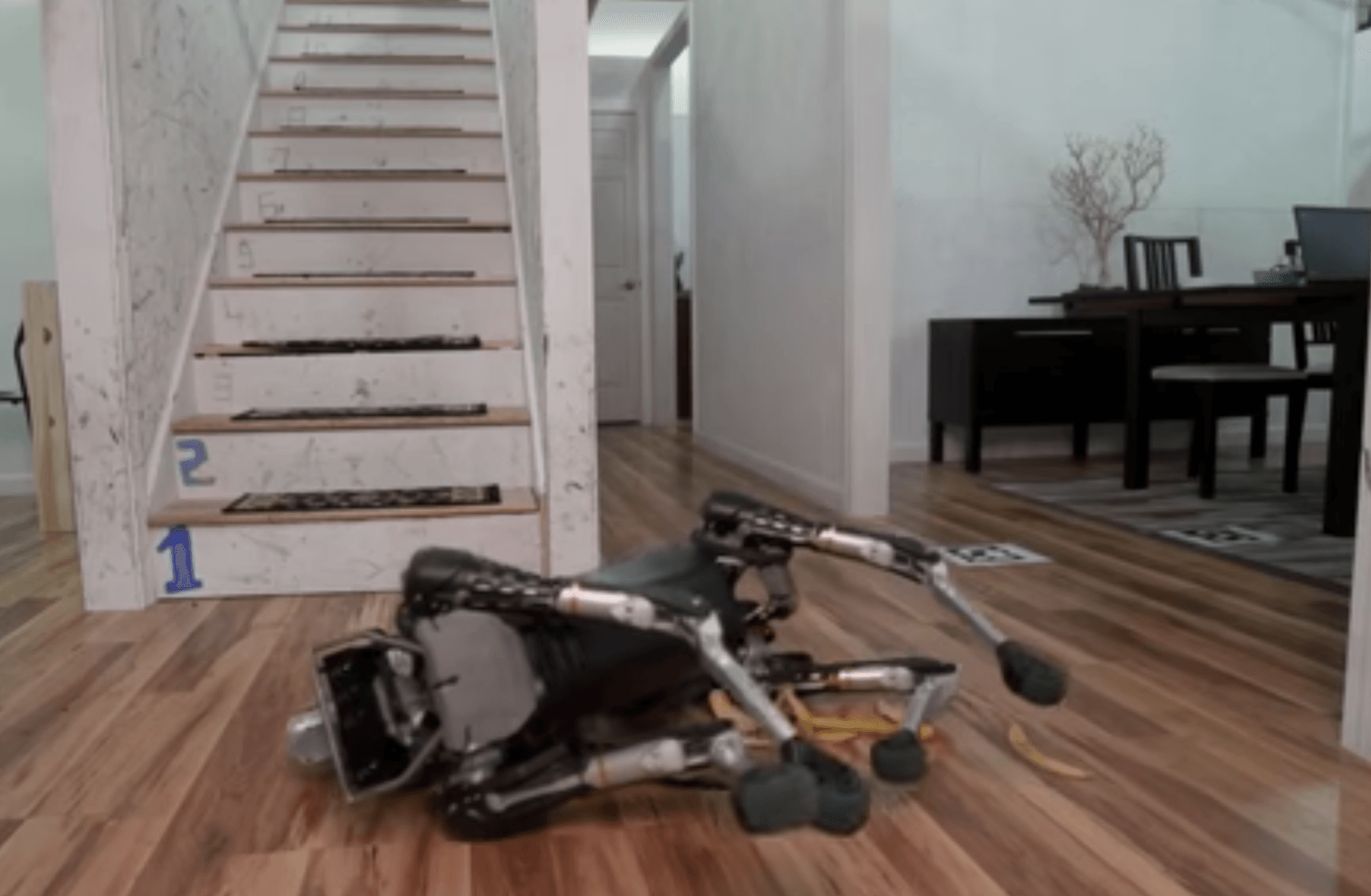
Nightmare-inducing dance moves aside, the video does achieve a bit of comic relief in the form of the SpotMini actually slipping on a batch of banana peels, because robots most certainly are not infallible either. While navigating through the company’s mock-up house, SpotMini turns to face a flight of stairs before catching its foot on a wayward peel.
Like a moment pulled straight from Mario Kart 64, SpotMini completely loses its balance, tips sideways, and is down for the count. It’s a shockingly inelegant moment, and for a hot second, it looks like the robot may have met its untimely end at the hands of a piece of fruit. But fret not! The robot picks itself back up in another series of movements that look a bit, well, eerie, and then balances itself before ascending the nearby stairs. If you want to watch the whole scene (which really is the best part of the video), you’ll want to start around 1:26.
Though SpotMini represents another impressive accomplishment for the Massachusetts-based engineers, it’s unclear exactly how Boston Dynamics intends to deploy these inventions — an uncertainty that led Google to finally part ways with the team. Nevertheless, it’s always incredibly entertaining to see what its robots get themselves into, no matter how startling their antics tend to be.