For the past few weeks, Anthropic’s Mythos has been viewed as the gold standard for AI-powered cybersecurity. That lead may already be shrinking. According to a new report from The Wall Street Journal, security researchers say Chinese AI startup Z.ai’s GLM-5.2 can now match Mythos when it comes to finding software security vulnerabilities, even if it still trails Anthropic and OpenAI in broader reasoning tasks.
GLM-5.2 is closing the gap in one very important area
As per the report, researchers found GLM-5.2 performs on par with Mythos in identifying software bugs, a capability that’s becoming increasingly important as companies race to patch vulnerabilities before hackers can exploit them. The model is also open-source, meaning anyone can download, modify, and run it on their own hardware without relying on a cloud provider. That flexibility makes it attractive for enterprises, but it also raises concerns that cybercriminals could adapt it for offensive purposes.
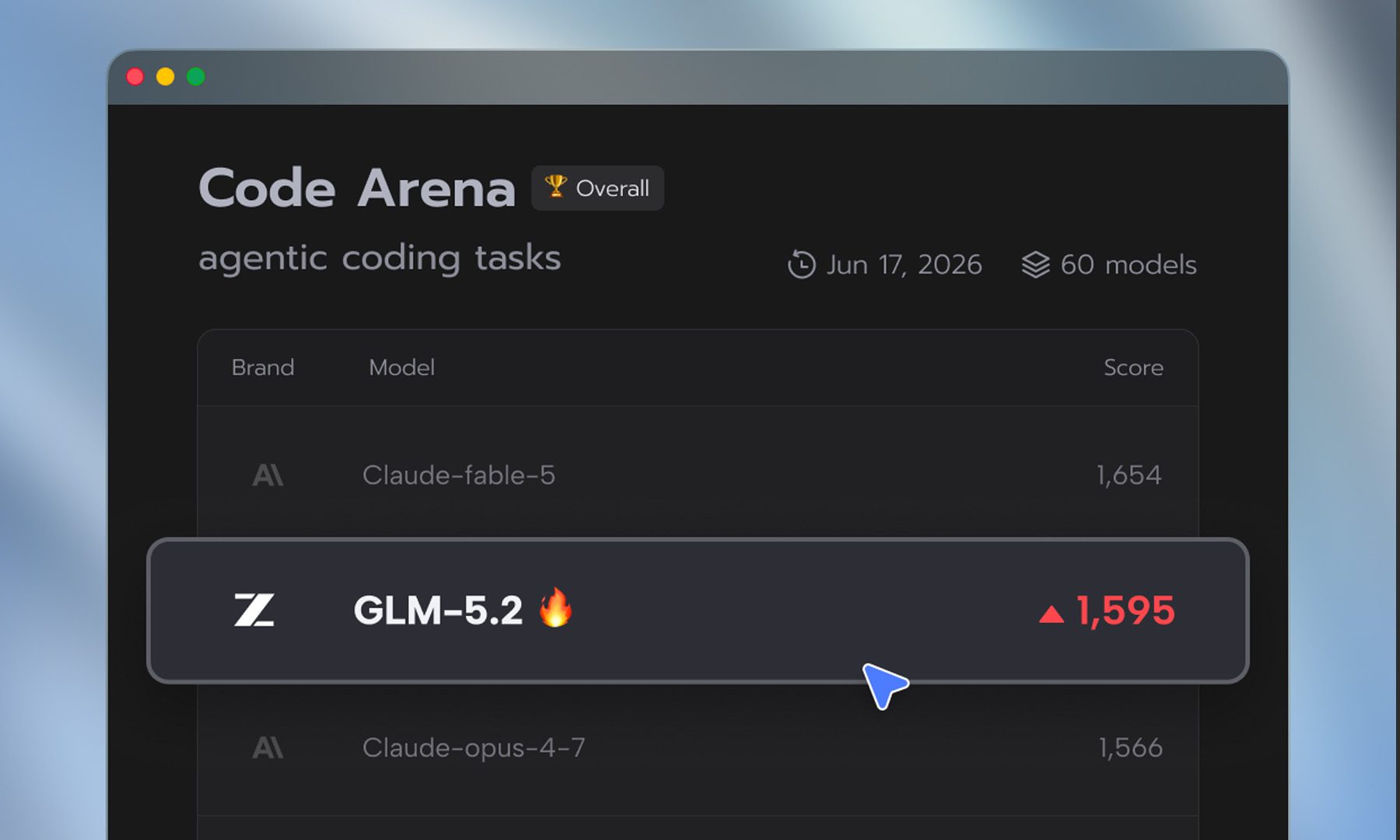
The report is careful to point out that this doesn’t mean China has overtaken the U.S. in AI overall. GLM-5.2 still lags behind Anthropic and OpenAI across many general-purpose tasks. But in cybersecurity, where even small improvements can have outsized real-world consequences, the performance gap has narrowed dramatically. According to benchmark data cited by the Journal, GLM-5.2 has even outperformed Claude Opus 4.8 in some security evaluations, while researchers say additional prompting allows it to reach Mythos-level bug-finding performance.
The bigger story isn’t who wins. It’s how fast the gap is closing
Interestingly, this all comes at a rather awkward time for the U.S. AI industry. While companies like Anthropic and OpenAI have spent the past few weeks restricting access to their most advanced frontier models over national security concerns, Chinese labs have been racing in the opposite direction by releasing increasingly capable open-weight alternatives that anyone can download and run.

The funny thing is that this debate was already playing out in public. Just days ago, Elon Musk predicted Chinese AI labs would probably catch up to Anthropic’s flagship Fable 5 by Q1 2027, at least in terms of benchmark performance. Zhipu AI founder Tang Jie quickly pushed back, replying, “won’t take that long.” Musk then clarified his position, arguing that while China might match Anthropic on benchmarks by then, achieving the same level of “true usefulness” would be a much tougher milestone, crediting Anthropic’s focus on practical intelligence.
Now, The Wall Street Journal’s latest report gives Tang’s optimism a little more weight. Instead of talking about coding benchmarks, it suggests GLM-5.2 is already matching Anthropic’s Mythos at finding security vulnerabilities, arguably one of the most valuable real-world AI applications today. That doesn’t suddenly make China the leader in frontier AI, but one thing is becoming increasingly difficult to ignore: the AI race is no longer a comfortable lead for the United States.