  1. Home
  2. Emerging Tech
  3. Social Media
  4. News

U.S. government and big tech want to use location data to fight coronavirus

Add as a preferred source on Google
 

The U.S. government is reportedly working with big tech to come up with ways that people’s cell phone data location can be used to combat the COVID-19 coronavirus outbreak. 

Recommended Videos

Facebook, Google, and other major tech companies are in talks with the government to examine compiling location data that would help follow the spread of the coronavirus in the U.S., The Washington Post reports. Public health officials would track this type of data to improve their understanding of how the coronavirus spreads. 

The Post reports that if the data were collected, it would be anonyzed and would be presented as an aggregated dataset where researchers could analyze location trends. Officials said that the data would not be built as a government database. 

Last week, Facebook, Google, Amazon, Apple, Microsoft, and Twitter attended a meeting with U.S. chief technology officer Michael Kratsios to address ways the federal government can work with the tech industry to respond properly to the coronavirus outbreak. That meeting could have resulted in the idea of using location data as a way to curb the spread of the virus. 

Digital Trends reached out to Facebook and Google to comment on the reports of helping with location data. We will update this story when we hear back. 
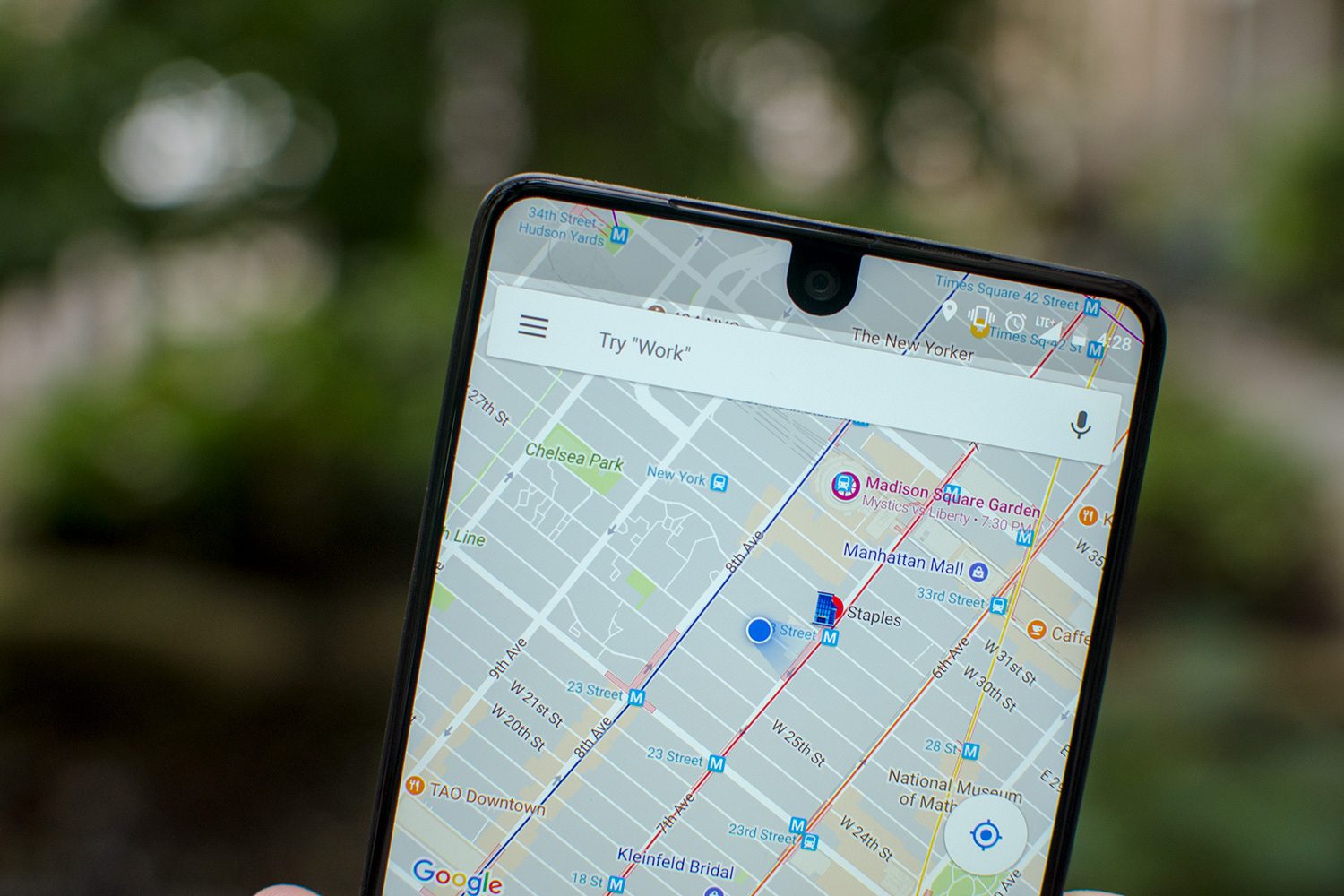
Essential phone review maps
Julian Chokkattu/Digital Trends

On Monday, it was reported that Israel was advocating to do the same thing for its citizens by using a secret trove of cell phone location data. The data would be used to decide who to put in quarantine based on whether they crossed paths with someone who was diagnosed with the coronavirus. 

While learning more about how the coronavirus spreads through location data could potentially end up in lower case numbers for countries, it raises privacy concerns.

Government use of people’s cell phone location data is unfortunately nothing new, and even here in the U.S., federal agencies use location data for immigration enforcement, according to the Wall Street Journal. 

However, desperate times could call for desperate measures, as confirmed coronavirus cases in the U.S. are increasing every day. 

In total, there have been more than 194,870 confirmed cases of the coronavirus worldwide, and 7,865 confirmed deaths, according to an online dashboard that tracks cases. The virus is believed to have originated in Wuhan, China, but there have been confirmed cases in the U.S., Australia, Canada, Japan, France, Germany, and dozens of other countries around the globe.

Allison Matyus
Former Digital Trends Contributor
Allison Matyus is a general news reporter at Digital Trends. She covers any and all tech news, including issues around social…
Ultra-thin transparent solar cells promise invisible charging for wearables, cars, and homes
Your car windows and smart glasses could one day harvest sunlight
Adult, Female, Person

A new kind of near-invisible solar cell could one day help everyday glass surfaces generate electricity. This could include car windows and sunroofs, smart glasses, wearables, building façades, and home windows.

Scientists at Nanyang Technological University, Singapore, have developed ultrathin transparent perovskite solar cells that are about 10,000 times thinner than a strand of human hair and around 50 times thinner than conventional perovskite solar cells. The NTU research team, led by Associate Professor Annalisa Bruno, published the findings in ACS Energy Letters (via TechXplore).

Read more
Edge browser on mobile gets a huge upgrade that makes it a worthy pick over Chrome
Edge mobile gets smarter just before Chrome’s big Gemini moment
Microsoft Edge on a phone

Chrome is still the default browser for many smartphone users, but Microsoft’s latest Edge update gives them a practical reason to try something else.

Microsoft has announced a major Copilot update for Edge across desktop and mobile. The rollout comes ahead of Google’s Gemini-powered Chrome upgrade for Android, which is expected in June, giving Edge a chance to stand out on phones before Chrome’s next big AI push.

Read more
After flubbing with Siri, Apple plans to host AI agents on the App Store
One problem is about money Apple won't commit to not charging. The other is about AI agents Apple can't figure out how to control. WWDC needs to solve both.
Electronics, Mobile Phone, Phone

Apple is currently facing a Siri problem that has nothing to do with Siri at all. With WWDC 2026 just weeks away, The Information reports the company is actively courting developers to integrate their apps with the new Siri coming in iOS 27. 

The mechanism powering the overhauled Siri, App Intents, is an API that lets Siri execute actions inside third-party apps without you actively opening them, which sounds quite useful, I’d say. However, some of the world’s largest developers are dragging their feet on it, not because it’s tough, but because Apple left the door open on charging for it later.

Read more