  1. Home
  2. Emerging Tech
  3. News

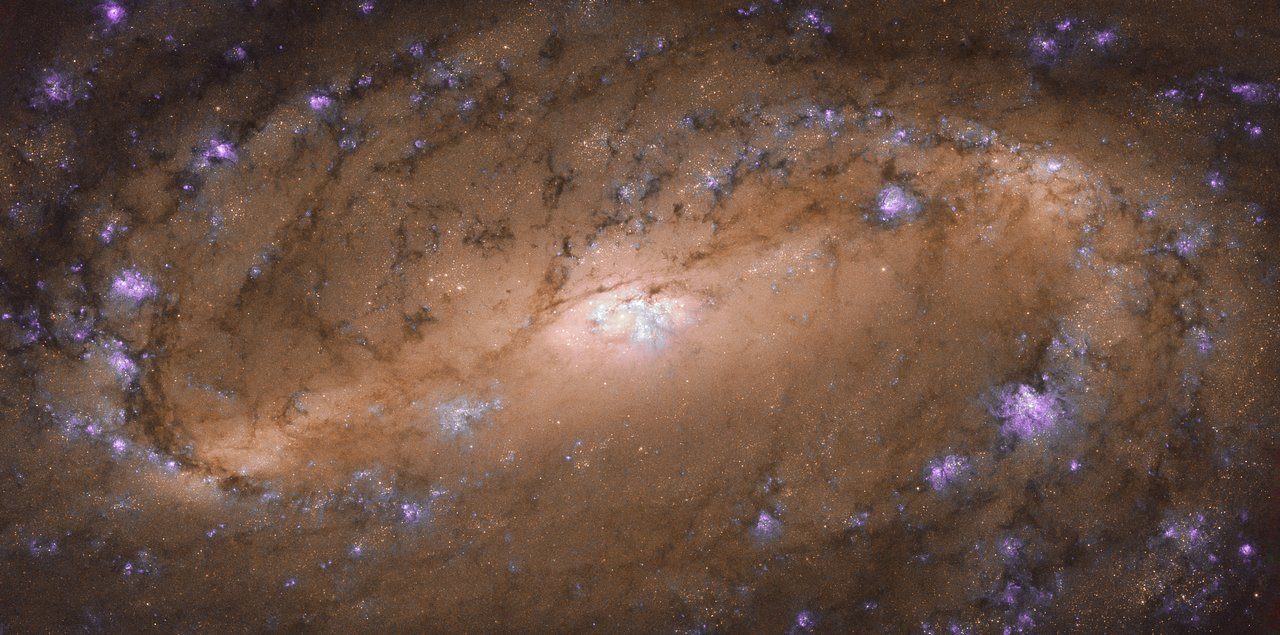
Hubble captures an archetypal spiral galaxy in the constellation of Leo

Add as a preferred source on Google

The stunning NGC 2903 galaxy, located in the constellation of Leo (The Lion). The image was captured by Hubble as part of a survey of 145 nearby disk galaxies. ESA/Hubble & NASA, L. Ho et al.

The Hubble Space Telescope has captured an ideal example of the archetypal spiral galaxy. The NGC 2903 galaxy is located in the constellation of Leo (The Lion) as is approximately 30 million light-years away. It is notable for its high rate of new star creation, which is particularly active in the center.

Recommended Videos

A spiral galaxy is the iconic shape that you likely imagine when you think of a galaxy. The Milky Way is a spiral galaxy, as are the nearby Andromeda and Triangulum Galaxies. They consist of a flat rotating disk, with a concentration of stars in the center of the disk forming an area called the bulge. Spiral galaxies have arms which reach out from their center, in which new stars are born, often making the arms glow as bright as the center of the spiral because of the hot young stars located inside them.

Spiral arms can have different properties too, either being the looser, more hazy type found in Sc or SBc galaxies, or the tight, closely wrapped arms found in Sa and SBa galaxies. As an SB type galaxy, NGC 2903 has looser arms which travel out further from its center.

The NGC 2903 galaxy, like our Milky Way, is a subtype of spiral galaxy called a bar spiral galaxy. The bar is a elongated section in the middle of the galaxy which forms a kind of central structure, affecting both the movement of stars and gases within the galaxy and the movement of the spiral arms. Between one third and two thirds of all spiral galaxies have bars, and it is believed that these areas act as additional stellar nurseries in which stars are born. In the image above you can see the elongated bar of bright white light right in the middle of the galaxy.

The image was captured as part of a Hubble survey which observed the central regions of 145 nearby disk galaxies. Astronomers were looking at the heart of galaxies to learn more about the black holes that lurk there, and how the stars, gas, and dust close by interact with them. Two monochromatic images were captured using two spectral filters, and the differences in brightness between the images were used to calculate the different hues in the final image.

Georgina Torbet
Georgina has been the space writer at Digital Trends space writer for six years, covering human space exploration, planetary…
DJI’s first 360° drone offers 8K video recording and a freakishly long transmission range
From omnidirectional obstacle sensing to 42 GB of onboard storage, the Avata 360 is DJI doing what DJI does best: raising the bar for everyone else.
DJI Avata 360° drone.

DJI has officially entered the 360° drone arena with the launch of the Avata 360. It’s the company’s first-ever fully immersive FPV drone, and a direct shot at the Antigravity A1, a rival built by an Insta360-incubated brand. Looks like the drone wars just got more interesting. 

What makes the Avata 360 worth looking at?

Read more
I transferred all my chats from other AI apps to Gemini — and it works flawlessly
Google Gemini Graphics Featured

You know that moment when AI assistants like ChatGPT, Gemini, or Claude suddenly lose the plot mid-conversation and start hallucinating like they’re absolutely sure they’re right? Yeah…it’s equal parts funny and painfully annoying. My usual reaction is switching between apps, hoping one of them gets it right. But the real problem is that I have to start over every single time. It feels like I’m stuck in a loop explaining my life story to different AIs, one after the other.

Now with Gemini, I can now jump in from other AI apps without that whole reset conversation. Finally, the Google gods have blessed us. I tried it out expecting the usual hiccups, but it was surprisingly smooth and quick.

Read more
Google expands Search Live globally with voice and camera AI
The feature is now available in 200+ countries with multilingual support
Google Search Live

Google is taking another big step toward turning Search into a full-blown AI assistant. The company has officially expanded Search Live globally, making the feature available in over 200 countries and territories, along with support for dozens of languages.

https://twitter.com/google/status/2037201891130523917

Read more