
For a few days in March 2021, millions of Indians suddenly couldn’t access many of the apps and services they relied on for everyday life. Every time they request a one-time passcode (OTP) to authenticate a bank transaction, retrieve a forgotten social media login, or register for a vaccine appointment, they ended up waiting forever for an SMS text that was never on its way.
Why? As it turns out, the one-time passcodes required to run these services were blocked by India’s new blockchain-powered SMS “scrubbing” system designed to cut down on spam texts.
Obviously, this wasn’t the intended result of the anti-spam system. The plan itself had noble intentions, but due to some anticompetitive lawsuits and bunches of bureaucracy, most companies held off on complying with the new telecommunication rules — which ultimately prevented their OTPs from reaching their users. To fix the issue, India’s telecom authority paused the rollout of the anti-spam blockchain network, thereby allowing OTP deliveries to resume and restoring access to everyone’s banks, social media accounts, and everything else.
Looking back on the way things transpired, it’s hard to see India’s anti-spam plan as anything but a failure. But despite the fact that the rollout of this technology was so badly bungled, India’s blockchain-powered spam-blocking idea still holds big promise. In a lot of ways, it’s a glimpse into what blockchain technology could do beyond cryptocurrency — and it’s worth revisiting.
The never-ending scourge of spam
Globally speaking, spam has consistently grown by double-digit figures for the last few years — with no end in sight.
In the United States, mobile subscribers received a record 7.4 billion spam text messages in March 2021, up 37% from the month before. In 2020, losses from fraudulent SMS amounted to nearly $86 million, according to the Federal Trade Commission.
And in a country like India, which is home to 1.36 billion people (over 4 times the population of the U.S.), the problem is even worse.
Giulia Porter, vice president of RoboKiller, a spam-blocking service, believes the reason worldwide spam issues have been prevalent is simply because of the complexity and diversity of the telecommunications industry — where there are no incentives or regulations to stop spam calls in a unified way.
Porter adds that advancements in tech have been a double-edged sword since they’ve also allowed spammers to constantly adapt and come up with new methods to evade enforcement efforts.
So, in the face of such a large and unruly problem, India decided to test out a powerful new tool: Blockchains.
Inside India’s anti-spam blockchain
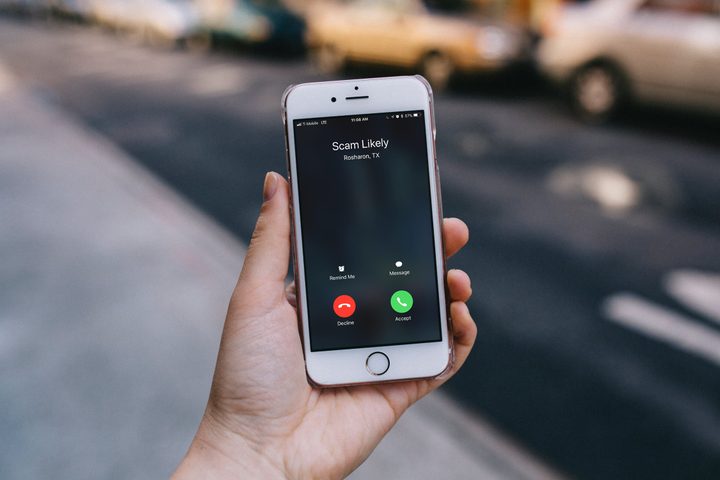
India’s blockchain framework, which is designed to curb “unsolicited commercial communication,” enables authorities to bring accountability and traceability into the country’s rampant spam industry. It requires marketers, bulk senders, and mobile carriers to register themselves on a digital ledger. This network also hosts users’ preferences over whether they’d like to receive unsolicited texts.
So, only when a mass commercial SMS meets the system’s antifraud standards — and the person targeted has opted into receiving the message — is it allowed to be delivered. The rest is scrubbed.
In a country where every person receives multiple fraudulent calls and texts per day, it was high time India took action on it. No one expected it to turn to a blockchain-based technology.
India has nearly a billion mobile subscribers and more than a billion commercial SMS messages are transmitted in the country every day. Relying on traditional channels to organize these heaps of sensitive data — which are being controlled by dozens of mobile carriers and marketers — would have meant hoarding it all in a central location, thereby making it less secure and more vulnerable to breaches (as has happened several times in the past in India). A distributed, blockchain-based approach seemed like a much better idea.
With this kind of distributed architecture in mind, India built a system in which each telecom operator has the ability to establish a dedicated node in the country’s mobile network. Every operator’s clients, marketers, and individual mobile subscribers exist as a branch of that telecom’s node. All these sources’ inputs automatically flow through the network in real time and eliminate the need for any particular entity to maintain its separate database.
When politics and technology collide
In theory, India’s decision to adopt a blockchain is sound. After all, blockchain’s distributed nature is just the sort of technological backbone authorities need to tackle a problem as scattered and messy as spam. Since each call or text is verified for traces of fraud and cross-checked against a person’s choice, there’s little room for scammers to circumvent safeguards.
India’s solution, unfortunately, didn’t go according to plan as the country mismanaged the implementation. So far, it’s been hit with a myriad of roadblocks, and the most significant of them has to do with the fact that local authorities concentrated the network’s control into the hands of a single company called Tanla. Complaints from other marketers and telecommunications companies argued that Tanla’s own business relies on mass SMS marketing campaigns, thereby raising a conflict of interest. The technology’s rollout has been dragged through the courts and has yet to prove its efficacy in the real world.
Raja Jurdak, a professor of distributed systems at Australia’s Queensland University of Technology, told Digital Trends that while the idea is attractive on the surface, it involves “several issues, including trust, scalability, and privacy.” Since, instead of keeping the blockchain network public, India has opted for a private one, Jurdak says it raises privacy concerns over how the data of hundreds of millions of users is handled.
Jurdak adds that the concentration of access and data at a single company goes against blockchain’s main design attribute, which is the decentralization of trust.
Can blockchain save us from spam once and for all?
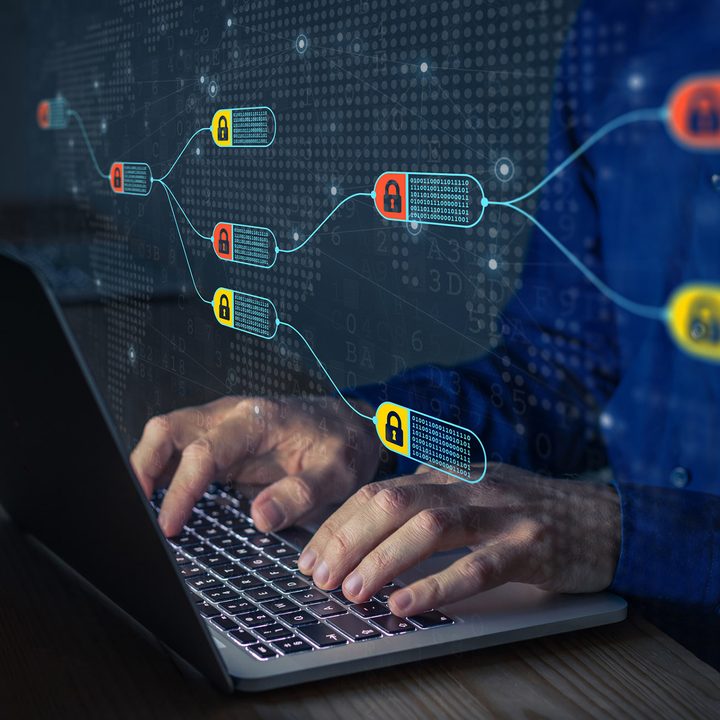
Although India mishandled the execution, experts believe its blockchain approach could still work as a template for the rest of the world and theoretically save us from spam.
Jurdak suggests increasing decentralization and providing suitable incentives to potential blockchain validators to participate in maintaining the blockchain — similar to a cryptocurrency — which would therefore reduce the need to trust individual participants.
India isn’t alone, either. Blockchain has been quietly upending a range of legacy services across the globe and upgrading them for the new, virtual-first world. Some hospitals in the United Kingdom, for instance, are employing blockchain to track the temperature of multiple coronavirus vaccines before administering them to patients.
Similarly, a global consortium of telecom operators and vendors is building a distributed ledger to crack down on “wangiri” fraud calls. The “wangiri” concept involves malicious actors leaving an abrupt missed call from an international number to people. When someone calls back, these actors are able to rack up the hefty international connection fees. With blockchain, telecom companies are able to share intelligence on detected “wangiri” calls with each other in real time and incorporate the global data into their algorithms to proactively put an end to future such frauds.
A central blockchain requires everyone to place the trust in a single organization that gets to “play god,” Brian Behlendorf, Linux Foundation’s general manager for Blockchain, Healthcare, and Identity, told Digital Trends
“Distributed ledger technology allows all parties to place their trust in the system,” he says. “That changes everything.”


