  1. Home
  2. Emerging Tech
  3. News

12 new moons were discovered orbiting Jupiter, and one’s an ‘oddball’

Add as a preferred source on Google
Image used with permission by copyright holder

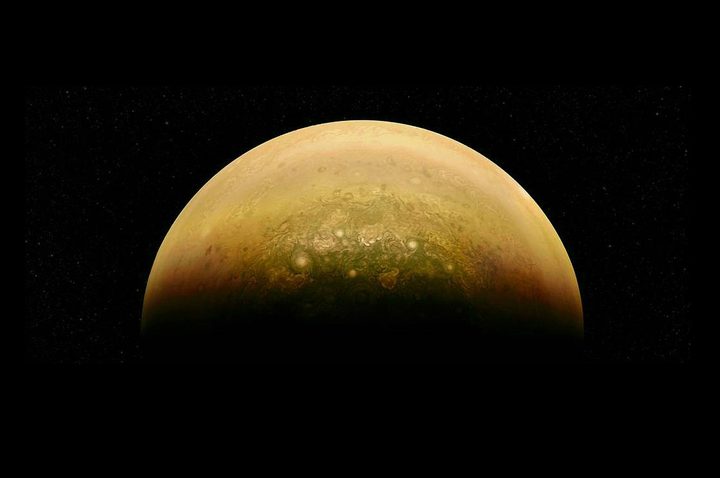
Jupiter got 12 new moons on Tuesday, July 17. Well, not exactly. Those dozen moons have, of course, always been in Jupiter’s orbit, but it was only this week that researchers from the Carnegie Institution for Science announced their discovery. The addition of these 12 brings the total number of moons (that we know of) to a whopping 79. As you might imagine, that’s far more than any other planet in our solar system can boast.

While the research team has suspected the existence of these 12 moons for about a year, it takes several observations in order to confirm that an object is, in fact, orbiting Jupiter. As such, the team took their time in confirming the new Jovian moons.

Recommended Videos

Scientists made their latest discovery when they were actually looking for another extraterrestrial body — Planet X, the planet that is suspected to exist somewhere beyond Pluto.

“Jupiter just happened to be in the sky near the search fields where we were looking for extremely distant solar system objects, so we were serendipitously able to look for new moons around Jupiter while at the same time looking for planets at the fringes of our solar system,” team leader Scott S. Sheppard said in an announcement. Of the 12 new moons discovered, 11 are described as normal moons, while the other is an “oddball.”

What makes it weird? Apparently, it’s just 1 kilometer wide, which means it’s the smallest moon scientists have discovered to date orbiting the planet, and it takes a full year and a half to make a complete trip around Jupiter. Moreover, its orbit crosses that of other moons in retrograde (those that travel in the opposite direction of Jupiter’s rotation), which is to say that at some point, multiple moons could collide. “This is an unstable situation,” Sheppard noted. “Head-on collisions would quickly break apart and grind the objects down to dust.”

This discovery could actually give scientists clues into the formation of moons and planets as a whole. As the team noted in its announcement, “Elucidating the complex influences that shaped a moon’s orbital history can teach scientists about our Solar System’s early years.” In this case, determining that there are still several small moons surrounding Jupiter suggests that they were actually created after the planets were formed.

Lulu Chang
Fascinated by the effects of technology on human interaction, Lulu believes that if her parents can use your new app…
Edge browser on mobile gets a huge upgrade that makes it a worthy pick over Chrome
Edge mobile gets smarter just before Chrome’s big Gemini moment
Microsoft Edge on a phone

Chrome is still the default browser for many smartphone users, but Microsoft’s latest Edge update gives them a practical reason to try something else.

Microsoft has announced a major Copilot update for Edge across desktop and mobile. The rollout comes ahead of Google’s Gemini-powered Chrome upgrade for Android, which is expected in June, giving Edge a chance to stand out on phones before Chrome’s next big AI push.

Read more
After flubbing with Siri, Apple plans to host AI agents on the App Store
One problem is about money Apple won't commit to not charging. The other is about AI agents Apple can't figure out how to control. WWDC needs to solve both.
Electronics, Mobile Phone, Phone

Apple is currently facing a Siri problem that has nothing to do with Siri at all. With WWDC 2026 just weeks away, The Information reports the company is actively courting developers to integrate their apps with the new Siri coming in iOS 27. 

The mechanism powering the overhauled Siri, App Intents, is an API that lets Siri execute actions inside third-party apps without you actively opening them, which sounds quite useful, I’d say. However, some of the world’s largest developers are dragging their feet on it, not because it’s tough, but because Apple left the door open on charging for it later.

Read more
EV batteries just need some AI top-up nudge, and they get a big 23% life boost, finds research
Charging fast and lasting long seemed impossible. A new AI trick says otherwise.
EV Charging

EV battery charging technology has always had to find the right balance between charging speed and battery longevity. If the charging speed is too fast, it wears down the battery. If the charging is too slow, nobody is happy. 

Researchers Meng Yuan from Victoria University of Wellington and Changfu Zou from Chalmers University of Technology in Sweden may have cracked this long-standing problem using an AI technique called deep reinforcement learning, and the results are pretty encouraging.

Read more