  1. Home
  2. Emerging Tech
  3. Legacy Archives

Tattooed fruits are the future of produce branding

Add as a preferred source on Google
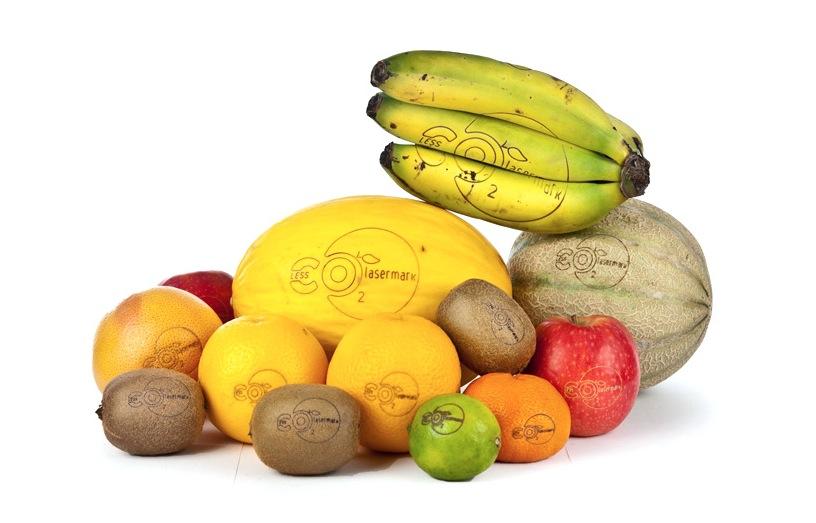
Laser Food cut fruits
Image used with permission by copyright holder

Have tattoos become so mainstream that even your local produce are getting them too? Well, yes and no. The fruits found in your nearest supermarket may soon feature some permanent skin branding, but not because it’s the new cool thing – it’s just more environmentally conscious.

New regulations have passed in the European Union that will allow produce companies to use iron oxides and hydroxides on the skin of fruit. This combination of chemicals enable companies to laser cut logos, labels, and barcodes onto the food item and make this “tattoo” clearer to the human eye. This technology, created by a Spain-based company called Laser Food, opens a new way to brand produce that are normally shipped without fancy packaging. Rather than slapping on annoying stickers most people forget to peel off, the laser etching lets the branding become one with the skin – and consumers can eat right through the engravement.

Recommended Videos

Laser Food tomatoesThe laser cutting technology can do more than just eliminate sticker material. Companies can now etch QR codes or barcodes to help consumers scan and learn more about the product, such as nutritional information or the company that grew the crop. Supermarkets can also cut their logo onto the produce as a way of seamless marketing.

Despite the laser technology, Laser Food promises that the process is gentle on fruits and will not damage the goods underneath the skin, making it possible to laser cut more fragile fruits like bananas and tomatoes. The company also boasts machines that can laser cut up to 54,000 pieces of fruits per hour. Laser Food is not the only company that have previously tried to switch companies from sticker branding to laser cutting. Eurolaser has also attempted to market similar technology, but it was only recently that the EU passed the regulations on using iron oxides and hydroxides to help condition fruit skins for their engravement.

It’s a novel piece of innovation for sure, but convincing companies to switch to this new (and likely expensive) method might take some time. Still, we’re on board with anything that takes away those silly produce stickers that always seem to be in the way.

Natt Garun
An avid gadgets and Internet culture enthusiast, Natt Garun spends her days bringing you the funniest, coolest, and strangest…
EV batteries just need some AI top-up nudge, and they get a big 23% life boost, finds research
Charging fast and lasting long seemed impossible. A new AI trick says otherwise.
EV Charging

EV battery charging technology has always had to find the right balance between charging speed and battery longevity. If the charging speed is too fast, it wears down the battery. If the charging is too slow, nobody is happy. 

Researchers Meng Yuan from Victoria University of Wellington and Changfu Zou from Chalmers University of Technology in Sweden may have cracked this long-standing problem using an AI technique called deep reinforcement learning, and the results are pretty encouraging.

Read more
Alexa for Shopping is a chatty new AI assistant with some cool tricks to make you spend at Amazon
Alexa now remembers your plans and turns them into shopping lists
Logo of Amazon’s new Alexa+ assistant.

After years of using Alexa to answer questions, control smart homes, play music, and handle everyday tasks, Amazon has found a more obvious job for it. Alexa is becoming your personal shopper, meant to help you find what you need faster and get it into your cart with fewer second thoughts.

Amazon is rolling out Alexa for Shopping to U.S. customers on the Amazon Shopping app, Amazon.com, and Echo Show devices. It combines the existing Rufus shopping chatbot with Alexa+ personalization, enabling the assistant to use product knowledge, shopping history, browsing behavior, past purchases, preferences, and Alexa conversations to improve recommendations. The assistant is free for signed-in Amazon customers and does not require Prime, an Echo device, or the Alexa app.

Read more
This see-through smart ring translates sign language and almost works like magic
asl translator smart ring on hand

For people who are hard of hearing, sign language isn't just a communication tool; it's their primary language. The problem is that sign language is not taught to people with regular hearing, thus creating a barrier that's hard to bridge. Now, a team of researchers in South Korea may have just found a surprisingly elegant solution to this age-old problem. 

According to a new study published in Science Advances, the system, called WRSLT (wirelessly connected, ring-type sign language translator), can recognize and translate both American Sign Language and International Sign Language words with around 88% accuracy. And yes, it works in real time.

Read more