
I’ve just come out of a LG’s CES 2026 press conference – dubbed a ‘World Premiere’, giving the sense of something new and exciting about to appear (although it transpired all of what was spoken about had already been press released).
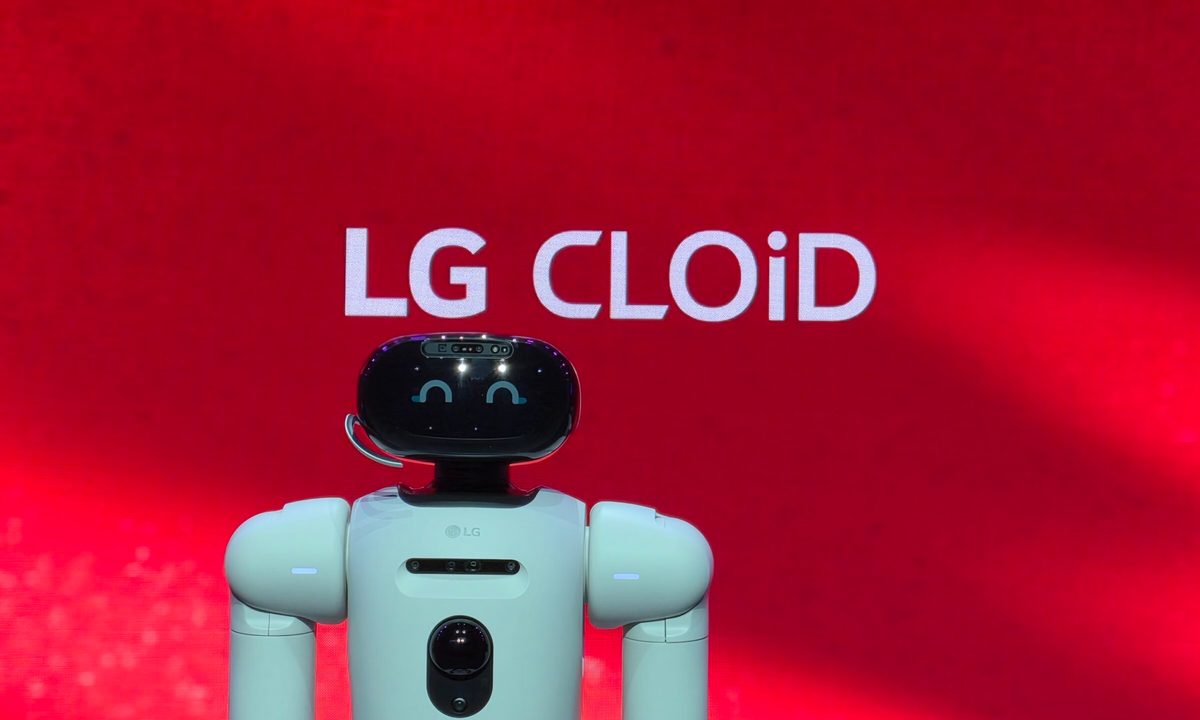
But it was clear what the focal point of the event was: Cloid (or CLOiD, if you write it in the way LG wants to brand it), a prototype home robot on wheels that’s designed to show the future of how we’ll live.
The idea is simple enough and another step towards realising the futuristic world those living in the ’50s imagined we’d be living by now. One where we no longer need to worry about chores, as we have machines to do all that. (I remember an episode of The Jetsons where George had his teeth brushed by two robotic arms very violently. I hope that never comes to pass).
Cloid looks a lot like the robots from the mind’s eye of those sci-fi writers from 75 years ago: a large wheel base, slow movements but impressive articulation in the hands and arms. It’s LG thinking about where we might be going in the future.
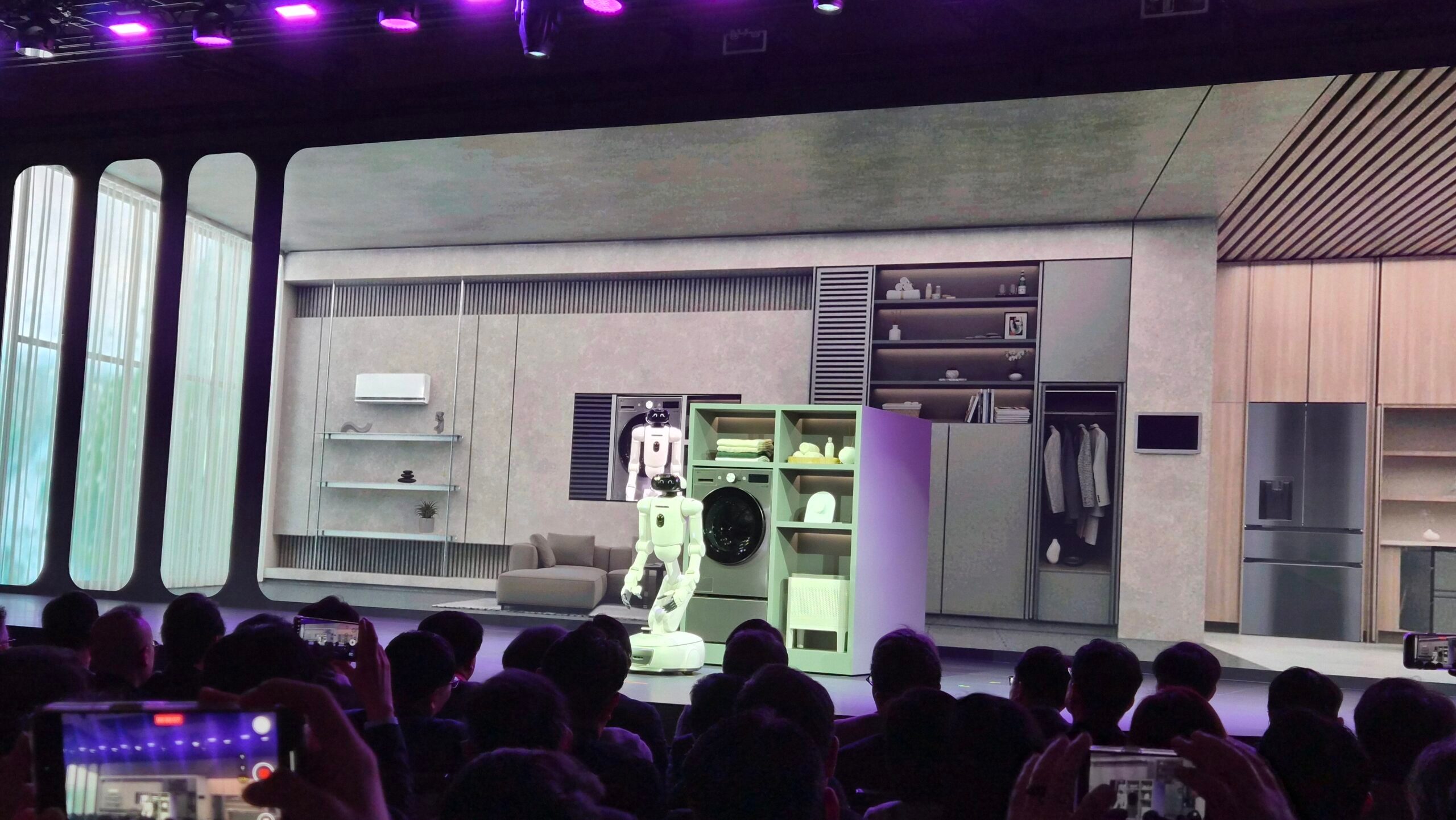
There was, of course, the predictable skit: an LG executive comes onstage where Cloid is standing by a washing machine. He hands the robot a wet towel because it’s been raining outside (even though he’s bone dry… it must have been an incredibly effective towel).
He asks Cloid to ‘deal with it’, to which the robot responds by taking the cloth, turning slowly to the washing machine, which opens its door automatically. The robot slowly (but accurately) places it inside, and the door shuts by itself. It makes sense that the door would open automatically… after all, the world that LG is painting is appliances that communicate with each other. But there was a sense of sadness that we didn’t get to see the robot trying to claw open the door with its fingers.
(The other option would have been to have a washing machine on wheels that wanders up to say hello and try to take your clothes when you get home after it’s rained, like a weird puppy. That would have made less sense.)
It was a fine demonstration, and likely one blocked out, step by step, to the absolute limit to remove the chance of anything going awry. The last thing LG wants is a robot that doesn’t function, as the headlines would have been terrible at this early stage in robotic development.
So, it’s just a robot?
But I did get a very strong feeling that this was the very earliest look possible at how robots in the home might function – after all, this Cloid prototype can’t pick things off the floor. It can’t even bend below knee level. It’s designed to be very slow to keep pets and children safe.
It might seem limited compared to the myriad robot demonstrations we see popping up these days (such as one playing tennis almost like a pro), but the amount of tech inside Cloid is still incredible: there’s a display, speakers, cameras, loads of sensors and generative AI powering the voice.
You need to look beyond this slow, pondering robot to see what LG was actually trying to say: it’s a symbol of the connection these brands think we’re going to need to make AI a ‘thing’ in the home, with Cloid being the physical example of this. An oven that can brown your croissants just as you like them. A robot that knows what you like to wear and when. Then taking it further than just Cloid: AI that listens and learns your habits; changing the cooling, for instance, to match how you use it, not what you code in.
And the robot design itself – while it has MASSIVE hands (and they do, dear reader, freak me out) they were clearly designed with fine motor skills, and the arms have an impressive range of motion. LG made a big deal of how it’s developing actuators (a key component in robotics) through its robotics design arm – the Axium actuator got a surprising amount of stage time and shows that’s partly where LG sees its future.
At CES this year, it feels like every brand is trying to position itself at the forefront of robotics and AI. To LG’s credit, it just gave its effort a face.