
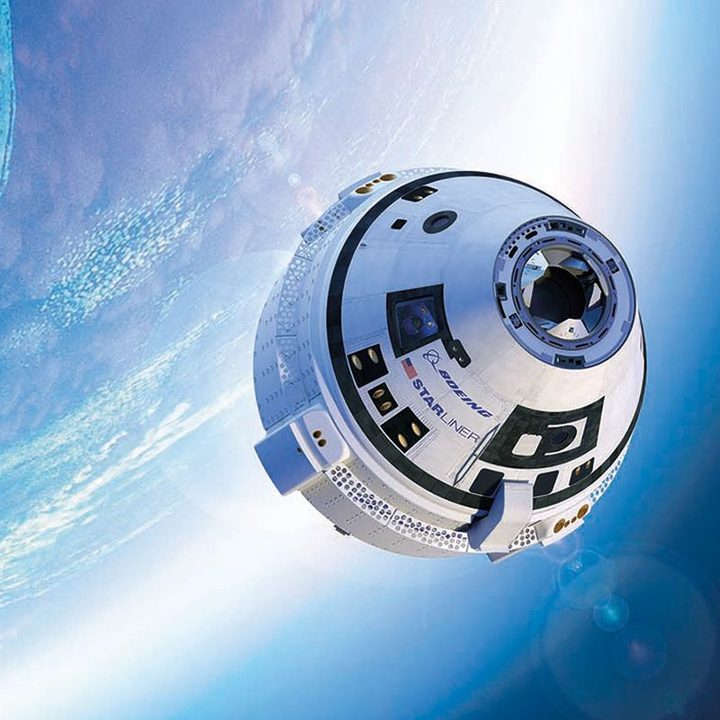
An anomaly during the most recent test of the Starliner, Boeing’s planned space taxi, means the company’s aggressive timeline to replace NASA’s space shuttle may have to be pushed back.
NASA had hoped to accelerate the timeline to certify private companies including Boeing and SpaceX to transport astronauts to and from the International Space Station (ISS); the agency wanted to turn a June Starliner test flight into a full-fledged mission. It was a bold move that some scientists worried could jeopardize crew safety. Too bold, perhaps.
“The engines successfully ignited and ran for the full duration,” Boeing said in a statement. “During engine shutdown an anomaly occurred that resulted in a propellant leak.”
While Boeing didn’t provide further details about what exactly went wrong, sources claimed that a valve in the propulsion system did not close entirely at the conclusion of the test, according to Ars Technica, which led to the leak.
“We have been conducting a thorough investigation with assistance from our NASA and industry partners,” Boeing added in the statement. “We are confident we found the cause and are moving forward with corrective action.”
It remains to be seen whether this issue will affect Starliner’s development schedule. Updates on crew test schedules should be released by NASA in the coming days. Both SpaceX and Boeing’s launch dates are expected to be sometime in late 2019, and likely won’t be able to win certification to send astronauts to the ISS until late 2019 at the earliest.
The development is a blow to Boeing, which proposed an updated and accelerated schedule in a contract modification. The amendment would add a third blue-suited crew member to the Starliner “Crew Flight Test” and extend the mission from two weeks to a full six months, according to Florida Today.
NASA’s current contract with Russia to ferry astronauts to the ISS aboard Soyuz spacecraft expires in 2019. Purchasing additional Soyuz seats is not an option, due to the long lead times involved. The two private contractors, Boeing’s Starliner and SpaceX’s Crew Dragon, will likely not be certified for four-person crews by that time.
“It was clear to us that we needed to provide NASA with additional flexibility to ensure the station remains fully staffed and fully operational until the Commercial Crew Program providers can pick up a more regular cadence of flying long-duration crew rotation missions,” Boeing said in a statement.
“This contract modification provides NASA with additional schedule margin if needed,” Bill Gerstenmaier of NASA added. “We appreciate Boeing’s willingness to evolve its flight to ensure we have continued access to space for our astronauts.”
In 2014, NASA awarded a $4.2 billion contract to Boeing and a $2.6 billion contract to SpaceX for two test flights and six operational missions. Boeing and SpaceX planned to launch unmanned test flights this summer, and to follow those missions up with second test flights with two-person crews before the end of the year.
Schedule pressure was a factor in the two shuttle disasters, and scientists on the NASA Aerospace Safety Advisory Panel have warned the agency not to be too hasty. As recently as 2012, however, NASA expanded the scope of the Dragon capsule test launch by packing it with supplies for the ISS and proceeding with the launch as if it was a regular operational mission.
At a presentation in March, NASA’s Kathy Lueders admitted that the new timeline was aggressive but achievable, reported Space News. “In a perfect schedule, it all could come together,” she said. “We really want to give them the time to do this right. Yes, we want them to do it as fast as possible, but we’re not willing to sacrifice the safety of the crew.”


