
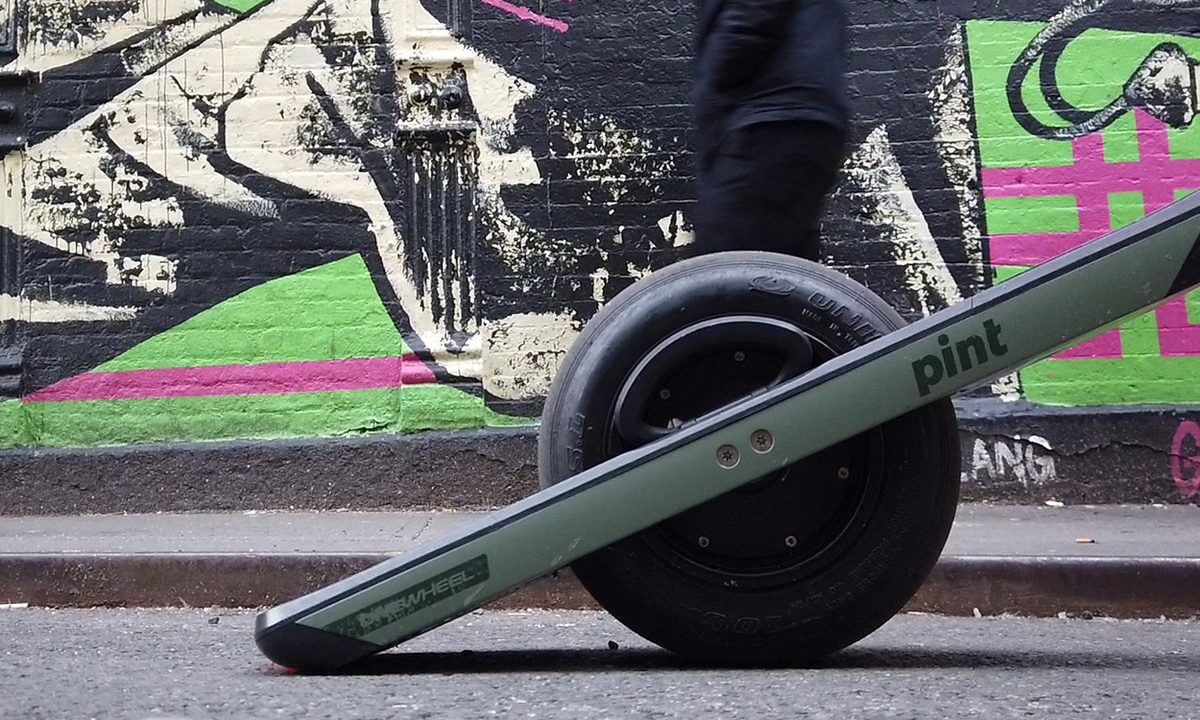
“The Onewheel Pint is a near-perfect blend of price, performance, and practicality.”
- Outrageously fun
- All-terrain
- Super nimble
- Convenient design
- Reasonable price
- Less range than XR
- Slightly lower top speed
“Why you can trust Digital Trends – We have a 20-year history of testing, reviewing, and rating products, services and apps to help you make a sound buying decision. Find out more about how we test and score products.“
The original Onewheel was released back in 2015, and ever since then, the company behind it (a California-based upstart called Future Motion) has kept its nose to the grindstone.
A couple years later it released the Onewheel Plus, a smoother, more refined version of the first generation. Roughly a year after that, it dropped the Onewheel Plus XR, an evolution of the Plus that boasts drastically improved range capabilities.
The company is back again, but this time it’s not an incremental improvement. The Onewheel Pint is a new branch on the Onewheel family tree.
Much like the iPhone 5C was a more affordable, mass-market version of the iPhone 5, the Onehweel Pint is a mass-market offshoot of the flagship Onewheel. To get a sense of how it compares to its big brothers we took it for a rip through some Chinatown alleyways in lower Manhattan. Here’s our opinion after about an hour of riding.
On Paper
Don’t let the name fool you. The Onewheel Pint certainly isn’t a slouch when it comes to features. It’s a bit smaller and narrower than its forebears, but it isn’t a massive step down in terms of power and performance.

In fact, in just about every way that matters, it’s either on par with the Onewheel Plus or better. It boasts just as much range (six to eight miles per charge), just as large of a motor (750 Watt), and yet it’s smaller and more lightweight, tipping the scales at just 23 pounds. The Onewheel Plus only has an edge in speed, since the Pint tops out at 16 miles per hour instead of the Onewheel Plus’ 19 miles per hour.
All things considered, the Pint looks damn good on paper.
The Pint’s range looks less impressive next to Future Motion’s flagship, the Onewheel Plus XR, which can travel up to 18 miles. Still, what it lacks in range it makes up for with a handful of innovative features. For example, it’s got a fancy new light system that lets you know what the board’s sensors are doing, there’s an integrated handle to help you carry the board when you’re not riding, and new software makes dismounting easier than ever before.
All things considered, the Pint looks damn good on paper. But what about real-world performance?
On Pavement
The Onewheel Plus is nimbler and more playful under your feet. It might only be a few pounds lighter than previous models, but the difference is immediately apparent when you hop on. It’s easier to throw around and initiate turns, and because the wheel is narrower, the transition from heelside to toeside feels snappy and immediate. In other words, it’s super lively on pavement, and is arguably more fun to ride than a full-sized Onewheel Plus.
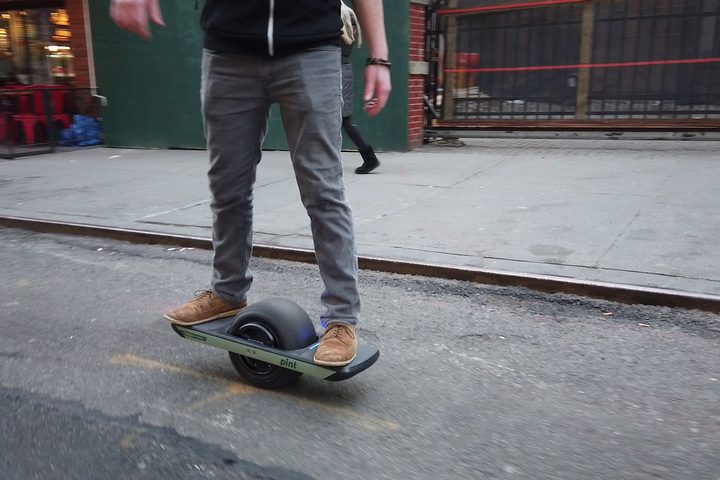
The other features are just icing on the cake. The Pint’s new Simplestop technology makes dismounts clean and easy, while the integrated handle makes it a breeze to pick up the board after you’ve hopped off. These improvements directly address two of Onewheel’s biggest pain points — tricky dismounts and cumbersome carrying.
The result is a riding (and carrying!) experience that’s more frictionless than ever. No more awkward bobbling as you try to dismount, and no more leaning sideways to counterbalance the hefty board dangling at your side.
Verdict
Though marketed as a smaller, more pared-down version of the Onewheel, the Pint is, in my opinion, on par with the Onewheel Plus XR. It’s not less than its big brother. It’s just designed and optimized for a different kind of rider.
The real clincher, though, is the price. It’s only $950 bucks! That’s still a lot of money, but it’s dramatically more affordable than not only the $1,800 OneWheel Plus XR, but also most other high-end electric skateboards on the market right now.
In my eyes, it’s a no-brainer. If you want a rideable device but don’t want to break the bank, the Onewheel Pint is the board to get.


