  1. Home
  2. Emerging Tech
  3. Web
  4. Legacy Archives

Overstock.com racks up $130,000 in sales on first day of accepting Bitcoin

Add as a preferred source on Google

According to a tweet published by Overstock.com CEO Patrick M. Byrne, the online retailer added an additional $130,000 in sales on the first full day of accepting the online digital currency known as Bitcoin. Those sales were the result of 840 orders, roughly averaging over $150 per order. In addition, the vast majority of these orders were placed by brand new customers. According to more information on Byrne’s Twitter account, the states with the highest number of users that paid with Bitcoin includes California, Florida, Texas and Washington. 

In addition, the most common products ordered by users that paid with Bitcoin included tech related items like mobile phone cases and flash drives as well as home related items like sheets and bath towels. Remarking on the purchases, Byrne said “I expected more video cards.” Byrne also noted the lack of users that paid with Bitcoin in a heavily populated state like New York. 
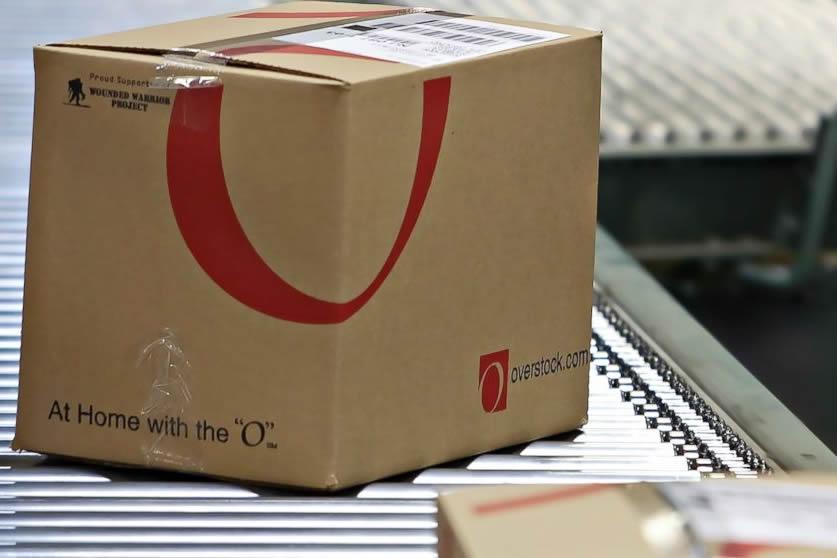
overstock-warehouse
Image used with permission by copyright holder

Overstock.com representatives haven’t indicated how the company will be handling currency conversions or what frequency those will occur. Hypothetically, Overstock.com could simply stockpile the digital currency in hopes that it will rise in value over time, but that strategy also runs the risk of losing value as well. It’s also not clear how the company will handle taxes on purchases made with Bitcoin. 

Recommended Videos

That being said, $130,000 in sales in a single day isn’t tremendously large for the online retailer when compared to all sales revenue generated in a single day. During a twelve month period, the company generated roughly $1.47 billion in sales. On a daily basis, that comes out to about $3.4 million in sales. Thus, Bitcoin transactions added an additional four percent of sales for the day. However, the use of Bitcoin for online transactions on Overstock.com is likely to grow over time since the company is the largest online retailer that currently accepts the digital currency. For the moment, it provides a small competitive advantage to Overstock.com over retail giant Amazon.

Mike Flacy
By day, I'm the content and social media manager for High-Def Digest, Steve's Digicams and The CheckOut on Ben's Bargains…
Rice grain-sized sensor could give robots a delicate touch and keep them from breaking stuff
Sprout Robot

Robots are incredibly precise, but being gentle is not always their strong suit. A machine that can build a car with near-perfect accuracy can still apply too much pressure when working in places where even the smallest mistake matters, like inside a human eye or during delicate surgery. That is why researchers at Shanghai Jiao Tong University are developing a new type of force sensor that could help robots “feel” what they are touching more accurately.

The sensor is tiny, about the size of a grain of rice at just 1.7 millimeters wide, making it small enough to fit inside advanced surgical tools. What makes it especially interesting is that it does not rely on traditional electronics. Instead, it uses light to measure force from every direction, including pressure, sliding movements, and twisting. Here is how it works. At the tip of an optical fiber sits a soft material that slightly changes shape when it comes into contact with something. That tiny deformation alters how light travels through the sensor. The altered light pattern is then sent through optical fibers to a camera, which captures it like an image. Researchers then use a machine learning model to study those light patterns and translate them into precise force readings. In simple terms, the system learns how to “read” touch through light alone, without needing a bunch of wires or multiple separate sensors packed into such a tiny space.

Read more
Meta’s own employees are having a hard time digesting AI. Who would’ve thought?
Artificial Intelligence

If you wanted a snapshot of what it looks like when a tech giant tries to force-feed its workforce an AI future, look no further than Meta right now. The company that built its empire on knowing everything about its users has turned that same appetite inward, and its employees are not happy about it. Last month, Meta quietly informed tens of thousands of its U.S. workers that their corporate laptops would begin tracking their keystrokes, mouse movements, clicks, and screen activity. The purpose was to feed that behavioral data into Meta's AI models so they could learn how people actually use computers. The reaction was immediate — within hours, internal comment threads were flooded with anger, confusion, and more than a hundred emoji reactions that left little to the imagination about how employees felt.

When an engineering manager asked how to opt out, Meta's chief technology officer, Andrew Bosworth, had a blunt answer: there was no opt-out, at least not on a company laptop. This is the same company that is also tying AI tool usage to performance reviews, running mandatory "AI Transformation Weeks" to retrain its workforce, and building internal dashboards that gamify how many AI tokens employees consume in a day — a metric so aggressively tracked that some workers started building AI agents to manage their other AI agents. The whole thing started to resemble a feedback loop eating itself.

Read more
Sci-fi got the gadgets right, but the vibes wrong
Sci-fi got plenty of consumer tech right, but reality keeps delivering the useful, compromised version of the dream
Officer K looking up at a neon-colored hologram in Blade Runner 2049.

I was recently waiting for an Uber when the GPS decided to lie for sport. The car was somewhere nearby, I was somewhere nearby, and somehow both of us were trapped in that modern ritual of wrong pins, slow turns, vague waving, and "I'm here" messages that help absolutely no one.

That was when I had a very reasonable thought: this is exactly where a hologram of a giant arrow pointing at me would be useful.

Read more