  1. Home
  2. Emerging Tech
  3. News

This A.I.-powered app can spot skin cancer with 95 percent accuracy

Add as a preferred source on Google
Detect skin cancer with your phone using SkinVision

If you’re going to trust your smartphone to do something as important as detect the most common forms of skin cancer, you want to be pretty darn sure that it works as advertised. Fortunately, the claims of an app called SkinVision appear to be accurate.

Recommended Videos

SkinVision is an iOS and Android app that lets users assess and track skin spots for changes over time. It works by asking users to snap a photo of concerning spots on their skin using their smartphone camera. Within 30 seconds of submitting this photo for review, an artificial intelligence algorithm then delivers a risk assessment: Either low, low with symptoms, or high. It does this by looking for telltale signs of skin cancer in spots, such as irregular patterns, multiple colors, asymmetry, size, and uneven borders. In the event that the app raises concerns, users can then visit a medical professional to get advice on what to do next.
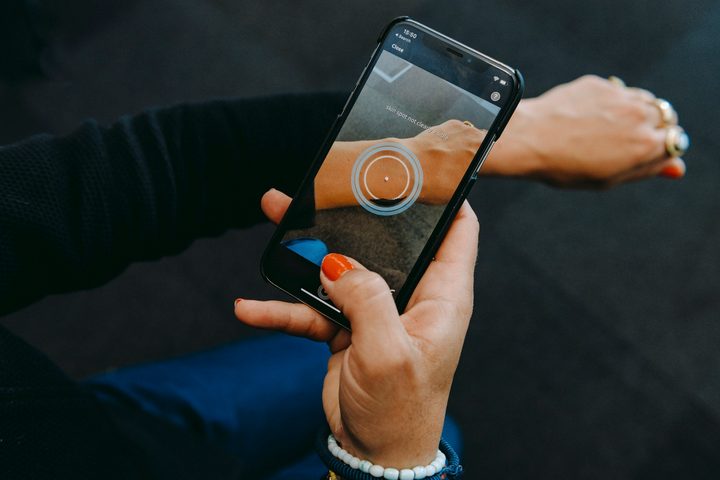
Image used with permission by copyright holder

“Our service does not formally provide a diagnosis, but instead a risk assessment and recommendation,” SkinVision spokesperson Abigail Blackburn told Digital Trends. “We aim to relieve pressure on the health care system by helping direct individuals to a health care professional at the appropriate time. Literature shows that suspicious skin spots are one of the most common reasons patients visit a general practitioner, and a high percentage of these visits can indicate a benign lesion. SkinVision hopes that the use of the app can reduce unnecessary visits, freeing up GPs to run their practice efficiently to see more patients. The cost for treatment of early-stage skin cancer is drastically different from late-stage skin cancer, which can require expensive treatment such as immunotherapy.”

In a recent study published in the Journal of the European Academy of Dermatology and Venereology, investigators tested the app’s claims that it can play a crucial role in early skin cancer detection. They concluded that it is around 95.1% sensitive in its ability to identify the most common forms of skin cancer. While there’s room for improvement when it comes to the specificity of the cancers, it’s still proven its value as an effective early warning system.

We’re still a long way from replacing doctors with machines (something that I don’t think will ever truly happen), but this is a great example of how A.I. can be used to improve health care, particularly when it comes to skin cancer, where early diagnosis is crucial. Tools like this can be game-changing.

Luke Dormehl
I'm a UK-based tech writer covering Cool Tech at Digital Trends. I've also written for Fast Company, Wired, the Guardian…
Robots just ran the Beijing half-marathon faster than the world record holder
humanoid robot running a marathon

A humanoid robot just ran a half-marathon faster than the world record holder. It might not seem impressive at first, but considering last year, the fastest robot at Beijing's humanoid robot half-marathon finished in two hours and 40 minutes, this is a huge achievement. 

As reported by the Associated Press, the winning robot at this year's Beijing half-marathon crossed the finish line in 50 minutes and 26 seconds, comfortably beating the human world record of 57 minutes recently set by Jacob Kiplimo. 

Read more
As if the plate wasn’t already full, AI is about to worsen the global e-waste crisis
New report highlights a rising environmental concern
Stack of graphics cards and motherboards in a landfill site e-waste

AI is already changing how the world works, but it’s also quietly making one of our biggest environmental problems even worse. And no, this isn’t about energy consumption this time. It’s about the hardware. Because every smarter AI model comes with a physical cost.

AI is about to supercharge the e-waste problem

Read more
Smart glasses are finding a surprise niche — Korean drama and theater shows
Urban, Night Life, Person

Every year, millions of people follow Korean content without speaking a word of the language. They stream shows with subtitles, read translated lyrics, and find workarounds. But live theater has always been a different problem — you can't pause or rewind it. That's the problem: a Korean startup thinks it's cracked, and Yuroy Wang was one of the first to try it. The 22-year-old Taipei retail worker is a K-pop fan who loves Korean culture but doesn't speak the language. When he went to see "The Second Chance Convenience Store," a touring play based on a Korean novel that was a bestseller in Taiwan, he expected supertitles. What he got instead was a pair of chunky black-framed AI-powered glasses sitting on his nose, translating the dialogue in real time directly on the lenses. "As soon as I found out they were available, I couldn't wait to try them," he said. Wang is part of a growing audience discovering that smart glasses, a category of tech that has struggled to find mainstream purpose for years, might have just found their calling in the most unexpected of places: live Korean theater.

How do the glasses work?

Read more