
  1. Home
  2. Emerging Tech
  3. News

Smart glasses were already creepy, now they’re helping people cheat

From spying fears to exam fraud, the next problem is already here

Add as a preferred source on Google
Meta AI Glasses
Meta

Smart glasses were already under fire for privacy concerns. But now, there’s a new problem brewing. Cheating. And it’s surprisingly easy.

A recent report by Rest of World highlights how AI-powered smart glasses are being used to scan exam questions and display answers directly on the lens, essentially turning them into a real-time cheating tool. In some cases, students are even renting these glasses for as little as $6 a day, using them not just for navigation or translation, but specifically to gain an unfair advantage in exams.

How does this even work?

It’s a mix of hardware and AI catching up. Modern smart glasses come equipped with cameras, microphones, and AI assistants that can analyze what you’re looking at and respond in real time. That means a question on paper can be scanned, processed by an AI model, and fed back as an answer. All without pulling out a phone. And because these devices look like regular glasses, they’re much harder to detect compared to traditional cheating methods.

Adding fuel to the fire, devices like the Ray-Ban Meta smart glasses have already sparked concerns around covert recording and privacy, with critics pointing out how easy it is to capture photos or videos without people noticing. Now, with cheating entering the picture, the concerns aren’t just about being watched but also about fairness, trust, and how institutions even enforce rules anymore.

When smart gets… a little too smart

This goes way beyond just exam cheating; it challenges the entire system. Experts warn that devices like AI-powered smart glasses could break traditional ways of detecting misconduct, since they’re subtle, always-on, and hard to track. Some regions have already started taking drastic steps, like temporarily disabling AI tools during exams, just to stay ahead.

Recommended Videos

At the same time, we’re stepping into an era of “invisible tech,” where these devices are genuinely useful but also easy to misuse. And that’s the real dilemma: when technology becomes this seamless, the line between helping and cheating starts to disappear.

Varun Mirchandani
Varun is an experienced technology journalist and editor with over eight years in consumer tech media. His work spans…
Edge browser on mobile gets a huge upgrade that makes it a worthy pick over Chrome
Edge mobile gets smarter just before Chrome’s big Gemini moment
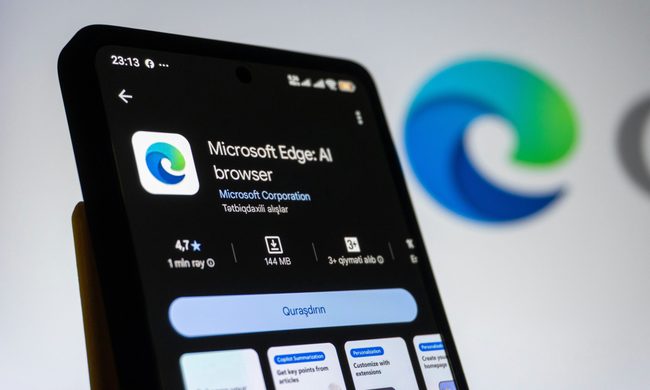
Microsoft Edge on a phone

Chrome is still the default browser for many smartphone users, but Microsoft’s latest Edge update gives them a practical reason to try something else.

Microsoft has announced a major Copilot update for Edge across desktop and mobile. The rollout comes ahead of Google’s Gemini-powered Chrome upgrade for Android, which is expected in June, giving Edge a chance to stand out on phones before Chrome’s next big AI push.

Read more
After flubbing with Siri, Apple plans to host AI agents on the App Store
One problem is about money Apple won't commit to not charging. The other is about AI agents Apple can't figure out how to control. WWDC needs to solve both.
Electronics, Mobile Phone, Phone

Apple is currently facing a Siri problem that has nothing to do with Siri at all. With WWDC 2026 just weeks away, The Information reports the company is actively courting developers to integrate their apps with the new Siri coming in iOS 27. 

The mechanism powering the overhauled Siri, App Intents, is an API that lets Siri execute actions inside third-party apps without you actively opening them, which sounds quite useful, I’d say. However, some of the world’s largest developers are dragging their feet on it, not because it’s tough, but because Apple left the door open on charging for it later.

Read more
EV batteries just need some AI top-up nudge, and they get a big 23% life boost, finds research
Charging fast and lasting long seemed impossible. A new AI trick says otherwise.
EV Charging

EV battery charging technology has always had to find the right balance between charging speed and battery longevity. If the charging speed is too fast, it wears down the battery. If the charging is too slow, nobody is happy. 

Researchers Meng Yuan from Victoria University of Wellington and Changfu Zou from Chalmers University of Technology in Sweden may have cracked this long-standing problem using an AI technique called deep reinforcement learning, and the results are pretty encouraging.

Read more