  1. Home
  2. Emerging Tech
  3. Mobile
  4. Legacy Archives

Stream TV to unveil ‘no glasses’ 3D tech for TVs, mobile and more at CES 2012

Add as a preferred source on Google

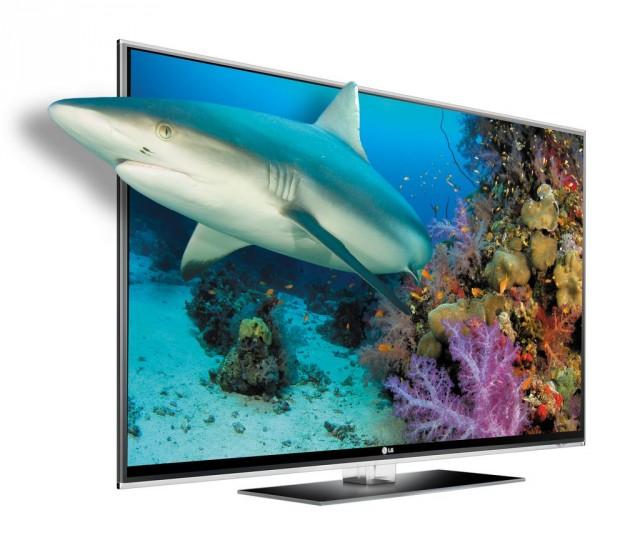
3d tv3D television with no glasses is the phrase being touted by Philadelphia-based Stream TV Networks which is promising to unveil a product during CES 2012, that will show off: “unprecedented autostereoscopic 3D imagery.”

The product has been branded as “Ultra-D,” and to go with the big name is big expectation. Stream TV claims that Ultra-D will make 3D television simple and accessible by converting 2D content into 3D autostereoscopic (without glasses), as well as taking any 3D stereoscopic content and making it watchable in 3D without glasses; though there hasn’t been much explanation as to how it will accomplish this.

Recommended Videos

The aim is to speed up 3D adoption. Rather than waiting for more 3D content to come to consumers, Stream TV wants the content to come to 3D tech. The unlimited, real time conversion supposedly works with all formats such as DVD, PC gaming, Blu-ray, cable and more. The company says there will be products for TVs as well as converter boxes, tablets, laptops, gaming devices, mobile phones and even digital picture frames.

“We are extremely proud of what we have been able to accomplish with our Ultra-D technology. It is capable of creating a significant shift in the way people view media, comparable to the transition from black and white to color TV,” said Stream TV’s CEO Mathu Rajan. “Our ultimate goal was to create a solution that addresses existing concerns impeding the adoption of 3D—consumer aversion to expensive glasses, viewer discomfort, variance in individual vision and preference and the slow creation of 3D content.”

Yes, aside from the “no glasses” tag, Rajan is also pushing the customization of 3D as a prominent feature which will address spatial perception by increasing or decreasing the 3D rendering; no more one-size-fits-all. A revolutionary product comparable to the transition from black and white TV? We’ll have to have to wait until the press unveiling at CES to find out more. The Ultra-D product launch will happen on January 9 at CES 2012.

Jeff Hughes
Former Digital Trends Contributor
I'm a SF Bay Area-based writer/ninja that loves anything geek, tech, comic, social media or gaming-related.
Robots just ran the Beijing half-marathon faster than the world record holder
humanoid robot running a marathon

A humanoid robot just ran a half-marathon faster than the world record holder. It might not seem impressive at first, but considering last year, the fastest robot at Beijing's humanoid robot half-marathon finished in two hours and 40 minutes, this is a huge achievement. 

As reported by the Associated Press, the winning robot at this year's Beijing half-marathon crossed the finish line in 50 minutes and 26 seconds, comfortably beating the human world record of 57 minutes recently set by Jacob Kiplimo. 

Read more
As if the plate wasn’t already full, AI is about to worsen the global e-waste crisis
New report highlights a rising environmental concern
Stack of graphics cards and motherboards in a landfill site e-waste

AI is already changing how the world works, but it’s also quietly making one of our biggest environmental problems even worse. And no, this isn’t about energy consumption this time. It’s about the hardware. Because every smarter AI model comes with a physical cost.

AI is about to supercharge the e-waste problem

Read more
Smart glasses are finding a surprise niche — Korean drama and theater shows
Urban, Night Life, Person

Every year, millions of people follow Korean content without speaking a word of the language. They stream shows with subtitles, read translated lyrics, and find workarounds. But live theater has always been a different problem — you can't pause or rewind it. That's the problem: a Korean startup thinks it's cracked, and Yuroy Wang was one of the first to try it. The 22-year-old Taipei retail worker is a K-pop fan who loves Korean culture but doesn't speak the language. When he went to see "The Second Chance Convenience Store," a touring play based on a Korean novel that was a bestseller in Taiwan, he expected supertitles. What he got instead was a pair of chunky black-framed AI-powered glasses sitting on his nose, translating the dialogue in real time directly on the lenses. "As soon as I found out they were available, I couldn't wait to try them," he said. Wang is part of a growing audience discovering that smart glasses, a category of tech that has struggled to find mainstream purpose for years, might have just found their calling in the most unexpected of places: live Korean theater.

How do the glasses work?

Read more