  1. Home
  2. Emerging Tech
  3. News

The legendary Oak Ridge lab just developed a portable device that detects GPS-spoofing live

Thieves can hijack your GPS and make everything look perfectly normal. Scientists just built the fix.

Add as a preferred source on Google
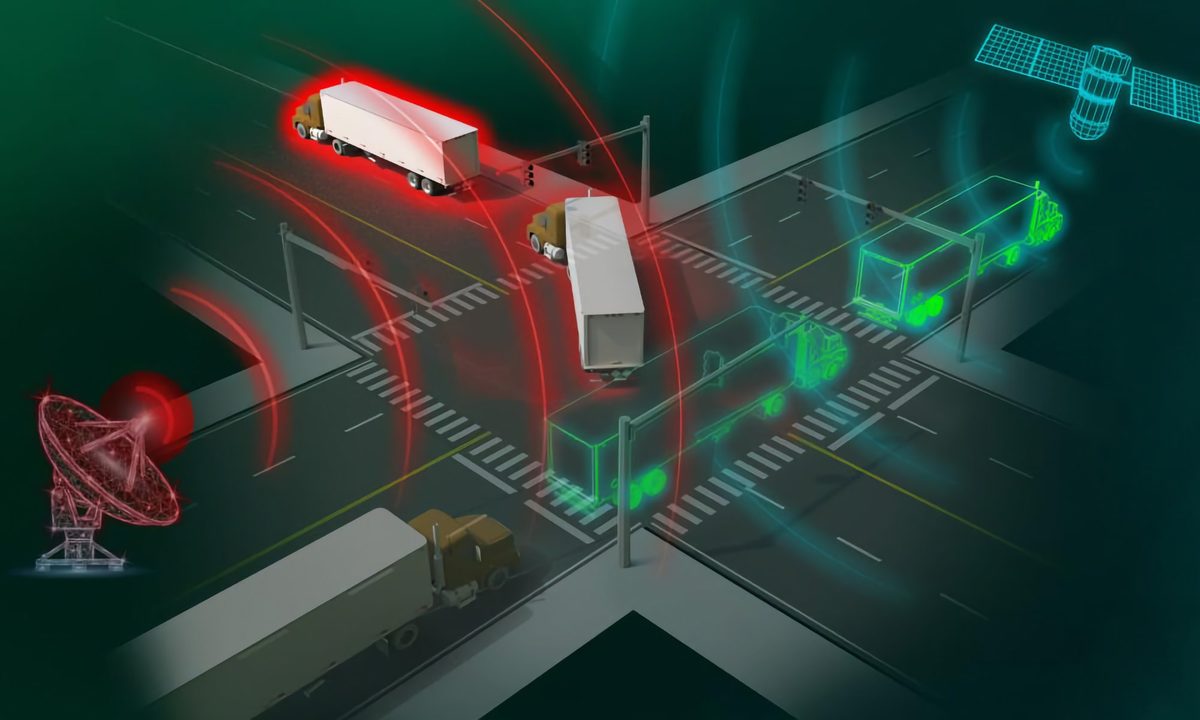
GPS spoofing example image
Oak Ridge National Laboratory

We trust GPS like we trust gravity. It just works and gets us where we want to go. But what if someone could trick it into lying to you, and you’d have absolutely no idea?

Unlike jamming, which floods your GPS with noise and at least lets you know something is wrong, spoofing sends fake signals that look completely legitimate. You might be tracking your car or a shipment and think everything is alright when actually the shipment has been routed to someplace else, with you none being the wiser. 

Recommended Videos

That’s GPS spoofing, and it’s a bigger problem than most people realize. This is what the Department of Energy’s Oak Ridge National Laboratory is trying to solve

How bad can it really get?

GPS spoofing might not seem bad on an individual level, but it’s a legitimate concern for companies and governments alike. International criminal networks are already using spoofing to steal loaded long-haul trucks. 

In one case, thieves spoofed GPS to hijack multiple shipments of specialty tequila from a brand co-founded by Guy Fieri and Sammy Hagar. They pulled it off repeatedly because the GPS tracking showed the truck heading exactly where it was supposed to go. 

Now imagine that same trick applied to a truck carrying radioactive materials or pharmaceuticals.

So, what’s the fix?

Researchers at the Department of Energy’s Oak Ridge National Laboratory have built the world’s first highly sensitive, portable GPS spoofing detector that works in real time, even while moving. What makes it special is that it can detect spoofing even when the fake signals are just as strong as the real ones, something no other known system can do.

“Ours is the best in the world,” said Austin Albright, who led the team. “Trucking needs a solution that works without special conditions or dependence on a trusted reference source.”
The detector works independently, without needing a GPS receiver or knowledge of available signals. The team is now working on making it more affordable for widespread use.

Albright sums up the urgency well. Like a carbon monoxide (it’s colorless and odorless) detector catches an invisible danger before it’s too late, this device does the same for GPS, before the cargo, or worse, disappears.


Rachit Agarwal
Rachit is a seasoned tech journalist with over seven years of experience covering the consumer technology landscape.
AI-fueled health policies are depriving the needy in one of the world’s poorest countries
A flawed AI system is driving up medical costs for Kenya’s poorest families
Two kids in Kenya

Kenya was promising wider access to more affordable healthcare. But a new investigation has revealed that its algorithm-driven system is making life harder for the people it was supposed to help most. According to reporting by The Guardian, Africa Uncensored, and Lighthouse Reports, Kenya's new Social Health Authority system is using a predictive machine-learning algorithm to estimate how much people should pay for public health insurance.

The system was first launched back in October 2024 as part of President William Ruto’s promise to expand healthcare access to Kenya's large informal workforce.

Read more
I use AI everyday — here are 3 reasons why I paid for Claude over ChatGPT
Claude login screen shown on iPhone

I use AI every single day, so I needed something I could actually depend on, not just occasionally dip into. At some point, it became clear that if I wanted that kind of consistency, I’d have to pay for it. The real confusion started when I had to choose. It came down to ChatGPT and Claude. I’ve used ChatGPT for a long time, and it already understands how I think and what I need, which made it a comfortable choice. But the more I looked into what Claude could do, the harder that decision became. It wasn’t an obvious pick anymore.

I went back and forth for a while, weighing familiarity against capability. In the end, I decided to go with Claude. And in hindsight, I don’t regret that choice one bit.

Read more
The Fitbit-for-your-brain era could be closer than we think
Your next wellness wearable might track your brain
HyperX collaborates with Neurable for a new non-invasive brain-scanning headset

Consumer tech has spent the last decade turning the body into a stream of metrics. Heart rate, sleep stages, blood oxygen, recovery, stress, and readiness have all been packaged into dashboards that deliver a clearer picture of your "health". Now the next frontier may be a little more intimate by moving up to the brain—not literally, thankfully.

Neurable, a Boston company building noninvasive brain-computer interface tech, is moving to a licensing model, which means its EEG-based system could soon show up in a much wider range of consumer gadgets beyond the company’s own headphones. Other brands may be able to build the tech into familiar products such as gaming headsets, smart glasses, hats, helmets, and other hearables. One of the first products expected to feature it is a gaming headset developed in collaboration with HyperX.

Read more