  1. Home
  2. Emerging Tech
  3. News

Attention, space gardeners: Simulated Martian soil now on sale for $20 a kilo

Add as a preferred source on Google
University of Central Florida

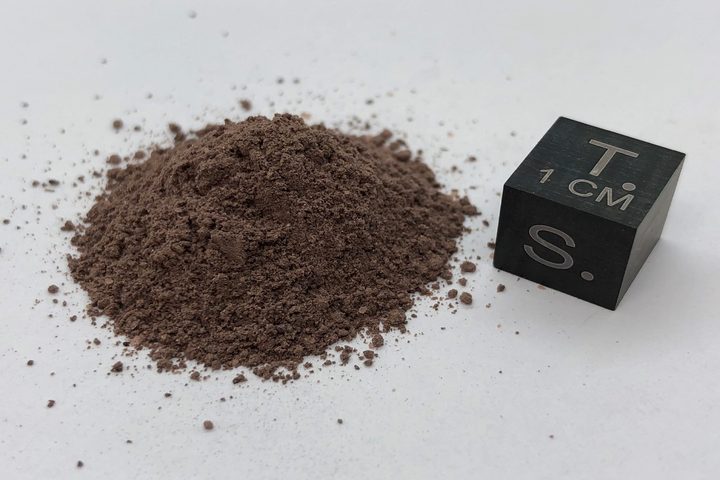
Have you got $20, plus postage, burning a hole in your pocket? If so, you may be interested in an offer from astrophysicists at the University of Central Florida: Martian soil that’s on sale for research purposes, priced at 20 bucks per kilogram. Okay, so it’s not actually soil taken from the Red Planet, but rather dirt created using the first scientific, standardized method to make a simulant material which will act in the same way as the real thing.

“We’re creating simulated, or artificial, soils that mimic those found on Mars, the Moon, and asteroids,” Kevin Cannon, a post-doctoral researcher who helped develop the material, told Digital Trends. “They’re made up of different minerals that occur naturally on Earth, but mixed up in unique proportions that are very unlike terrestrial soils.”

Recommended Videos

The University of Central Florida formula soil is based on the chemical signature of materials gathered on Mars by the Curiosity rover, which landed on Mars in 2012. UCF Physics Professor Dan Britt, who also worked on this project, built two calibration targets which were part of the Curiosity rover.

Making Mars Dirt

But why exactly is a renowned university drumming up a few extra bucks by selling dirt? As it turns out, it’s less about pulling in money than something a whole lot more important: standardization. At present, a number of institutions, organizations and startups are researching topics like how best to grow food on Mars. However, they’re not using standardized simulants, which makes it difficult to compare experimental results in any meaningful way. By creating its more accurate space soil simulant, the UCF researchers hope to advance research in a more practical, useful manner.

“We work mostly with planetary scientists and engineers at universities, NASA centers, and private space companies,” Cannon continued. “There are all kinds of applications, including testing robotics, extracting resources like water from planetary materials, and learning to grow plants on future missions to Mars or the moon.”

It turns out that making Martian soil isn’t exactly a niche industry, either. To date, the university has gotten requests from more than 50 different groups, totaling more than half a metric ton of simulant. “We’re planning on having the capacity to make between hundreds of kilos and several tons per year,” Cannon said.

A paper describing the work is available to read online.

Luke Dormehl
I'm a UK-based tech writer covering Cool Tech at Digital Trends. I've also written for Fast Company, Wired, the Guardian…
Alexa for Shopping is a chatty new AI assistant with some cool tricks to make you spend at Amazon
Alexa now remembers your plans and turns them into shopping lists
Logo of Amazon’s new Alexa+ assistant.

After years of using Alexa to answer questions, control smart homes, play music, and handle everyday tasks, Amazon has found a more obvious job for it. Alexa is becoming your personal shopper, meant to help you find what you need faster and get it into your cart with fewer second thoughts.

Amazon is rolling out Alexa for Shopping to U.S. customers on the Amazon Shopping app, Amazon.com, and Echo Show devices. It combines the existing Rufus shopping chatbot with Alexa+ personalization, enabling the assistant to use product knowledge, shopping history, browsing behavior, past purchases, preferences, and Alexa conversations to improve recommendations. The assistant is free for signed-in Amazon customers and does not require Prime, an Echo device, or the Alexa app.

Read more
This see-through smart ring translates sign language and almost works like magic
asl translator smart ring on hand

For people who are hard of hearing, sign language isn't just a communication tool; it's their primary language. The problem is that sign language is not taught to people with regular hearing, thus creating a barrier that's hard to bridge. Now, a team of researchers in South Korea may have just found a surprisingly elegant solution to this age-old problem. 

According to a new study published in Science Advances, the system, called WRSLT (wirelessly connected, ring-type sign language translator), can recognize and translate both American Sign Language and International Sign Language words with around 88% accuracy. And yes, it works in real time.

Read more
The Android Show 2026: Gemini Intelligence, Googlebook, Android 17 updates, and everything else
Gemini Intelligence, Googlebooks, Android 17, and redesigned Android Auto. Google didn't hold back at its pre-I/O show, and the main event is still a week away.
The Android Show 2026

Every year, Google front-loads its Android announcements in a separate pre-show the week before its annual I/O conference. This year, the company did exactly that, and The Android Show: I/O Edition was anything but a warmup act. 

Google showed up well prepared, with plenty of software and a major hardware announcement that took everyone by surprise. One by one, let's talk about everything, including a deeply integrated AI overhaul, a long-overdue security upgrade, an Android Auto makeover that feels like it was designed for 2026, and a brand-new laptop category. 

Read more