
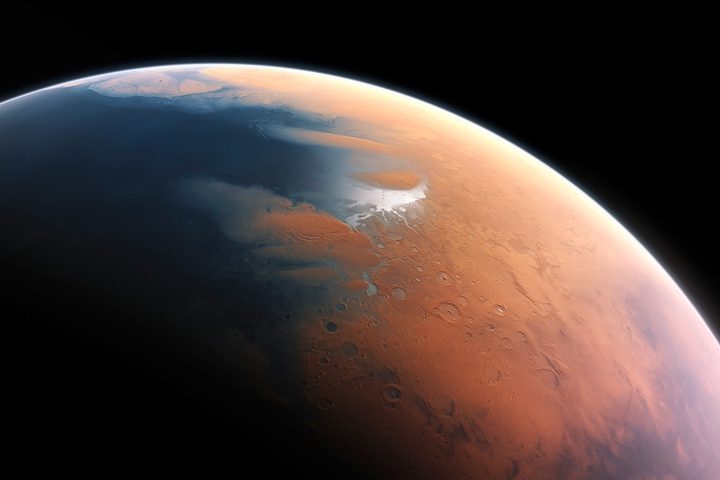
Drop everything and take a seat. We humans may have a new home. Or at the very least, a prerequisite for a new home.
Scientists have discovered what is believed to be a lake located underneath the south polar ice cap of Mars, measuring about 12.5 miles across. While researchers previously found signs that water once flowed across the planet’s surface, this is the first time that a persistent, existing body of water has been discovered.
The lake, located a mile beneath the planet’s surface, is likely still in a liquid form only because it is extremely salty and under a lot of pressure. But still, water is water, and this finding has the capacity to fundamentally change what we know about the Red Planet and, of course, whether or not we will one day be able to inhabit it.
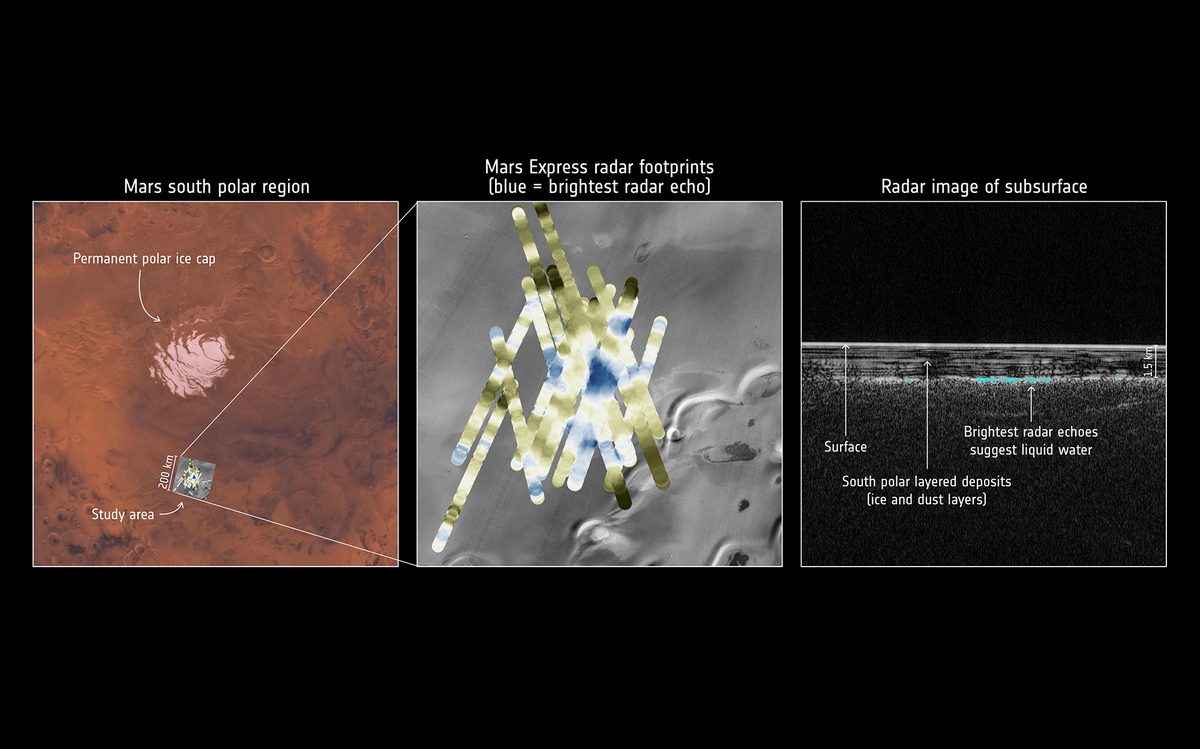
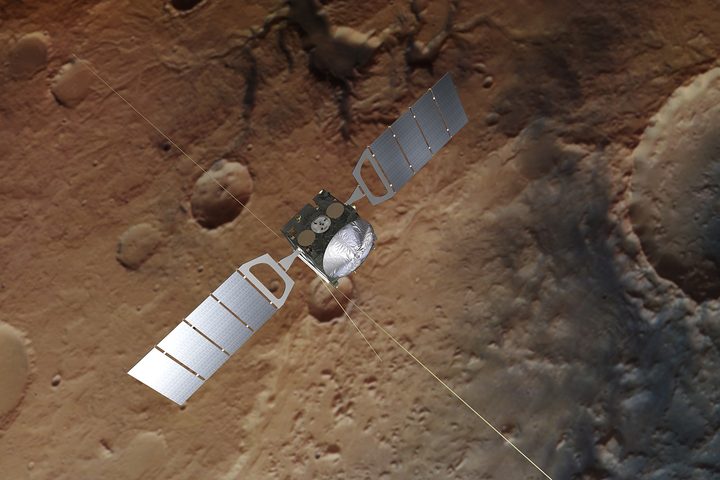
Roberto Orosei at the Istituto Nazionale di Astrofisica in Bologna led the research team who drew the groundbreaking conclusions, and the paper detailing their work was today published in the journal Science. The team leveraged data from the Mars Advanced Radar for Subsurface and Ionosphere Sounding, or MARSIS, which is located on the European Space Agency’s Mars Express Orbiter. The scientists examined data between 2012 and 2015 in the area near the planet’s south pole. While this region “does not exhibit any peculiar characteristics,” as the paper notes, it has long been thought that the polar ice caps may contain liquid deposits.
And now, this hypothesis has been proven correct.
“It’s probably not a very large lake,” Orosei told the BBC. While it’s unclear how deep the lake is, the team estimates a minimum of three feet. “This really qualifies this as a body of water. A lake, not some kind of meltwater filling some space between rock and ice, as happens in certain glaciers on Earth,” Orosei added.
To be fair, this doesn’t actually imply anything concerning the existence of life on Mars quite yet. As Dr. Manish Patel from the Open University told the BBC, “We have long since known that the surface of Mars is inhospitable to life as we know it, so the search for life on Mars is now in the subsurface. This is where we get sufficient protection from harmful radiation, and the pressure and temperature rise to more favorable levels. Most importantly, this allows liquid water, essential for life.”
Ultimately, while scientists are not any closer to finding actual life on Mars, it does give them a sense of where to look. As Patel explained, “It is like a treasure map – except in this case, there will be lots of ‘X’s marking the spots.”
Scientists are careful to warn, however, that there still is not definitive evidence that this body of water is, in fact, liquid water.
“Getting there and acquiring the final evidence that this is indeed a lake will not be an easy task,” Orosei admitted. “It will require flying a robot there which is capable of drilling through 1.5km of ice. This will certainly require some technological developments that at the moment are not available.”
But here’s hoping that they will be soon.


