
Unless you’ve been living in a technological black hole for the last few years, you’ve probably heard of Elon Musk, and read stories about his ambitious ideas and startups. Between sexy electric cars, “hyperloop” transit systems, reusable rockets, and Mars colonies; there’s certainly no shortage of things to look forward to from the guy. In this article, we’ll explore one of his more intriguing pursuits, dubbed “Starlink,” and the implications it has for both the internet and the world at large. Here’s a breakdown of what SpaceX Starlink is, and why you should get pumped about it.
Humble beginnings

In 2015, Musk began probing the FCC about testing a “global broadband” system, and in September of 2017 filed applications for a satellite based broadband network called (you guessed it) Starlink, with the objective of eventually building a low-cost, satellite based broadband network capable of delivering internet access to the entire globe.
Sounds pretty straightforward — but what makes Starlink special compared to conventional satellite internet? Well, to put it plainly: while satellite internet has been around for ages, it has generally suffered from high latency, unreliable connections, and spotty service areas. With Starlink, SpaceX intends to put a “constellation” of satellites in low earth orbit, thereby providing high-speed, cable-like internet to every corner of the planet. The project is expected to cost around $10 billion in total.
The road ahead
To give you a sense of just how formidable a challenge this is, here are some numbers: There are currently only 1,459 satellites currently in orbit around earth, along with 2,600 inactive. SpaceX will need to launch 4,425 satellites into orbit to achieve its desired coverage. That’s going to require a lot of rockets, a lot of fuel, and a lot of money.

The project is ambitious to say the least, but the payoff will presumably be immense. Imagine having blazing fast internet available all the time, no matter if you’re were in the middle of a crowded city or deep in the Amazonian jungle. Slated for as soon as 2024, this theoretical blanket of broadband isn’t that far off. If this project comes to fruition, it would make low latency internet available to locations that previously had either poor service, or none at all. The impact such a network might have on Earth remains to be seen, but Elon Musk is already thinking beyond our pale blue dot. In the long-term, SpaceX intends to develop a similar system to deploy on Mars for future colonization attempts, and will use the Starlink project to lay the foundation for those efforts.
The first successful launch

On February 22, 2018, SpaceX and Starlink took a huge step: The project successfully launched the first two Starlink test satellites (named Tintin A and Tintin B) from the Vandenberg Air Force base in California.
This is still a very early development: The demo satellites are designed primarily to prove that the Starlink concept is viable. There’s no sign they will be part of the official Starlink grid once it starts to go up. However, the milestone is still a particularly important one that shows the project is ongoing and in good health.
Following the successful launch of the very first satellites, Starlink got some more good news: The FCC approved the official request for the project to provide broadband services. That means that if Starlink gets enough satellites in the sky to offer a commercial internet connection, they are free to offer it in the U.S. (and charge for it). Of course, a few satellites in a long way from the expected 800 or so, but FCC approval is still an important green light for the project…although the organization did admit some trepidation concerning the high number of planned Starlink satellite, tying approval to a robust requirement for managing orbital debris. In other words, Starlink will have to clean up all its messes.
A little competition…with Facebook?
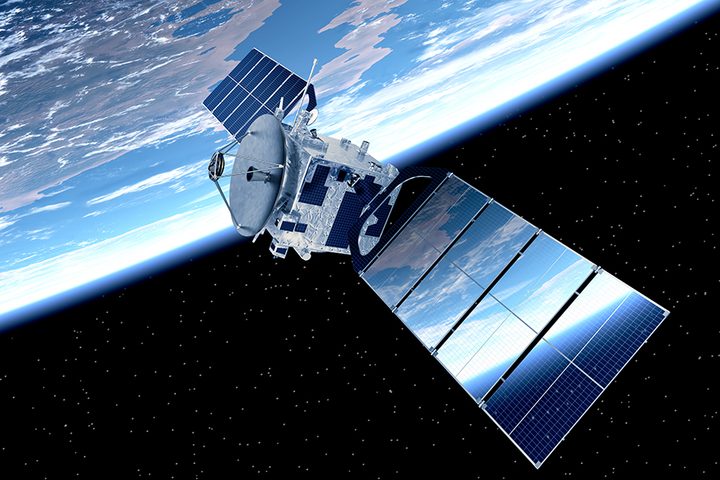
Google may be messing around with balloons, but Facebook is investing in a project similar to Starlink, which could provide some interesting competition up in orbital space. We don’t know everything about the project yet, but we do know that Facebook is developing a satellite in house named “Athena” specifically to offer internet service to underdeveloped areas.
Athena is expected to launch on a trial run next year, after which things will get very interesting for Starlink. If the trial run is a success, we suspect Facebook will start working on a whole mesh of satellites in the Starlink model, pitting the two projects directly against each other.


