
With Crisis Core: Final Fantasy VII Reunion’s release date fast approaching, you may be debating what platform to buy it on. It’ll launch on everything from PC to Nintendo Switch, and there’s a fair reason to get it on each. A PS5 or Xbox Series X copy will provide a smooth, reliable experience, while a PC copy will allow you to run it at ultra-high frame rates if you so desire.
After playing through the action-RPG’s first three chapters, I’ve come bearing an initial recommendation: prioritize portability over power. Though it may look like a flashy remake, Crisis Core is still very much the PlayStation Portable game that first launched in 2007. As such, devices like the Steam Deck and Nintendo Switch are a much better match for its design philosophies. Its pick-up-and-put-down nature simply holds up better when you’re taking it on the go, not grinding in front of a TV.
Keep it portable
If you didn’t know that Crisis Core was originally a PSP exclusive, that fact would become immediately clear when starting its remake. Despite its modern touches meant to give it parity with Final Fantasy VII Remake, Square Enix isn’t going for a high-concept reimagining here; it’s simply applying a new coat of paint. The basic structure of the original remains almost entirely untouched, with tweaks just making combat feel smoother and UI look cleaner.
There’s an immediately noticeable contrast in something that looks like a console game from 2022, yet feels like a handheld title created for comparatively modest hardware in 2007. Take its mission structure, for instance. Its main quests are more bite-sized in nature, sending Zack Fair into compact maps with only a few side routes to explore. They usually feature some linear traversal, a handful of fairly static conversations to move the plot along, and a big boss fight against an enemy like Ifrit to round things out. Despite the fact that it looks closer to Final Fantasy VII Remake thanks to some asset sharing, it’s all a bit more straightforward. I can feel how the original was originally built to be played in chunks as opposed to a few long sit-downs.
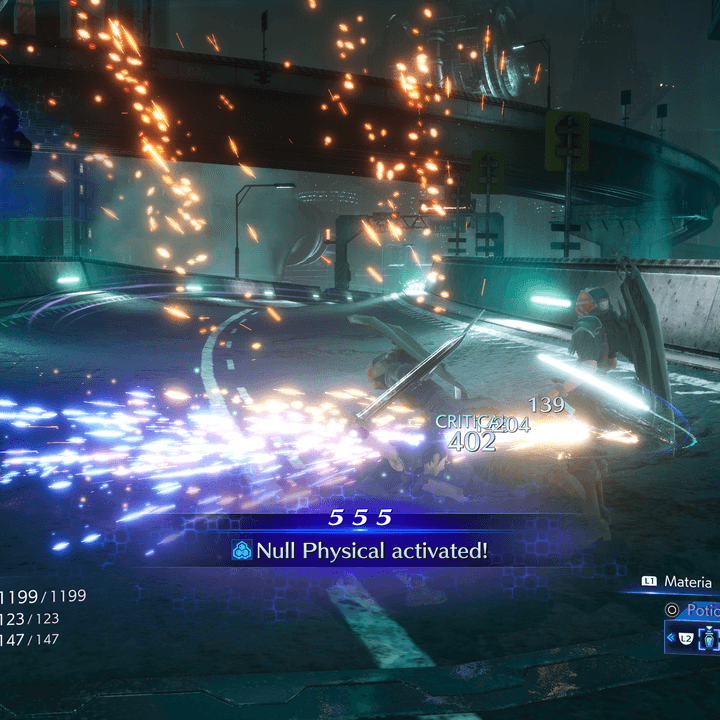
I especially notice that in the game’s side-missions. Like the original, Crisis Core features hundreds of optional quests that are all somewhat similar in nature. Each one lasts a few minutes at most and tasks Zack with slashing a few enemies on a handful of small maps surrounded by red barriers. If you try to sit down at a PC and bang out 20 of these at once, you might come down with a case of cabin fever. The repetitive nature of them (I’ve fought bosses like Bahamut multiple times already with no noticeable variation) can make them feel like a total chore in the wrong context.
They immediately click, however, when playing the game on a handheld device. Since I traveled for Thanksgiving last week, I decided to download Crisis Core on my Steam Deck and transfer my PC save data over. Rather than spending long chunks of time with it, I would pick it up while casually watching TV with my parents, kicking out a few side missions during commercials or a football game’s halftime break. That flow felt much more natural, which makes sense considering that’s exactly the kind of experience portable games like the original were designed around.
It’s not like you really need the power boost a console like PS5 will provide here based on my time with it so far. While it’s a cleaner-looking game, it’s still building off of the stiffer nature of the original. Characters largely have a limited set of animations that are reused — Zack sure loves to squat — and environments are sparsely detailed. The main technical upgrade comes in the form of summon animations, which give the game a little more pizzazz, but it’s easy to see how Square Enix was able to get the remake running on everything down to the Nintendo Switch (I’ve yet to test it on that console, but I can’t imagine it struggling there while running at a reduced 30 frames per second).

Whichever platform you decide to buy it on, I’d recommend you calibrate your expectations before diving in. Crisis Core still very much has the soul of a portable game, one that works better when you can pick away at its quick missions rather than grind it out like a long RPG. I’m looking forward to digging into its next chapters at my own pace while lazily lounging on my couch.
Crisis Core: Final Fantasy VII Reunion launches on December 13 for Xbox One, Xbox Series X/S, PS4, PS5, PC, and Nintendo Switch.


