
When I spoke to the developers behind Ghostwire: Tokyo earlier this year, they insisted that it wasn’t a horror game. Despite coming from Tango Gameworks, a studio run by Resident Evil creator Shinji Mikami, the team was eager to distance it from the genre it’s best known for. When I played the game’s first chapter, I was convinced they were lying. The eerie opening had me jumping out of my seat with sudden scary visuals and terrifying creatures.
Then I heard a dog barking. My brain went into panic mode, assuming I was about to run into some grotesque dog enemy just like I would in Resident Evil. Instead, I found a totally normal Shiba Inu wandering the game’s empty streets. As I approached it, I got the one button prompt everyone wants to see: Pet. Then I noticed a second option, asking if I wanted to read the dog’s mind by feeding it. I pulled out a can of dog food and the pup happily thanked me via subtitles before digging up some buried money for me.
After playing the first two chapters of Ghostwire: Tokyo, I’m loving the way the game balances the freaky and the whimsical. It’s made me laugh just as much as it’s made me jump so far.
Disappearing act
Ghostwire: Tokyo has an eerie opening. I watched as everyone in Tokyo suddenly vanished, leaving the streets disconcertingly empty. The atmosphere is immediately striking. The game is a first-person adventure game where players traverse the foggy city, and it’s an unsettling world to explore. Environments are littered with clothing as outfits dropped off of people when they disappeared.
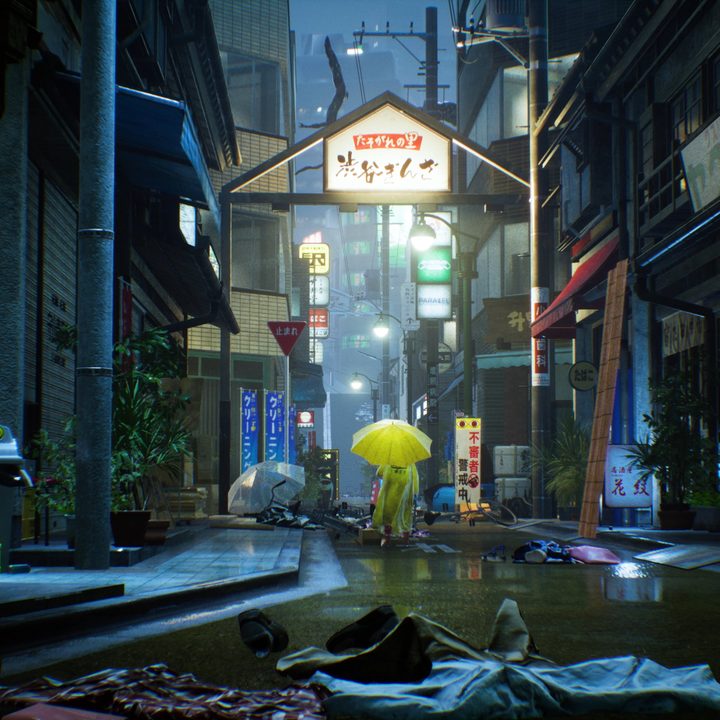
Even creepier is the game’s use of music. You’d think that a game about an empty city would have no sound, but the opposite is true. Clashing music blares from buildings as you explore, which makes perfect sense. No one had time to turn their speakers off as they were vanishing into the ether. It really feels like wandering through the aftermath of a sudden extinction event and seeing what humanity was doing in its last moments, which are now preserved in amber.
What really ups the fear factor is the game’s psychological terror. The most basic enemies, for example, are lanky, faceless spirits wielding umbrellas. They move slowly, making it easy to shoot them down from afar with magic attacks (the game is essentially a shooter without the guns), but they’re a haunting sight. Sneak up behind one for a stealth kill and you’ll see its pale face momentarily scream, which is scarier than actually letting it attack you.

The game also features spooky visual tricks that give it a whole Poltergeist vibe. In the opening chapter, I’m walking through a hospital as fluorescent lights flicker. At the end of one hallway, a swarm of metal folding chairs suddenly flies in out of nowhere, forming a path-blocking wall. When talking to a spirit out in the world, I notice the shutters on a building in the background slamming up and down.
While I have experienced a few jump scares early on, I get why the developers don’t want to paint it as a horror game. It’s unsettling, but it’s not trying to scare players. Battles can be won with relative ease and there’s no resource scarcity, so it’s not the tense experience you’d expect from a typical horror game. Instead, it’s a master class in atmosphere, turning Tokyo into a city that truly feels possessed.
Yōkai watch
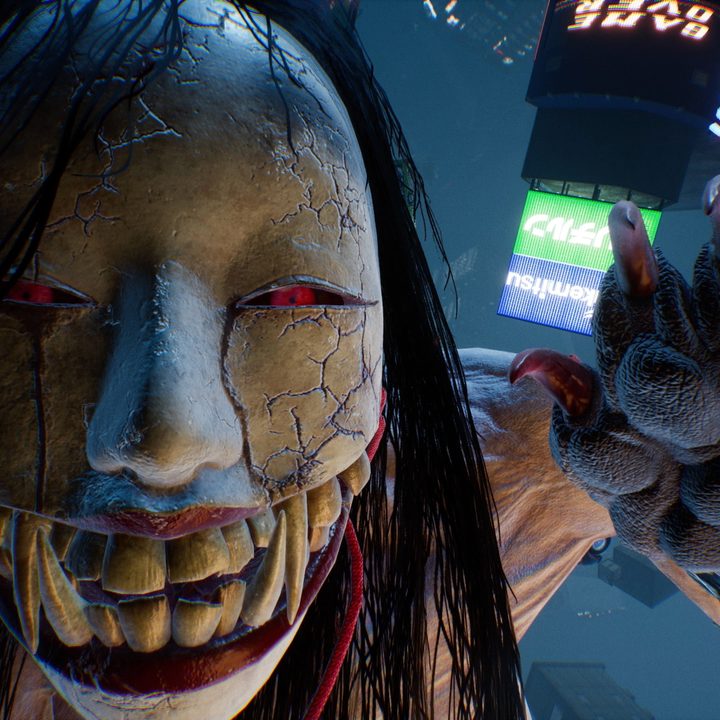
Not all spirits are evil — in fact, some of them are downright zany. Ghostwire: Tokyo is heavily rooted in Japanese folklore and features several yōkai. Some are practical, like flying tengu that players can grapple onto to reach high buildings. Others are hilarious, like magical cats who run convenience stores and are always eager to shake some cash out of me.
Yōkai play a big role in subquests based on my time so far. I find one spirit crying about how their umbrella ran away. Sure enough, I walk forward and see an umbrella creature hopping around a construction site. In another mission, I need to trick a kappa into eating a cucumber so I can capture it. I’ve loved seeing how the game adapts various bits of folklore into creative quests and characters so far, and it’s what I’m most eager to experience more of in the full game.
The absolute best, and funniest, thing I’ve come across so far is tanuki. During chapter2, I meet a raccoon spirit who complains that all of his friends have scattered. I was tasked with tracking them down in a standard “find the hidden objects” running quest, but it’s much more delightful than your average game. I need to look for random inanimate objects that have a raccoon tail on them and are scattered around the world to find the hidden tanuki.
So far, Ghostwire: Tokyo is filled with hidden charm like that, making it more whimsical than you might expect from its dark trailers. The unsettling psychological horror is still there (one subquest set in a hoarder’s fly-infested house had my stomach churning), but Tango Gameworks seems to be having a blast reimaging Tokyo as a city overrun by eccentric spirits who just want to sell you some dango. Stock up on dog food, because you’re going to feed a whole lot of dogs.
Ghostwire: Tokyo launches on March 25 for PlayStation 5 and PC. A visual novel prelude is available for free right now.


