


“For those of you on the fence about a 3DS, the larger display of the 3DS XL should be enough to convince you to take the plunge.”
- Much bigger 3D display
- Larger touchscreen is easier to use
- Better, more ergonomic design
- Adding a right thumb stick would have made sense
- $30 more than original 3DS
- Software library is still weak
“Why you can trust Digital Trends – We have a 20-year history of testing, reviewing, and rating products, services and apps to help you make a sound buying decision. Find out more about how we test and score products.“
For the second time since its North American release on March 27, the Nintendo 3DS will undergo a significant change. The first of these changes occurred just four months after its release and saw the price drop from $250 to $170, a move that attracted a wave of new adopters, but also brought heavy criticism from those who paid full price.
This time though, the change is not only welcome, it’s a smart move. Early adopters are still going to be on the outside looking in, but the new Nintendo 3DS XL not only increases the appeal of Nintendo’s system, it puts it in a better position to combat the PlayStation Vita. It only makes one obvious and significant change, but it is a big one. Pun intended.
The Nintendo 3DS XL has a screen 90 percent bigger than the original model, now spanning nearly 4.9 inches diagonally. The internal workings remain identical, so refer to our Nintendo 3DS review for a more detailed look at the pros and cons of the hardware. While existing 3DS owners may stare longingly at the super-sized screen on the XL, they won’t be missing out on any technological advances beyond that.
Bigger is better
Let’s get right to the heart of the redesign: the new screen. Measuring 4.18 inches wide and 2.5 inches high, the display is 90 percent larger than the original 3DS screen. It’s nearly identical in size to the PlayStation Vita’s display, but uses LCD rather than OLED technology, unfortunately. The 800 x 240 pixel resolution is essentially halved when viewing images in 3D, allotting 400 vertical lines to each eye. Though this is the same resolution as the original 3DS, it looks great on the larger screen.
The lower screen has also been boosted in size to 3.34 inches wide and 2.5 inches high. The resolution remains only 320 x 240, but it doesn’t pose an issue here, as most games will use it for lesser functions that aren’t as graphically demanding.

The real question then becomes: Is it worth the money (the 3DS XL is $199, $30 more than the 3DS now) to buy a larger screen? The answer is yes. Sort of.
You can’t undervalue the change in screen size here. There difference isn’t quite night and day, but maybe more analogous to night and dusk. If you compare the two Nintendo devices and play both models, it’s almost impossible to go back to the smaller unit. It feels like you are losing something important. The 3D effect on the larger screen is also a bit easier to see, since you don’t have to worry as much about moving it to the side and losing the image as you did before.
But for anyone who already owns a 3DS and hasn’t been exposed to the XL, you really aren’t missing anything by not buying the new version. The bigger screen is nicer, no denying that, but it won’t significantly alter the gaming experience. Stick with what you are used to and save the money.
If you don’t own either and are comparing the two models, the $30 price increase is worth it.
While the larger 3D display is obviously what people are focusing on, we found the increase to the bottom 2D screen more useful. The larger upper screen made the gaming experience a bit easier on our eyes, but the larger lower screen is helpful when you need to look at things quickly. Games like Mario Kart, where you need to take your eyes off the upper screen to look at the map below, do actually benefit a bit from the increased screen. Touchscreen functions are also easier on the larger pad. The larger select, home, and start buttons are also nice.
What is old is new again
While the rest of the hardware is identical, the 3DS XL does seem to offer a slight improvement in the Wi-Fi signal strength. This could be a result of the new casing, or perhaps an internal reconfiguration, but it is a slight bit better. The camera, on the other hand, is the same as before and remains somewhat disappointing.
One of the biggest complaints about the original 3DS was the weak battery. Without the 3D on, you could possibly eek out five hours of battery life, maybe a bit more. The same is mostly true of the 3DS XL. With the 3D on expect about three to four hours (the brightness and the volume also make a difference). If you are use an app like Netflix that is connects to the Internet, then you can plan on four or five hours. A 3DS game with the 3D off will run around five hours, maybe more, while a DS game can last for about eight hours.
A New Hope (for your hands)
To accommodate the larger displays, the 3DS XL is, of course, physically larger. But Nintendo did a bit more than just stretch the original design out to accommodate; it went ahead and resigned it slightly.
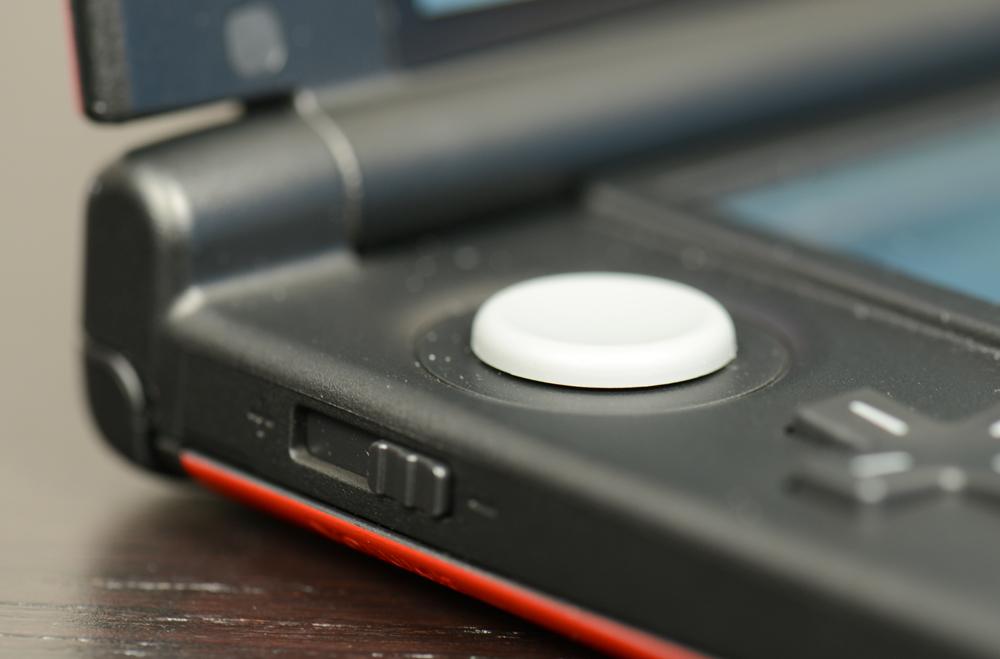
Though bulkier, the 3DS XL actually feels sturdier – even if it’s just an illusion created by the plastic on the top that is reminiscent of brushed metal. The more beneficial change is in the corners, which are now more rounded. This minor tweak makes a difference after a few hours, and it feels more ergonomic. The bigger size also makes it easier to grip. It does result in far more accidental hits of the shoulder buttons, but that is a minor gripe.
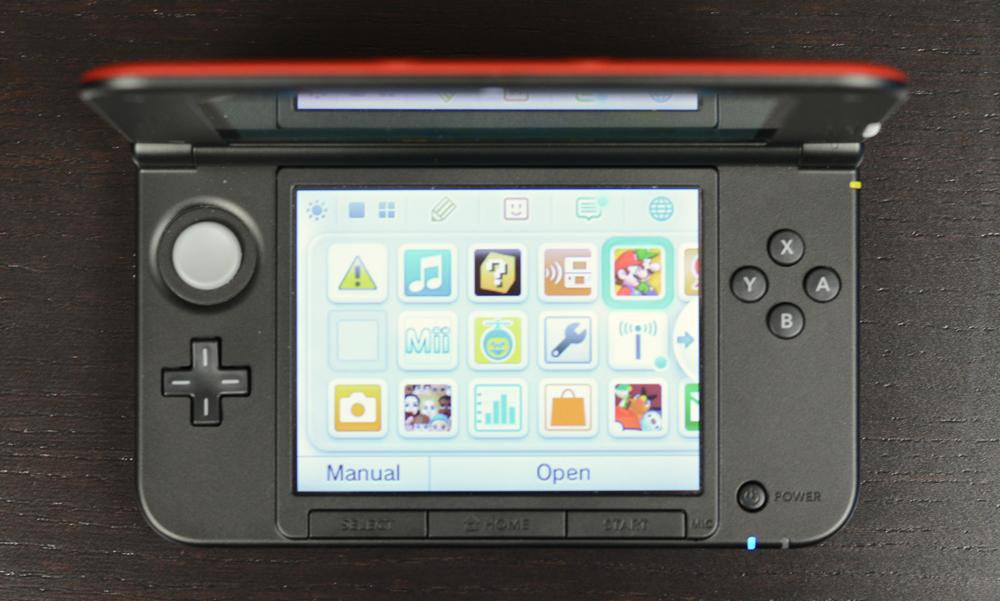
The biggest issue with the design of the 3DS XL isn’t what Nintendo added, but what’s still missing: namely a right thumb stick. Granted, that may have opened a can of worms. Fundamentally changing the hardware would require a major redesign, which in turn would raise the price, so it isn’t surprising to see Nintendo stick with its guns on this. Still, there is an additional peripheral that you can purchase for the 3DS that adds a right thumb stick. It could have been done, but wasn’t, which is a shame.
Regardless, the case design is an improvement over the boxier original.
The software
When the original Nintendo 3DS shipped, several of the promised apps, like the e-store and Web browser, weren’t yet available. Nintendo promised their arrival, and they did eventually show up, but at launch there wasn’t much internal software. The game selection was also initially lacking, but that has almost become the norm with any new hardware launch.
The current selection of apps and games have improved the package significantly. Having Netflix is no longer a benefit to mobile hardware, it is expected. It was far more of a negative to not have it and other programs like it, than it was a boon to have them. That is no longer an issue thankfully, but the game software is.
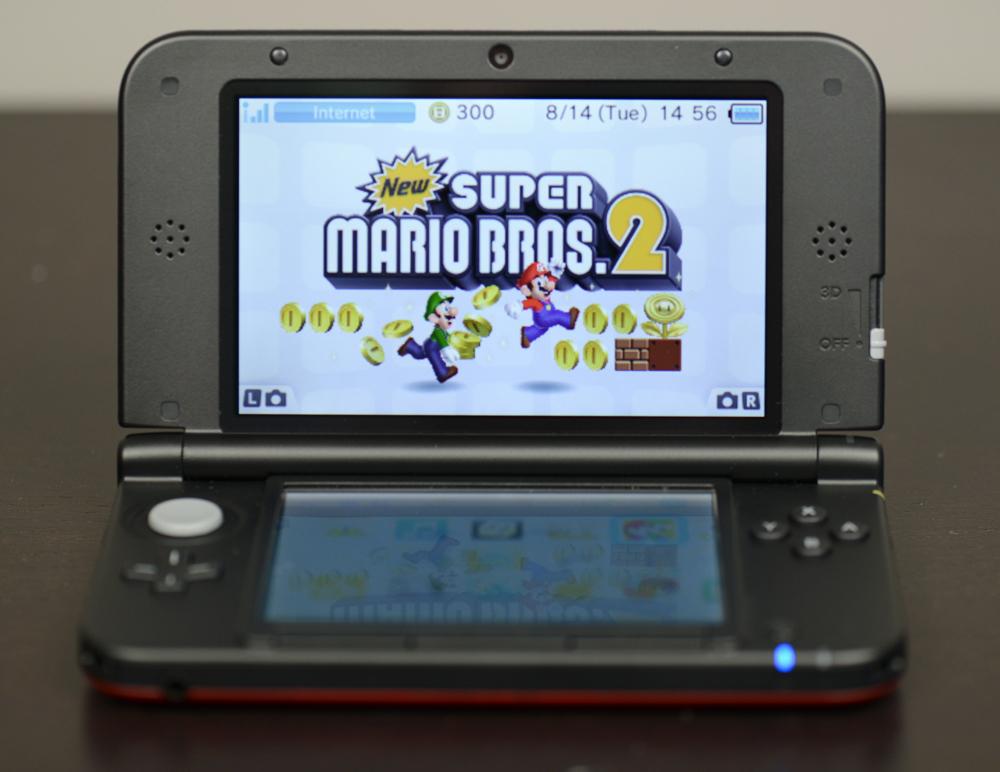
If you are a longtime Nintendo fan, then you can make do with the vast selection of classic Nintendo games available through the online store, as well as the enormous library of DS titles you can purchase and play. Compared to the 3DS XL’s direct rival, the Vita, this is a huge advantage. Sony has announced that it will be releasing the majority of the PS One classics for the Vita, but there was an air of vagueness about that, and no definitive timetable – or possible pricing structure. When Sony releases those games, the playing field will be evened out a bit, but for now Nintendo has the clear upper hand. New releases, however, are a different story.
Despite a few big releases recently, the software library is still anemic. Mario can’t keep the 3DS library afloat on his own. There is still no mention of a Zelda or Metroid, and the third-party developers have not been as quick to embrace the 3DS as they were the DS.
This is something that could turn around easily enough, but until it does, it remains an asterisk next to the system. There are plenty of titles, but after well over a year there are still only a few marquis games. There are several exclusives in development, but only a few have release windows. This is an issue that will continue to hound Nintendo for at least the rest of the year, and it is something that should cause Nintendo serious concern.
Conclusion
The 3DS XL is an improvement to the original Nintendo 3DS without question. The larger screen is much easier on your eyes, and the lower screen’s increased girth makes things like touch commands easier. The ergonomic redesign is also much easier on your hands, even with the overall increase in mass.
The two problems this new model introduces are that it costs more (a relative problem, since it’s still $50 less than the Vita), and that it doesn’t add a right thumb stick. That will scare off a lot of third-party developers and limit the games that can be ported to the system. The technology exists, and Nintendo already recognized that when it released the Circle Pad Pro.
Putting aside the lack of the right thumb stick, the 3DS XL is a good piece of hardware and the larger screen is an improvement. The software library is still AWOL, though. There are a few quality games out there worth playing, but by and large the library needs to improve, and quickly. But, for those of you on the fence about a 3DS, the larger display of the 3DS XL should be enough to convince you to take the plunge.
Highs
- Much bigger 3D display
- Larger touchscreen is easier to use
- Better, more ergonomic design
Lows
- Adding a right thumb stick would have made sense
- $30 more than original 3DS
- Software library is still weak


