
Right now, Nintendo is in a wholly unique position. The Nintendo Switch has continued to sell ridiculously well since its 2017 release. Even with lower-performing specs, a limited (but growing) third-party title base, and issues with the hardware itself (looking at you, Joy-Con drift), players are still flocking to the system. Nintendo is winning with an underperforming console.
The only place to go from here is up then. Nintendo can make a new console that performs better, loads games faster, and displays them at a higher resolution. It would be the long-rumored, long-awaited Switch Pro that so many Switch owners have said they would purchase.
Except that’s not what we’re getting. At least not right now.
On Tuesday, July 6, Nintendo announced the Switch OLED, a hardware revision of the console that sadly doesn’t do all that much. The main difference is really in the model’s name, “OLED.” The Switch OLED sports an OLED screen, which is admittedly a sizable upgrade from the base Switch’s LCD monitor. However, at $350, you would have a hard time selling someone a console they already have by saying it has a better screen. The Switch OLED is underwhelming — but that’s because it’s not for me.
The Switch OLED isn’t built for people that read spec sheets. Nintendo didn’t make it for people that wonder if the Nvidia custom Tegra processor present in the OLED is the same as the one in the base Switch. And Nintendo certainly didn’t make it for people that really care about display resolutions, battery life, or any of the other specs that haven’t changed between the OLED and base Switch.
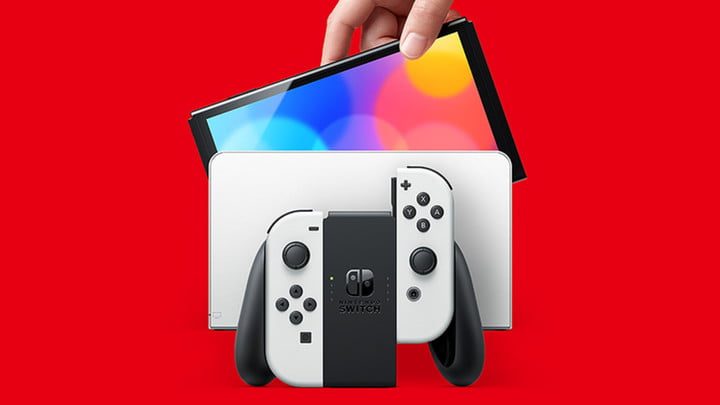
Rather, the Switch OLED, set to be released on October 8, is for families, children, and people that don’t already have a Switch. The console, on the outside, looks better than the original Switch in that it’s bigger. This holiday season, when a father, mother, or grandparent walks into a GameStop or goes online to buy a Switch for a kid, they’ll gravitate towards the one that came out in 2021, not 2017.
It’s also worth noting that the Switch OLED is a pretty great upgrade for portable players. With a larger screen and OLED display, which will assumedly be brighter than the base Switch’s LCD monitor, playing on the go will be better than ever. That is, as long as you don’t mind that the Switch OLED will be just a tad bit heavier.
If you’re going to rerelease a console to move some more product, it makes sense that the changes wouldn’t be sweeping. You just need to slap a new name on the box that stands out, and in this case, Nintendo went with something technical. “OLED” is a fancy anagram, something that, by itself, makes the console seem more impressive.
I’m personally disappointed by the thing altogether, but I’m not alone. The announcement was immediately met with a wave of criticism on social media. VGC editor Andy Robinson has said that, without hardware upgrades, the new Switch model is “incredibly disappointing.” Esports player Leffen has also brought up the OLED’s lack of performance upgrades, saying the console “is a lot worse than expected.”
But the Switch OLED isn’t supposed to impress games journalists or informed consumers that look through spec sheets, and it’s certainly not going to impress any esports players. It’s underwhelming because, if you’re like me, you know what Nintendo can do with the Switch. You’re just waiting for the company to actually do it.
Instead, the Switch OLED is for the average consumer, someone that doesn’t consume games media. It’s par for Nintendo’s course of not catering to “gamers,” and instead targeting, well, just about everyone else.


