
Pokémon Brilliant Diamond and Shining Pearl, the long-awaited remakes of Diamond and Pearl, came out last week and were … just fine. Our review noted that they’re serviceable and approachable, but stick close to the established Pokémon formula.
By the time reviews were out, the games had already been mercilessly picked apart by their adult fan base, with widespread leaks and criticisms prompting discussion about how good the games could have been. Some fans complained about always-on experience share and potential postgame problems, but I can almost guarantee that not one child who got Brilliant Diamond or Shining Pearl on launch day was thinking about them.
As the Pokémon franchise has matured, it’s developed a huge audience split. On one side are kids, whom the series has always been aimed toward. Pokémon games are bright, colorful, family-friendly romps through fantasy worlds where children can tame their own monsters and become the very best like no one ever was. On the other side are adult fans who started playing when they were kids and have grown up with the franchise. As they got older and played a wider variety of games, these fans’ expectations for Pokémon went through the roof, but the series hasn’t always matured with them.
Modern main-series Pokémon games are trying to court both of these audiences, but it’s impossible to please everyone at once: They want fundamentally different things out of the experience, and it’s causing a rift across the Pokémon fandom.
Childlike wonder
Pokémon will always have a fan base of kids, particularly since people who grew up with the series themselves are now introducing it to their own children. Its status as one of the biggest and most recognizable franchises in the world means that it’s also one of the safest bets for new games and media entries. I have no doubt that Pokémon will continue well beyond our lifetimes.
Because of its well-cemented audience, newer games in the franchise don’t necessarily have to take risks. This applies even more to remakes, which are intended to be a refresh of an old game rather than a brand-new experience. The Pokémon Company knew it could play things extremely safe with Brilliant Diamond and Shining Pearl because kids simply wouldn’t know the difference. Many young fans who are playing the remakes today may not have been born when Diamond and Pearl came out in 2006. (Boy, am I getting old.)
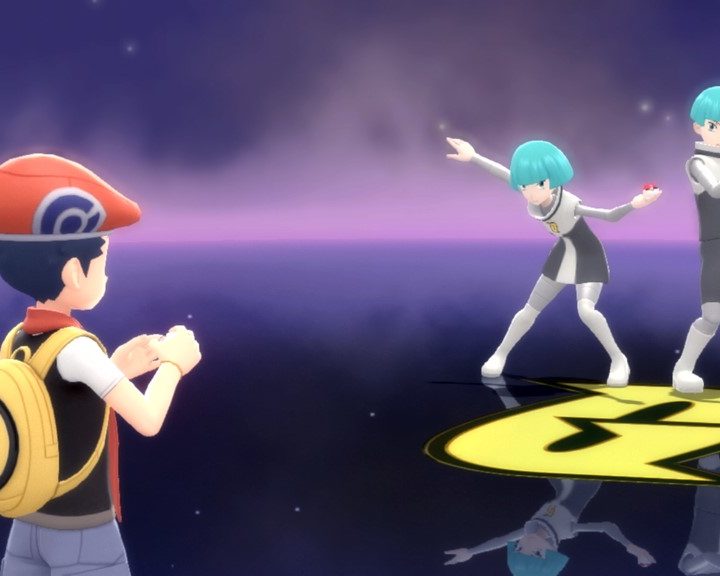
What children want out of their Pokémon experience is what today’s adult fans wanted when they were kids: Colorful monsters, fun battles that aren’t too hard, and a genuine sense of exploration and discovery. Later Pokémon games have struggled with the latter, which is part of the reason why the old games feel so special, more so for kids who are experiencing them for the first time. Unlike adult fans who may enjoy spending endless hours grinding in other RPGs, kids don’t like to stop their adventure to eke out a few levels or face the same boss over and over, only to be smacked down each time.
Modern Pokémon games are friendly, approachable, and streamlined, making it easy for kids to keep moving forward and granting them endless resources if they struggle. These features are designed to reduce frustration — which, ironically, is what they’re causing in adults.
Adult logic
Adults are a slightly more difficult target audience to aim for. Older Pokémon fans are famously opinionated and critical, simply because they love the series and they know what it can be at its very best. Though there are exceptions, on the whole, dedicated adult fans want much more difficult gameplay out of their experience. They want to be challenged, to strategize, and to build a team that really is the very best. In these players’ eyes, one of the most egregious issues with Brilliant Diamond and Shining Pearl is that they don’t allow players to turn off the EXP Share, which makes the game much less of a grind. The games are almost too easy, allowing anyone who’s played Pokémon before to breeze through them pretty quickly.

Adult fans also want a longer gameplay experience, a stronger postgame, and more fleshed-out communication options. All of these features foster competition and strategy. Longer gameplay means a wider variety of trainers to face, a better postgame means more of what are commonly known as each game’s hardest challenges, and more options for communication enable players to battle with other real people, who are always infinitely better than the game’s A.I. (that’s why self-imposed challenges like Nuzlocke runs are so popular). Players of this age are often familiar with other consoles’ and platforms’ voice chat and text chat abilities, which are missing from most Nintendo titles in the name of kid-friendliness and frequently feel like a damper on what is supposed to be a fundamentally collaborative game.
Dual Pikachus
The differences between what kids and adults want out of Pokémon are incredibly difficult to reconcile. At the core, kids want a Pokémon game. Adults want a Pokémon world, one that puts few restrictions on which Pokémon they can catch and what areas they can explore, and one that lives up to the wonder and magic they experienced from the series when they themselves were young. Nintendo has obviously been listening to fan feedback and has put suggestions into practice, but if it tries to make games that attempt to please both sides, it won’t please anyone.

There are appealing aspects of both groups: Kids are going to buy Pokémon games no matter what. If a Pokémon game proves to be too hard and strategic for their age group, they’ll simply put it down and move on to something else, which doesn’t matter business-wise — their parents’ money has already been spent. They’re not as nitpicky as adults, and they can’t scream at a company on Twitter if they don’t get what they want. If kids don’t enjoy the games, though, there’s less of a chance they’ll buy the trading cards, and watch the anime, and ask for the action figures for Christmas, and participate in the franchise as a whole. Nintendo and Game Freak know that they have to cater to this audience.
Many hardcore adult fans will also continue to buy the games no matter what. Older fans have more disposable income for merchandise and can get more “invested” in the series, potentially pouring out hundreds or thousands of dollars on exclusive merchandise and high-level collaborations. In the past, the developers have been less willing to appease this audience, but if they continue down that path, there remains the possibility of serious dissent and fracture within the community.
There is a Pokémon reckoning coming. As obnoxious as some adult Pokémon fans can be, they do have a point: When is it time to put their foot down and demand that Nintendo and Game Freak incorporate more of their desired features into the games? This demand doesn’t necessarily mean that there will no longer be Pokémon games for kids. By the time we reach Black and White remakes, perhaps Game Freak (or ILCA, who developed the latest remakes) will include a difficulty slider that allows players to choose how hard they want their experience to be. Perhaps Pokémon Legends: Arceus will mark a junction on the Pokémon track, one where future “open-world” Pokémon titles are aimed at adult fans who want a world out of their games rather than just a path.
There’s no telling what the future holds for Pikachu and friends, but one thing is certain: The way it stands now, Pokémon will never please all of its fans at once.


