“Why you can trust Digital Trends – We have a 20-year history of testing, reviewing, and rating products, services and apps to help you make a sound buying decision. Find out more about how we test and score products.“
For the second time in two years, DOOM developer Id Software is blending ’90s shooter ideas with modern trends to revive one of its classic franchises.
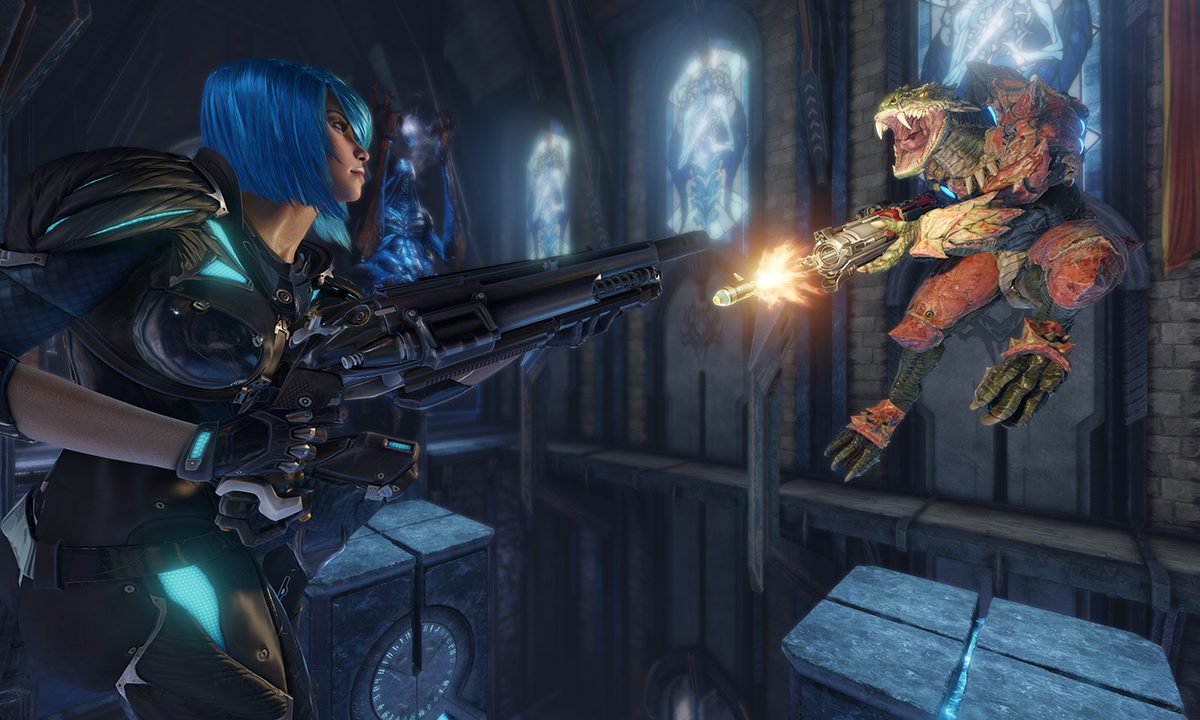
After id Software’s extremely successful revival of Doom last year, the developer has moved to revitalize its classic multiplayer shooter series, Quake. Announced at E3 2016, Quake Champions is the first new game in the main Quake franchise since 2005. Like Doom, Champions adds new flourishes to the series core elements, namely super-fast shooting, to make shooter you’d recognize as something made in 2017.
Aside from its free-to-play monetization scheme, the most obvious of these flourishes in right there in the name, “Champions.” While the game doesn’t rely on the team-building systems of “hero shooters” like Overwatch, picking an avatar affects how you blast other players, and how they’ll be bringing to the fight to you.
While the addition of champions are novel, they do not define Quake Champions the way you might expect. Digging into the world of shooters past, the game evokes that late 1990s arena feel with a fast pace, lots of weapons to snag, health packs to pick up and more. Adding specific, variable characters to that old-school formula helps Quake carve its own niche among multiplayer shooters.
Rocket jumps and rail guns snipes
The name Quake carries a lot of expectations, and, first and foremost, Champions evokes the distinct feel of the franchise. The feeling stems from the shooter conventions that Quake helped to make popular: fast-paced movement, levels designed with lots of verticality, crazy weapons, and health pick-ups. It’s an experience that rewards fast thinking, great reflexes, and a miniscule eye for aim.
Everything moves fast, with players basically sprinting around the arena to come blast away at each other.
The strategy in Quake Champions, like its ancestors, is in arena control. You start, generally, with a weak machine gun, and spend most of the match seeking out better stuff: Rockets, shotguns, rail guns, nail guns and lightning guns round out the arsenal. Each is good for different situations, so winning every round — whether it’s team deathmatch, a free-for-all encounter or the one-on-one “duels” mode — means finding the gun that will catch opponents at a disadvantage, and playing to the strengths of what you have handy when the fight comes to you.
Like Doom, Quake Champions is getting back to that old late-’90s shooter feel. Everything moves fast, with players basically sprinting around the arena to come blast away at each other. Elements like jump pads make it possible to traverse up and down to different levels, and knowing the lay of the land becomes essential as players wise up to where the best sniping site lines or rocket ambush points are. It’s been nearly two decades since I last picked up a Quake game, but immediately it threw me back into those multiplayer sessions with friends played with Dreamcast controllers or at LAN parties.
We are the champions
While Champions feels like classic Quake most of the time, the game’s characters show its modern side. The series has always provided the option to choose from a variety of potential gunners, but they’ve never felt this distinct before. The Champion you take into battle changes your strategies and approaches, and you can switch between them — as well as different potential loadouts — any time you’re killed in a match.

It may sound just like Overwatch but the game doesn’t feel that way. While Champions gives you the option to change characters and adjust team composition, the nuances that set them apart don’t seem quite so pronounced. Where Overwatch packs characters that are built specifically around elements like speed, defense, or range, Quake’s champions are more well-rounded. Plus, Quake’s champions aren’t tied to specific weapons: Every character is as good with a sniper rifle as they are with a shotgun.
The major difference between champions, the one that makes them interesting, is a unique special ability. These skills, which are tied to a cooldown, add a dynamic tool you can build a strategy around.
For example, Ranger, the starting character in the closed beta, has the ability to throw a grenade-like orb in the middle of battle. That orb sits wherever you throw it until an enemy happens by, at which point it explodes. But if you’d rather not use Ranger’s orb as a bomb, you can hit the special ability button again and teleport to the spot where it landed.
Quake’s champions aren’t tied to specific weapons: Every character is as good with a sniper rifle as they are with a shotgun.
The characters also have general, physical distinctions. Bigger characters, like the hulking Scalebearer, are tougher to bring down, but slower in general. Smaller champs, such as roller-derby-inspired Slash are speedier but get dropped quicker. It’s a pretty standard trade-off, and one that’s easy to comprehend. But the longer you play Quake, and with more characters, the more you come to understand the nuances of how each character handles.
For now, the differences among the champions offers enough adds some variation to Quake Champions, even if the game moves so fast that those differences don’t always make a huge difference. It’s a precarious balancing act and we’ll have to see how well Quake manages it — but, at least in the closed beta, the reliance on characters adds some cool new ideas to its mostly nostalgic formula.
Highs
- Fast gameplay recalls the original Quake
- Champion abilities are fun
- Interesting three-player “duel” mode
Lows
- Dull music and sound direction
- Champions could be more distinctive