

QD-OLED monitors are known for delivering deep blacks by turning off individual pixels completely. In real-world use, though, that advantage doesn’t always hold up. Ambient light reflecting off the screen can wash out those blacks, but Samsung now has a solution.
How is Samsung fixing reflections and washed-out blacks on QD-OLED monitors?
Samsung’s solution for the issue is a new low-reflection film called QuantumBlack. The company says it reduces light reflectance by around 20 percent compared to the company’s previous film, helping preserve contrast and black levels even in brightly-lit rooms.
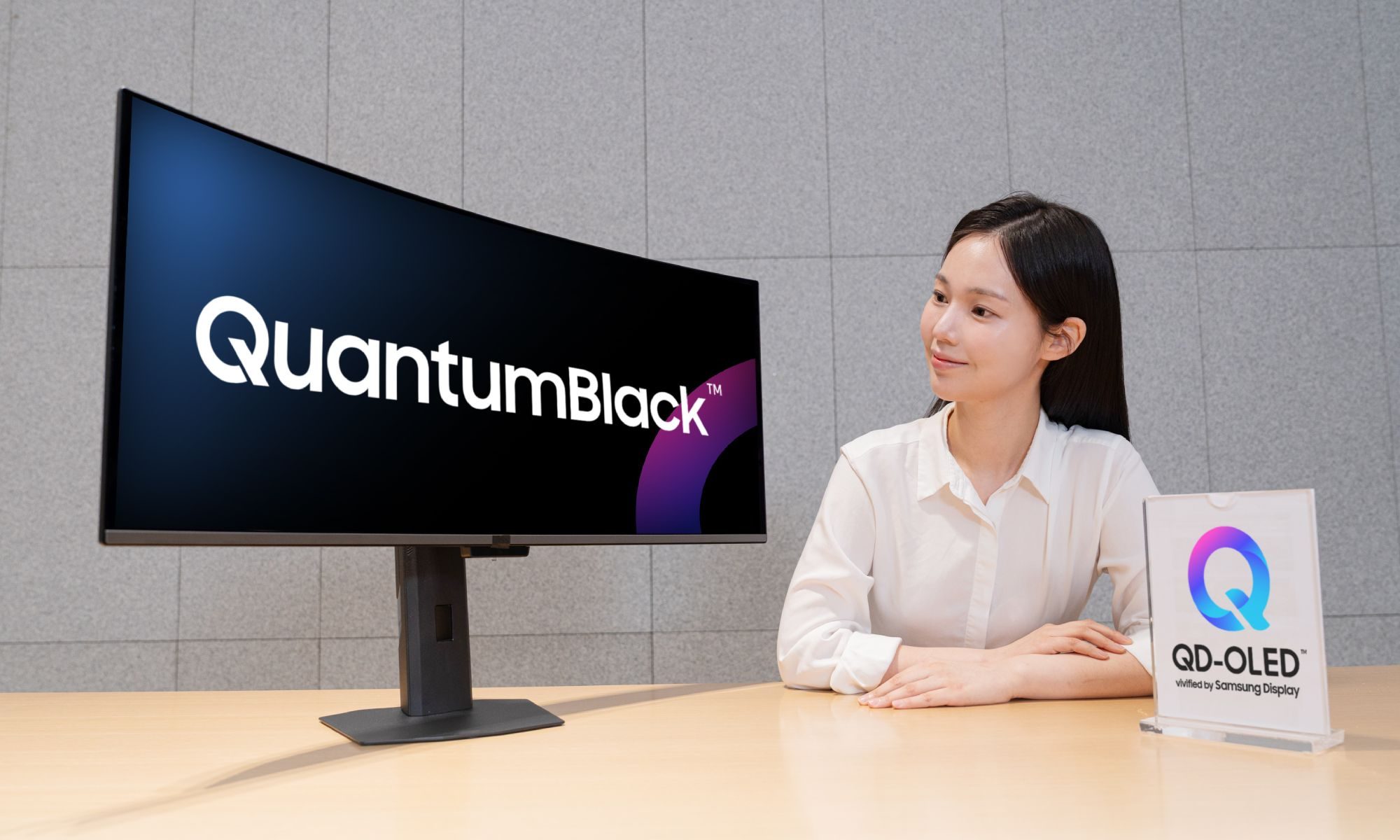
The film also enhances panel durability, with Samsung claiming that it improves surface hardness from 2H to 3H, making panels more resistant to scratches. In short, the QuantumBlack film addresses both visual consistency and long-term durability, two areas where QD-OLED monitors have had minor but noticeable drawbacks.
Talking about the development, Brad Jung, VP and Head of the Large Display Marketing team at Samsung Display, said, “QuantumBlack technology is a premium solution that further strengthens QD-OLED’s inherent advantage of delivering deep and perfect black, providing a differentiated level of immersion while also improving panel durability. We will continue to introduce innovative technologies to create new user experiences across gaming and content environments.”
Which brands are adopting the QuantumBlack film?
Since Samsung Display supplies QD-OLED panels to a wide range of manufacturers, the QuantumBlack film won’t be exclusive to the company’s monitors. Brands like Asus, Gigabyte, and MSI have already announced gaming monitors that use the new film, even if they brand it differently.
Asus calls it “Black Shield” on its ROG Swift OLED PG32UCDM Gen3 monitor, while MSI markets it as “Dark Armor” on the MPG 341CQR QD-OLED X36. Gigabyte has also adopted the film across models like the MO34WQC36 and MO32U24, where it goes by “Obsidian Shield”.
Different names aside, the underlying tech remains the same, meaning you can expect similar improvements to reflections and perceived black levels regardless of the brand you choose.


