Microsoft’s Xbox Series X is coming in 2020 and, as you’ve likely heard, it looks like a minifridge. Its strange vertical design left gamers scratching their heads, but there’s a method behind the madness. The new Xbox looks different because its hardware is far more powerful than anything we’ve seen before.
Analysis by Eurogamer’s Digital Foundry suggests the Xbox Series X will pack between 9 and 12 teraflops of raw computing power, as much as double the Xbox One X’s six teraflops. Some of that gain will come from newer, more modern hardware, but that alone won’t be enough. Digital Foundry believes Microsoft will have to increase total system power draw beyond 300 watts. More power means more heat, and a larger box is one way to handle that heat.

That’s good news for graphical fidelity. Yet there may be a significant, troubling consequence: An increase in gaming’s contribution to climate change. Gamers have enjoyed the luxury of ignoring this issue so far, but a significant increase in power draw from next-gen console hardware could increase gaming’s carbon footprint when exactly the opposite is needed.
Is it really a problem?
You might not think your console contributes much to climate change. Game consoles don’t produce any obvious pollution, and while some end up in dumps, many are resold. Power consumption isn’t frequently discussed by console manufacturers and consoles don’t carry the bright yellow Energy Guide labels you’ll find on an oven, refrigerator, or dryer.
A recent study in The Computer Games Journal found that U.S. gamers are responsible for as much carbon dioxide as 5 million cars annually. While that’s obviously less than the transportation industry, it puts gaming ahead of all the nation’s freezers, cooking devices, washers, or dishwashers. The study also found consoles contributed 66% of gaming’s total carbon output, easily outpacing PC desktops, PC laptops, and media streaming devices.
So, yes. Gaming’s carbon footprint is a problem. It’s not causing the climate crisis alone, but it contributes. A game console’s power must come from somewhere. In most parts of the world, that somewhere is a power plant that emits greenhouse gases.
300 is a lot of watts
There’s a direct correlation between power consumption and carbon footprint. That’s why the Xbox Series X is worrying.
Assuming Digital Foundry’s guess is right, the Xbox Series X will consume significantly more power than even the Xbox One X, which is already the most power-hungry console.
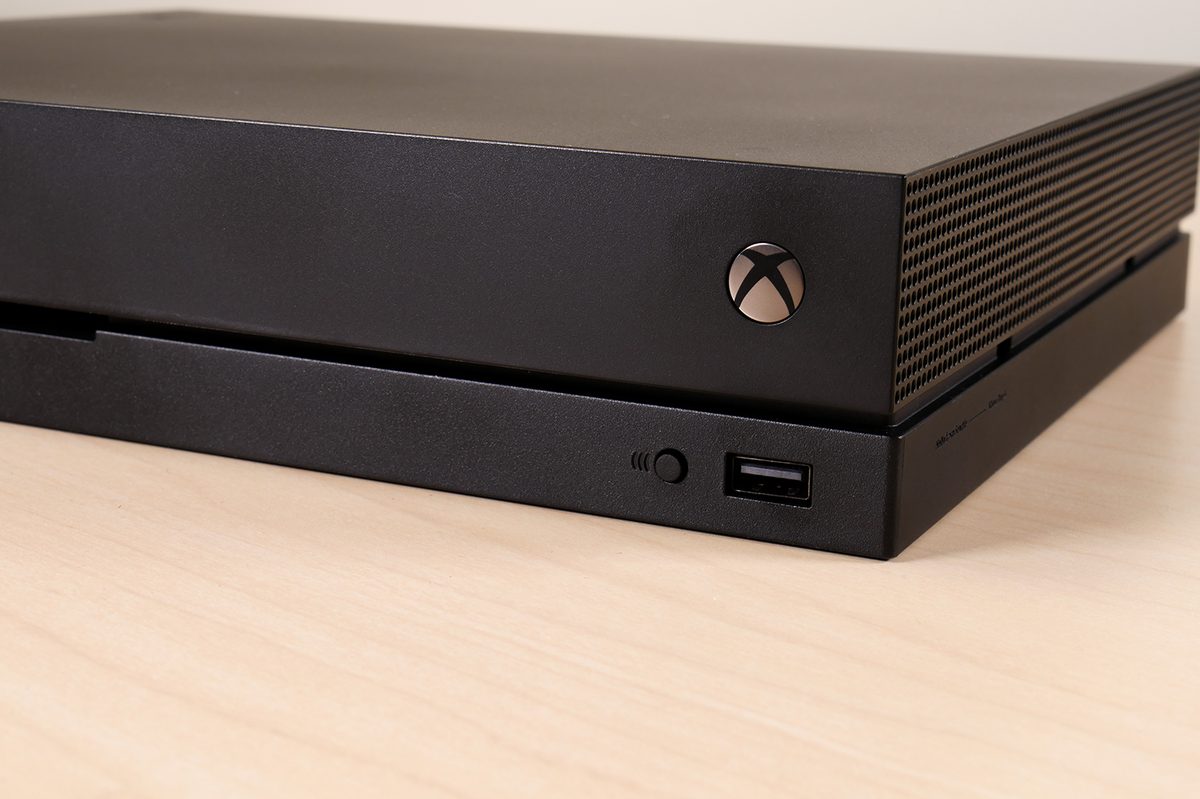
How much more is hard to say for sure, since it depends on both final Series X hardware and how you measure. A conservative estimate would pit that predicted 300-watt consumption against the 245-watt rated maximum of the Xbox One X, which puts the increase at 22%. A less charitable comparison would place that 300-watt estimate against the typical actual power consumption of the Xbox One X in real-world use, which is about 180-watt under heavy load. In that case, the Series X increases consumption by 67%.
Both results are disappointing. Climate change can only be stopped by a significant decrease in carbon output, and that’s not going to happen if everyday items like game consoles go in the wrong direction. The 300-watt figure will put the Xbox Series X ahead of many refrigerators, and it’d be a new high-water mark for console power consumption.
Power from your pockets
If you’re not worried about what the Xbox Series X means for climate change, you might be worried about what it means for your wallet.
Early consoles didn’t use enough power to put a dent in your power bill. The PlayStation 2, original Xbox, and GameCube all consumed between 30 and 50 watts while playing games. At 12 cents per kilowatt, the average price for power in the United States, you’d have to play 6 hours every day to add more than a dollar to your monthly power bill.
Play that much on an Xbox Series X, however, and you’ll pay $6.48 a month. That adds up to almost 80 dollars a year.
Six hours is a lot of playing time, of course, but cut that down to a more sensible 2 hours each day and you’ll still pay about $26 every year. That’s an extra $156 dollars added to the console’s price if you use it for six years.
Causing a crisis for no good reason?
Consoles like the Xbox Series X may well push the carbon footprint of gaming in the wrong direction. And here’s the worst part. Games may not be “better.”
Will they look better? Sure. But that doesn’t mean they’ll be more fun. Many of the world’s most popular games aren’t all that demanding or, at least, don’t need to be. League of Legends. Destiny 2. Overwatch. All these are sharp as a tack at 4K and 60FPS, but they’re just as fun at 1080p with a few details dialed back.
Sony and Microsoft make lofty promises about their environmental commitments. If they’re truly concerned about the climate crisis, however, fighting over 8K resolution and 120 FPS is the wrong move. Gaming needs real innovation, and that innovation is possible without making the climate crisis worse.