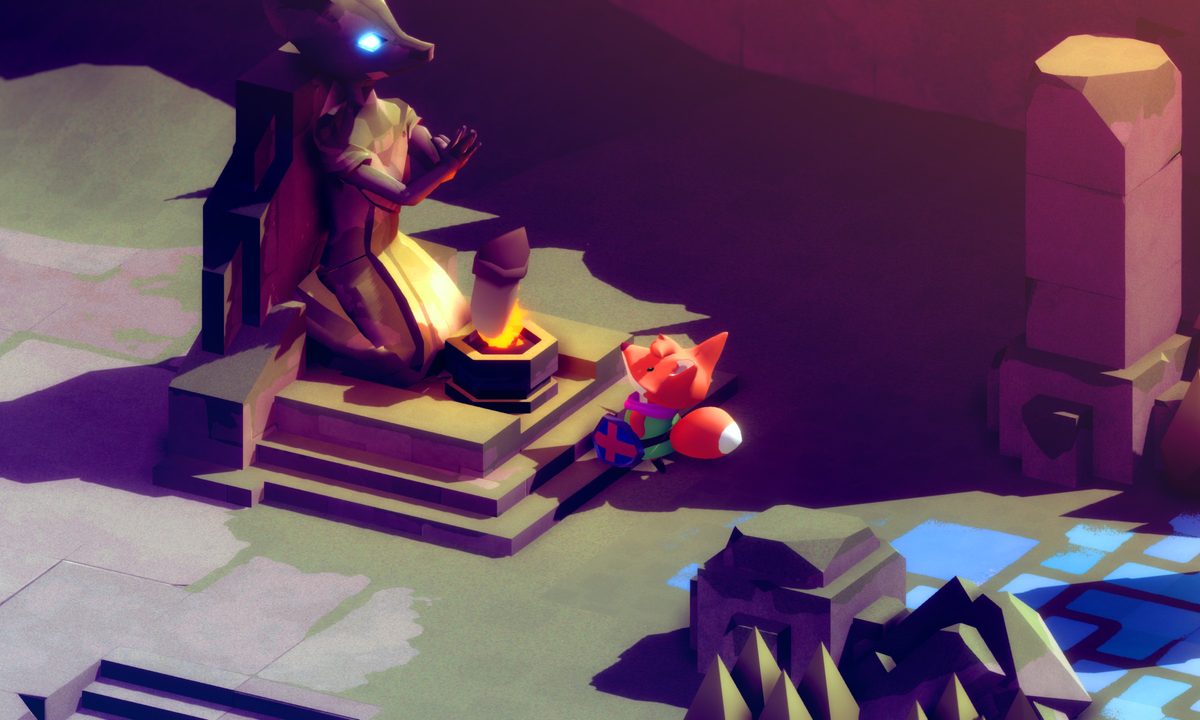
“Tunic offers players an adventure full of mystery, but delivers a purposefully obtuse world that's impossible to sort out.”
- Gorgeous visuals
- Exciting boss fights
- Stale combat
- Too community-oriented
- Incredibly confusing world
- Frustrating camera
“Why you can trust Digital Trends – We have a 20-year history of testing, reviewing, and rating products, services and apps to help you make a sound buying decision. Find out more about how we test and score products.“
Deception is the name of the game in Tunic.
If like me, you’ve kept tabs on this indie game over the past few years, then you’ve likely been awed by its gorgeous aesthetic and adorable main character. On its surface, Tunic looks like an ode to classic Zelda titles, though it hides much more under the surface. Tunic is rich in mysteries that it desperately wants players to solve, though when it comes to helping players along that path, it does almost nothing.
Instead of coming out as something that pays homage to old Legend of Zelda games, Tunic gets too wrapped up in its own mysteries, quickly becoming a backtrack-laden slog that constantly left me confused. Any time I encountered a new area, I wasn’t sure if I was in the right place, and whenever I left one, it felt as though I was missing something. Tunic didn’t leave me feeling like a confident adventurer, but a kid lost in a forest.
Manual not included
Tunic starts the way so many adventure games do: With its main character, an adorable Fox wearing a tunic, waking up on a beach. The game offers you very little guidance from there in terms of where to go or what to do. The basics will be intuitive to anyone who’s ever played a Zelda game (find a sword and start slashing enemies and grass), but Tunic itself takes a very hands-off approach to the player experience.
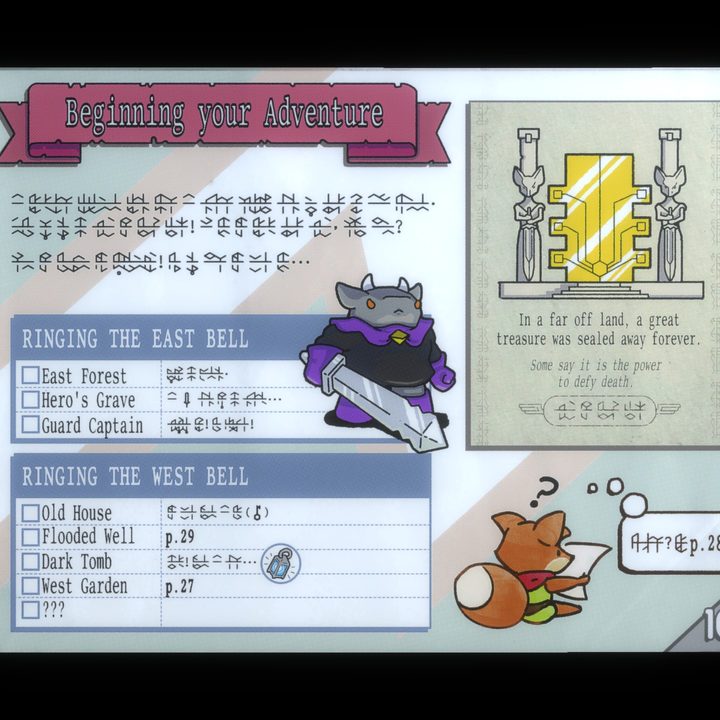
Instead, it’s up to players to learn, well, everything — and not in the same way that Counter-Strike: Global Offensive players learn how to Bunny Hop. Every part of Tunic is meant to be discovered by players, primarily through the manual pages found throughout the overworld. These shining white squares are found everywhere in Tunic and explain the game piecemeal, from revealing its secret areas to teaching basic controls. Each pickup adds two pages to an NES-era retro game manual, complete with illustrations, notes in margins, and even coffee stains.
Introducing new gameplay concepts and ideas through an in-game manual that you slowly grow is a genuinely novel idea. It’s exciting to get a page and learn something new about Tunic‘s mechanics, locations, or lore. Of course, sometimes the information you get from a new page isn’t helpful at all, and that’s when Tunic expects you to work with other players. Cooperation between people playing the game seems to be an intentional part of Tunic‘s design; it doesn’t expect you and only you to be able to figure everything out. Tunic is purposefully obtuse, something that’s clear from the start and only gets more obvious the further you progress.
For people reviewing the game, I was treated to a Discord channel full of other critics, where people helped each other figure out Tunic‘s mysteries. Or at least, that was the intention. Instead, this server ended up filled with people saying that they were stuck and had no clue what to do next — something I experienced multiple times. I ended up reaching out for help just once during my playing time, though I should have done that more and saved myself some headaches.
Very few feelings are as frustrating as getting stuck in a game, and Tunic almost goes out of its way to make sure you’ll experience that sensation at some point. By purposefully withholding information from players in an attempt to emulate the communal cooperation felt by kids in the 1990s playing early Zelda games, Tunic ends up being a chore. My playtime of the game, which topped off at just over 12 hours, included at least two of wandering around areas because I was missing something, or thought I was.
Tunic itself takes a very hands-off approach to the player experience.
One of those searches was caused by Tunic‘s apparent delight in being as visually vague as possible. As if it weren’t frustrating enough that there isn’t any readable language in the game (Tunic swaps English for a bunch of fantasy runes), the game’s fixed camera angle means that you won’t see all of the game either. Paths are hidden behind buildings, between walls, or in walls, and sometimes those paths lead the way to Tunic‘s next main area. Of course, others lead to treasure chests containing items or the game’s unnamed currency. If you get stuck because you don’t know where to go, or can’t find that next hidden path, Tunic simply throws its hands up and says “Well, that’s on you bucko! DM someone on Twitter about it.”
Outdone and out of date
When I wasn’t banging my head against a wall trying to figure out where to go next in Tunic (which even has a cheeky achievement called “What now?” as if I hadn’t been asking myself that same question), I was able to actually somewhat enjoy its simplistic take on combat. However, it only shines for small parts of the game, and eventually is overshadowed by repetition.
Nothing is mysterious about the way players fight in Tunic, thankfully. The little fox can hit enemies with a three-hit sword combo and avoid damage with a shield or dodge roll. Magic items throw a bit of variety into this mix, with one that stuns enemies and pulls them straight over for a free combo and another that freezes them in place. There’s nothing massively exciting here — it’s all pretty bare-bones.
It wants to have simple combat, akin to something like the Zelda Oracle games, but that approach gets stale incredibly fast here.
Frustratingly though, you can only have three items equipped at any time, though for me it was more like two since I was always using my sword. That leaves just two slots for magic items or consumables, which just isn’t enough. The items I wanted to use were out of hand when I needed them the most, and Tunic‘s menu is impossible to navigate quickly, especially during combat (much like Elden Ring, battles keep going while your menu is open).
Eventually, fights in Tunic get tiresome, especially due to some frustrating enemy A.I. Spiders, and enemies that behave like them, constantly back away from players, only attacking when they finally bump into a wall. Chasing down enemies only to slowly whittle their health away through a mix of attacks and blocks gets tiring pretty fast.
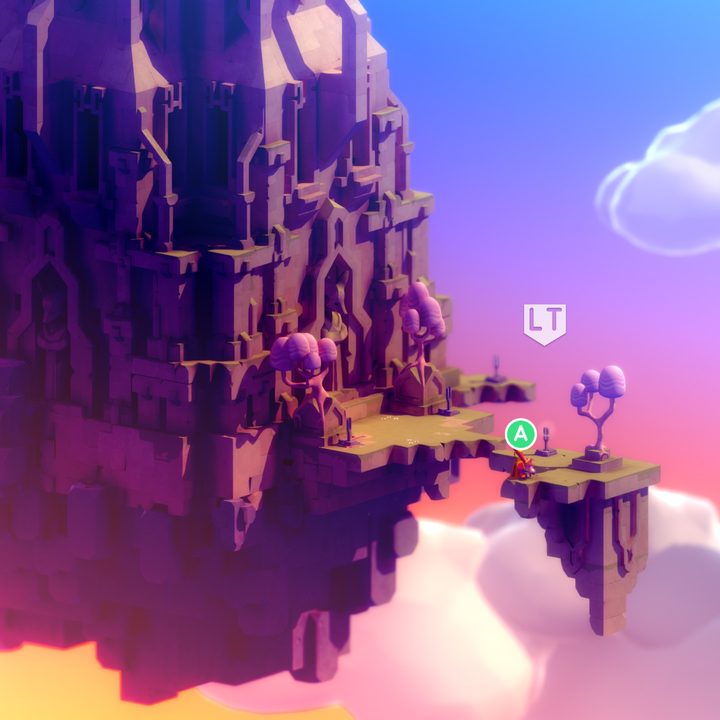
Boss fights provide a solid change of pace though, showing off what Tunic can be like at its best. These massive enemies provide a solid challenge, and force players to use every resource they have at their disposal, leading to some pulse-pounding battles. They’re the only time Tunic‘s difficulty feels authentic instead of clumsily imposed.
Still, Tunic doesn’t do anything in this regard that shines above its peers. Combat feels clunky overall, though it’s not the only aspect that feels dated. Its exploration is similarly undercooked, requiring more backtracking and memorization from players than any Metroid title ever has. Paired with its dismal camera, just getting around the gorgeous world of Tunic can be a pain.
Our take
Tunic desperately tries to recreate the magic of classic Legend of Zelda games, all too often doing so to a fault. It tries to be hands-off and instead leaves the player with no idea of where to go. It wants to have simple combat, akin to something like the Zelda Oracle games, but that approach gets stale incredibly fast here. More than anything though, Tunic left me feeling lost in its mysteries, which I didn’t want to solve out of need or drive, but because I couldn’t bear them anymore.
Is there a better alternative?
Tunic is trying to emulate old-school Zelda, and if you want that experience with a fresh coat of paint, give 2019’s remake of The Legend of Zelda: Link’s Awakening a try. It’s gorgeous and plays like the 1993 version with some much-needed improvements.
How long will it last?
Tunic takes around 12 hours to beat normally, but if you’re trying to solve all of its mysteries, that playtime could easily balloon up to 20.
Should you buy it?
No. Tunic‘s insistence on being obtuse and unclear leads to dead end after dead end. Since it’s built around players cooperating to figure out its mysteries and puzzles, I can’t recommend this game to anyone who wants to beat a single-player game by themselves.