“Why you can trust Digital Trends – We have a 20-year history of testing, reviewing, and rating products, services and apps to help you make a sound buying decision. Find out more about how we test and score products.“
Microsoft botched the announcement of Project xCloud at E3 2019. It was spoken of quickly by Phil Spencer, executive vice president of gaming, who proclaimed that xCloud will span both console streaming – that is, games running on a console you own to another device you own – and cloud gaming. No other details were revealed at the time, leading many gamers (including myself) to wonder if Microsoft was serious about cloud gaming.
They are. My hands-on time with Project xCloud proved it. It’s a real thing with real potential, but not without flaws.
The crude cloud
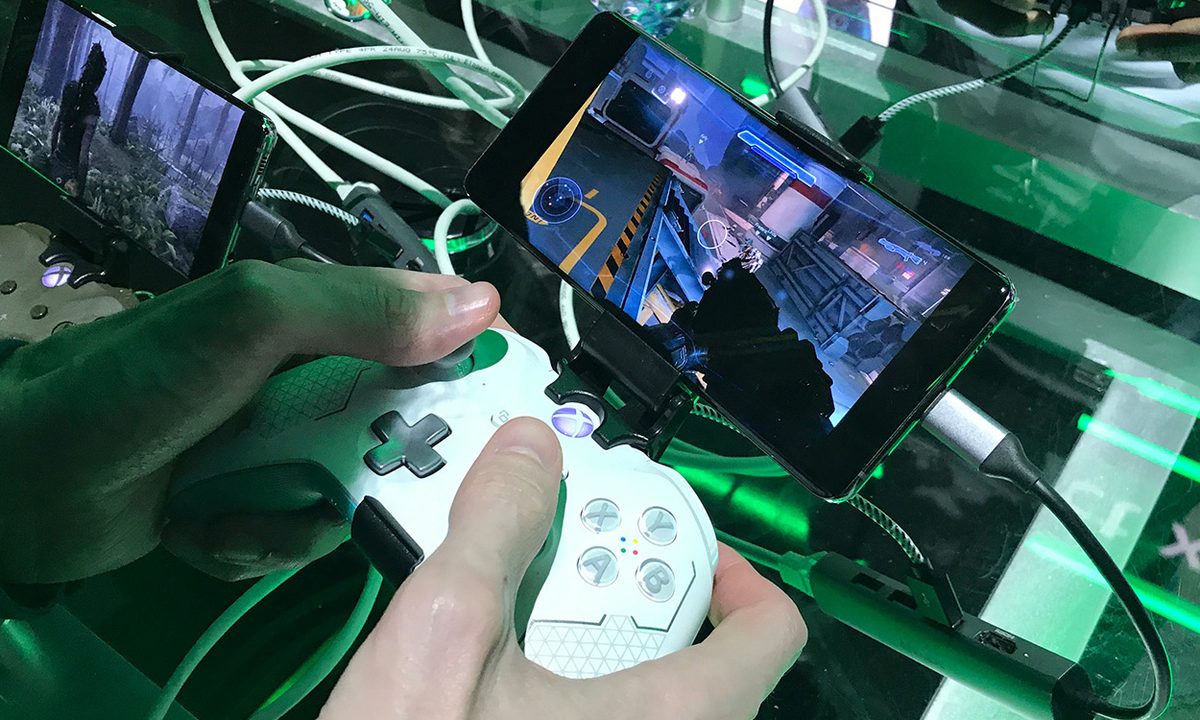
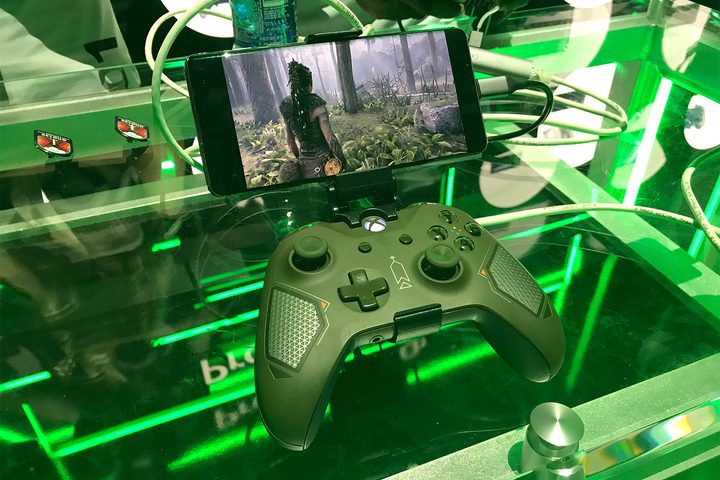
The Project xCloud demo I saw wasn’t a private, closed-doors preview, but instead available to anyone attending the Xbox Showcase – which wasn’t a small audience. Microsoft huddled the demo around a tiny kiosk with six Xbox controllers perilously tethered to smartphones. All the phones were connected to the internet through Ethernet adapters, and the games were powered by a Microsoft data center in San Francisco.
I think this shows Microsoft is scrambling to show its response to Google’s Stadia. The company must’ve felt it had no choice but to respond even if it had nothing concrete ready to show. Project Scarlett shares that story. It was announced in response to the PlayStation 5, but Microsoft offered only a brief snippet with unsurprising details.
People playing on the @Xbox Project xCloud at the Xbox Showcase! #E32019 pic.twitter.com/U03HJbd5vk
— Digital Trends (@DigitalTrends) June 10, 2019
Crude demo aside, Microsoft’s decision to demo xCloud on a selection of smartphones is a curious choice. It’s the weakest link in both xCloud and Stadia. Both want to offer high-resolution console gaming on your phone, but there’s a catch. You must use a controller. Stadia tried to obscure that in its big pre-E3 announcement, which shows few examples of smartphone play, but Microsoft let me pick up a controller and try it.
It’s not an elegant solution even without the cords dangling from the demo units. Nintendo’s Switch wisely connects its controllers to the console because any other method means a bulky, awkward experience. I have no idea whether the total volume of an Xbox controller exceeds a Switch, but there’s no arguing its shape is harder to pack away.
Smartphone displays might be an awkward fit, but they look outstanding.
What about touch? Xbox is exploring the use of touch in all games on xCloud, but that won’t be available at launch. I’m not surprised. Adapting a controller game to touch is no easy task.
Once the controller is attached, another problem becomes obvious. Screen size. All the phones in my demo had large screens, but I don’t think any quite matched the 6.2-inch screen size of the Switch. Only a few phones are that large, and many have a slightly unusual display that’s narrower than most. The Samsung Galaxy S10+ has a 6.4-inch screen, for example, but at a 19:9 aspect ratio.
Xbox and PC games aren’t made for a screen that small. The result? Interface issues. Text and fine UI elements are too small on the smartphones. I found myself stuck in a dead-end hallway while playing Halo 5. Except it wasn’t a dead end. The end of the hallway was an elevator but, because the on-screen prompt to activate it was so small, I had to scour the area before I noticed it.
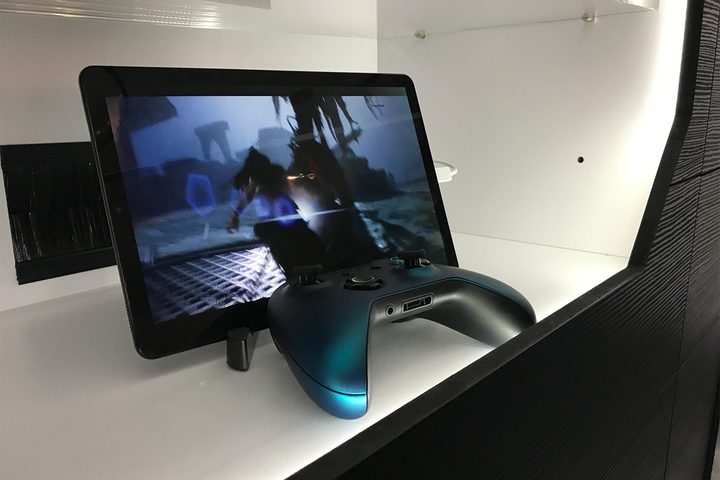
It’s not all bad news. Smartphone displays might be an awkward fit, but they look outstanding. A modern OLED display, like that found on many high-end smartphones, can outperform most computer monitors and makes the Switch look like a relic. The advantage was obvious in Hellblade, where the game’s gorgeous graphics looked even better than usual.
Impressive, but imperfect
Xbox had a variety of games to show at its Project xCloud booth. That’s good. It shows that many different games can be adapted to cloud gaming. Google’s Stadia has relied on Assassin’s Creed Odyssey and, more recently, Doom, leaving me to wonder just how quickly developers will embrace Google’s effort.
I tried Halo 5 and Hellblade: Senua’s Sacrifice. The difference between them was night and day, and not just because the games have so little in common.
The Hellblade demo was bad. Lag was evident from the moment I touched the controller.
The Hellblade demo was bad. There’s no way to sugarcoat it. Lag was evident from the moment I touched the controller. The problem was not a stutter or hitch, but instead an ever-present lack of responsiveness. I moved my thumb, and the game took its sweet time responding. The area I played included no combat at all, which was good, because I wouldn’t have stood3 a chance with the lag I suffered.
Halo 5 was much better. I had no problem fighting my way through the hallway of a spaceship and deploying all the usual tactics a veteran Halo fan knows. Grunts went down easily to headshots. I suspect the demo was on easy difficulty, but even so, the point was made. The game felt much as it does on a real Xbox.
While I didn’t play Gears 4, Digital Trends writer Steven Petite gave it a go. His time was similar to my Halo 5 experience with one important exception. Well, actually, two – the game froze twice. Gears 4 was otherwise smooth, with only the slightest hint of latency.
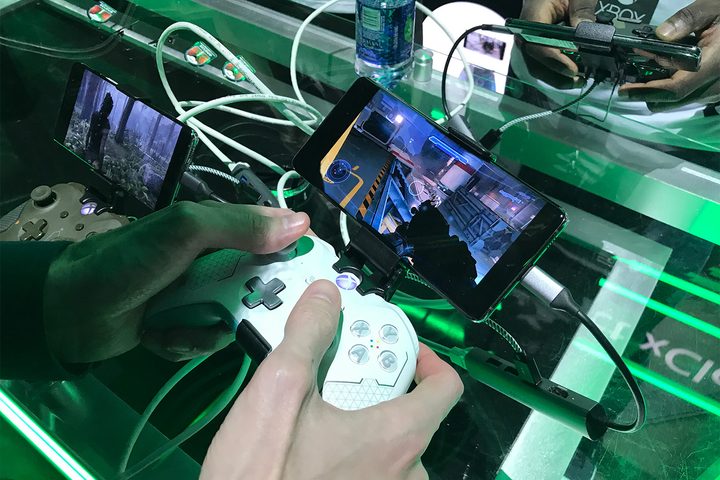
It’s a mixed result, then. And there’s one other problem. The resolution on all phones was quoted at 720p. Why? Because “a phone’s screen is too small to notice it anyway,” as I was told at the booth. On the contrary, I did notice it in both Hellblade and Halo 5. The image quality was softer than I expected. It wasn’t ugly, but the use of 720p was obvious.
The cost of bravery
Microsoft’s xCloud announcement at E3 2019 felt rushed, both on stage and when I had it in my hands. Halo 5 played beautifully and felt responsive, but Hellblade lagged noticeably, and Gears 4 crashed twice. It’s clear xCloud isn’t ready for prime time.
Still, the demo was brave. The demo was held in a less-controlled environment than anything I’ve seen from Stadia and showed a wider selection of games. Google’s safe presentations have left many questions. Yeah, you can buy a pre-order for Stadia now, but that doesn’t mean it’s guaranteed to work well.
Cloud gaming could change how you game. But it won’t do it this year.