
The Legend of Zelda: Skyward Sword has a complicated legacy. When it launched in 2011, the game immediately received rave reviews hailing it as a masterpiece. Consensus on the game slowly became more divisive over the ensuing decade, thanks in no small part to The Legend of Zelda: Breath of the Wild — a game which retroactively made Skyward Sword’s flaws feel more apparent.
With the newly released Skyward Sword HD remaster, Nintendo had a chance to regain the narrative. The new Switch upgrade fixes some common complaints about the original game by cutting down on tutorials and giving players the option to use button controls, which was absent in the motion-only Wii version. As a result of those tweaks, Skyward Sword HD is unquestionably the definitive way to experience the Zelda adventure in 2021.
Even with those improvements, there are limits to just how much a remaster like this can fix. While the quality of life is improved in Skyward Sword HD, the remaster shows that the Wii game’s problems were always much deeper than pet peeves.
Core design
For players who remember every minute detail of the original game, Skyward Sword HD’s improvements are apparent right off the bat. The reduced tutorials make the opening hours of the game move a little faster. Fi doesn’t pop up every few minutes to give obvious tips, dialogue can be fast-forwarded, and players won’t have to read a description every time they pick up an item. Every little pain point has been ironed out to make the game move more quickly.
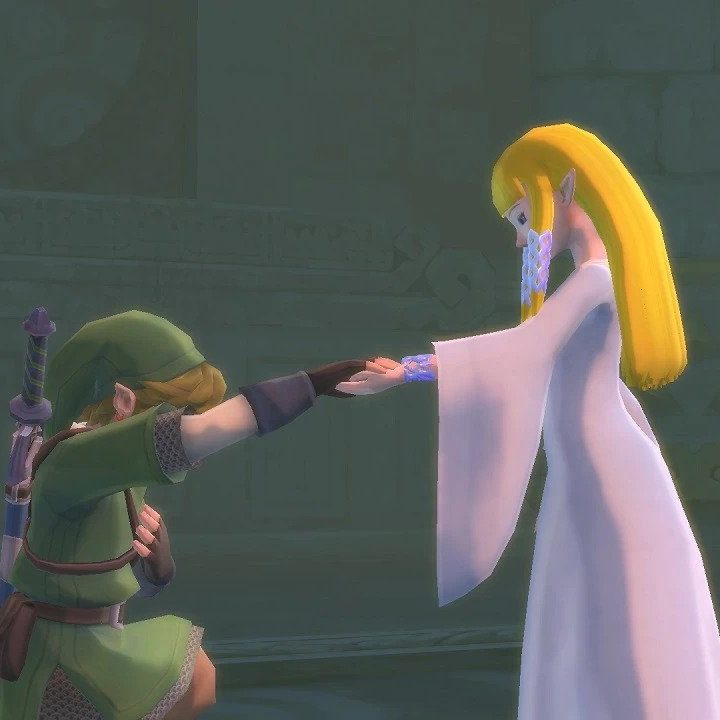
But if I’m being honest, none of those problems have stuck in my mind for the past decade. When I think of the original Skyward Sword, I don’t bemoan its slow tutorials or un-skippable cutscenes. Those are little details that likely bugged me in the moment, but I’ve long since forgotten them. Had I not known Nintendo was tweaking those aspects, there’s a good chance I wouldn’t have noticed anything had changed. The point of quality of life upgrades is to make a game feel natural, after all.
Instead, it’s Skyward Sword’s broader annoyances that come to mind. For example, I vividly remember dousing — an overused mechanic that required players to point the Wiimote at the TV to find the next objective. Dousing quickly becomes a repetitive annoyance as early parts of the game task Link with hunting down key fragments or woodland creatures by following their trail. As soon as it popped up in the HD remaster, I instantly remembered why I had such a sour opinion on the game in 2011.
Dousing is a pain, but it’s a symptom of a more fundamental design philosophy that runs through Skyward Sword. The game was originally launched on Nintendo Wii during an era where Nintendo was eager to serve players of all stripes. The company found itself streamlining mechanics in all of its biggest series to make them more accessible to its newfound casual audience.
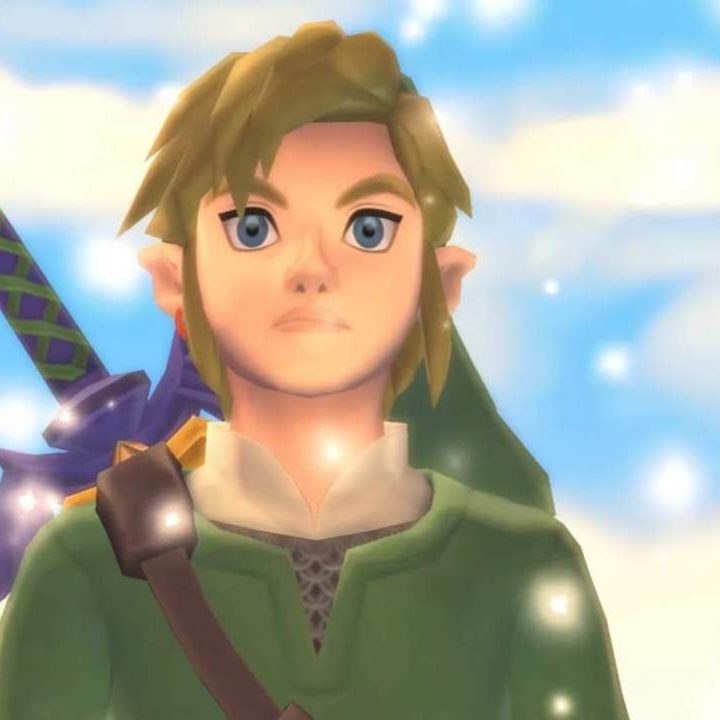
That idea didn’t quite mesh with the classic Zelda formula. The series has always thrived on exploration, but Skyward Sword largely fails to deliver that strength. It’s disappointingly linear thanks in no small part to features like dousing that literally light the path forward. That’s especially apparent in the game’s earliest dungeons too, which may as well be laid out like a railroad apartment (though a few later dungeons are series highlights).
Annoyances like the overzealous tutorials were part of that wider problem. Details like that rarely exist in a vacuum; they’re representative of a game’s core design. A remaster can reduce textboxes or speed up dialogue, but it’s much harder to undo the larger, structural decisions that trickle down. A fresh coat of paint doesn’t turn a lemon into a Ferrari.
In motion
The limitations of remaster tweaking become more apparent when dissecting Skyward Sword HD’s new control options. In the original Wii game, players had to use motion controls. The HD version adds standard button controls, which is a welcome change. Wii motion controls were never perfect and that always made Skyward Sword a frustrating experience. Now players can shape sword shots with the right joy-con stick, making gameplay more precise.
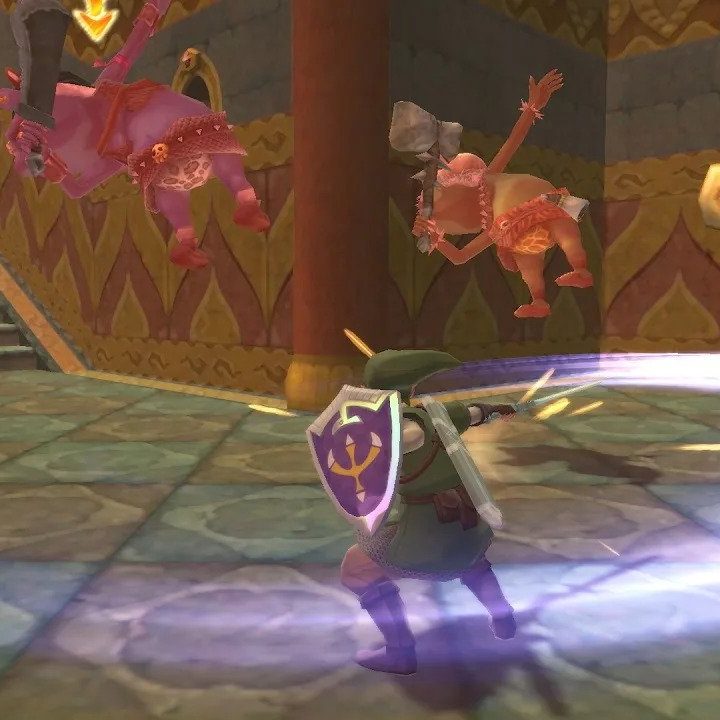
But dropping new button controls into a game that was explicitly designed around motion presents problems. Camera control is an immediate casualty of the change. Since sword slashes are mapped to the right stick by necessity, the camera is moved by holding down the left bumper and then moving the right stick. That means players can’t attack and swivel the camera at the same time. It’s near impossible to dash and move the camera too, making it a clumsy solution.
The pain points run even deeper, though. Physicality guides the original game’s combat. Many of the game’s enemies are a sort of puzzle where players need to swing their swords in the correct direction to hit an exposed weak point. If a Moblin raises a shield on its left side, that signals that players need to slash from the right side. Most enemies, including bosses, are built around enemies telegraphing their weak points.
Swinging a controller to attack is a longer process than simply tapping a button. As such, enemies tend to hold their position a few seconds longer than one might expect before attacking. It makes a lot of sense when trying to use an imprecise Wiimote, but it doesn’t translate as well to button controls. Enemies will stand stationary for an awkwardly long time, giving players an absurdly long window to attack. I’m able to slash a Moblin three or four times while it stands on the defense, ending some encounters in mere seconds.
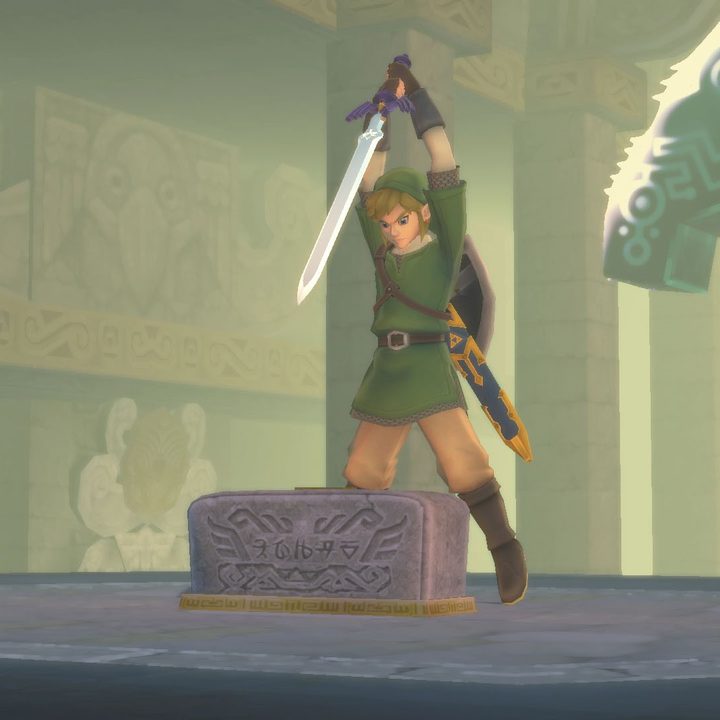
It’s especially notable in boss fights. The third dungeon’s Moldarch battle becomes comically easy as I’m able to slash down its weak points in a few thumb flicks, ending the fight without a whiff of challenge or danger. With motion controls enabled, it’s a trickier fight that requires quick thinking; with buttons, it’s as easy as slicing up a deku baba.
Remasters can modernize the experience of playing an old game, but they can’t upend fundamental design decisions. Skyward Sword is never going to feel like a different game unless Nintendo builds a full remake from the ground up. Quality of life changes just eliminate pesky distractions and allow us to see a game’s heart more clearly. Strip away all of Fi’s exhausting tips and you’re still looking at a Wii game that was overeager to use motion controls and hold players’ hands every step of the way.
There are still plenty of good reasons to revisit Skyward Sword in 2021. It’s a fascinating historical document in retrospect, as it contains sparks of creativity that would go on to become defining features in Breath of the Wild. It’s a valuable trip down memory lane for Zelda fans; just don’t expect it to change your tune.
The Legend of Zelda: Skyward Sword HD is available now on Nintendo Switch.


