
Gadgets give us an easier way to find recipes, joke with friends, and kill time on the subway, but they can also have a much grander impact on our lives. This holiday season, we’re stepping back to appreciate those moments. In our ongoing series, Tech That Changed Us, DT writers will share personal tales of how tech has truly reshaped their lives for the better. We hope it has for you, too.
I’m thankful for technology because it saved my life.
The year was 2001. I was a single father of two children. We were living with my girlfriend and her daughter at the time (who eventually became my wife and step-daughter) when life suddenly began to get really slow for me. Not in a time sense, but daily movement became a difficult task. After a number of sluggish days, I visited the doctor who directed me to a cardiologist. It was nearly Christmas when they told me I had a year to live. My only shot was a dangerous new high-tech procedure.
As they wheeled me into the delivery room, my kids were writing letters to Santa. “I want you to let my Dad come home on Christmas Day,” one letter to Santa reads. “My last and special wish is that I want you to let Kevin (who is in the hospital) come home for Christmas,” another said. My only son at the time merely said “I love you Santa!” written by The Boy. Too funny.
Where this all began
See, I was born with Aortic Stenosis. It’s a defect in the aortic heart valve that prevents it from opening correctly. When I was five years old, it was fixed at the Children’s Hospital in Chapel Hill, North Carolina so that I could survive until I was older. Despite the fix, I still had problems when it came to physical stress and how it manifested in the heart, so things like sports and Physical Education classes were off limits. Socially, that was hard because kids at school can be insensitive to those with physical problems.
I went under the knife December 17, and then half a day later, I was in recovery with the new “kit” installed. That’s when I went into cardiac arrest.
When I turned 12, surgeons in Chapel Hill replaced my native, defective valve with a metal one. That was a life-changing event, as I had to grow accustomed to a clock-like “tick” inside my chest and within my head. But thanks to technology, I was somewhat “fixed” to where I could live until I was at least 18. I still couldn’t do anything stressful given that metal was sewn into my flesh. I also had to start taking a blood thinner to keep my blood from clotting around the metal.
Half a decade later I was 17 and a senior in high school when I suddenly hit the floor in pain during after-school band practice. I was taken to the emergency room and then shipped back off to Chapel Hill to verify the cause of the pain. The final diagnosis was that I was suffering from pleurisy, but the cardiac catheterization confirmed nothing valve-related was wrong. It did uncover a new problem, though: I had a small aneurism in the aorta that connected with the metal valve.
One last chance
I didn’t hear anything else about that aneurism until I was told in 2001 that it would kill me in a year. On top of that, my slowness stemmed from my heart being unable to pump blood properly because it outgrew the valve implant. To fix the entire problem, the doctors would need to install a “kit” comprised of a larger metal valve and a new portion to replace the defective aorta artery. This would be my third open-heart surgery in 33 years, and I was terrified.
I headed to the hospital not long after that. The surgeons warned me of the potential death percentage as they always do with major surgeries, and I checked into the hospital, frightened to no end that I would leave my two children without a father. In a best-case scenario, I would spend Christmas in recovery, so my then-girlfriend would need to handle Christmas with the three children. I went under the knife on December 17, and then half a day later, I was in recovery with the new “kit” installed. That’s when I went into cardiac arrest.
The kids didn’t get their exact wish, but thanks to technology, we had a small celebration on Christmas Day in the hospital. I was alive.
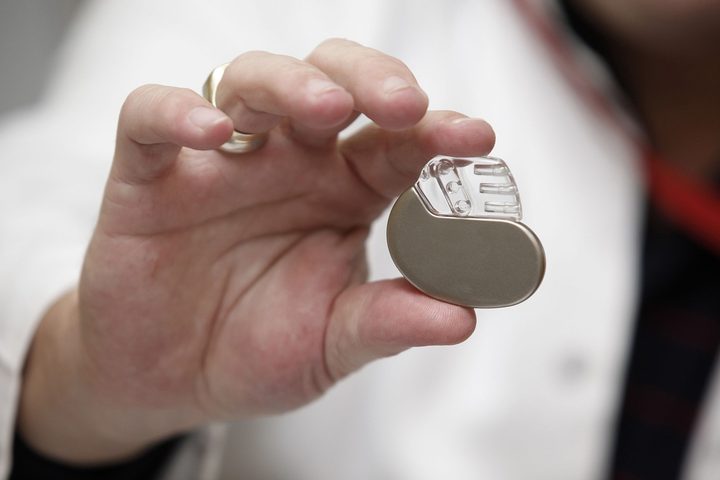
Given that I’m typing this, you know I survived. The surgeons zapped me back to life and then cut me back open to see if blood clots caused the issue. Eventually, they determined that after cleaning off all the heavy scar tissue from the surface of my heart to install the kit, my heart’s electrical system was damaged. That led the doctors to install a pacemaker to keep my heart beating if the electrical system failed again.
Ultimately, the kids didn’t get their exact wish, but thanks to technology, we had a small celebration on Christmas Day in the hospital. I was alive, and I went home just days later. Looking back, I am endlessly thankful for the technology that saved me, and it’s technology that keeps me going this holiday season. And that’s before I look at the kids we’ve had since then, and realize that it was technology (and biology) allowed them to enter the world and enrich our lives, too.


