

On today’s episode of You Asked: Would you go with LG’s C5 or Sony’s Bravia 9? Is the Sony A80J worth upgrading from in 2025? And how does turning the brightness up on your TV affect its lifespan?
Does maxing TV brightness kill it faster?

@billwill1337 asks: Doesn’t having the brightness set high shorten the life of the TV?
Bill’s question is one of many we get about brightness on the channel. Honestly, we should address this more. But yes, having the brightness turned to higher levels does shorten the lifespan of the TV. How much it shortens it, I’m not sure, but it does.
The higher the brightness, the more stress you put on some of the components, including the backlight in LED TVs and the organic materials and individual pixels in OLED TVs.
You also have to consider temperature. Heat and electronics aren’t a great mix. More brightness means generating more heat, which can also wear on parts.
And this begs the question: why do people like to have their TVs turned to maximum brightness levels?
The answer is top-tier performance and, honestly, because it’s your TV. Do what you want. As a channel that examines TV performance, we like to know just how bright it can get. How good will HDR viewing look with brightness maxed out? That’s why you see a lot of YouTube channels pushing performance. We’ve even recommended turning it up, as long as it’s not uncomfortable to view, to get the best out of a TV’s HDR performance.
Many consumers at home probably figure that if they bought a TV capable of achieving high brightness levels, they might as well get the best out of it. Others have a legitimate need to max out brightness—like those with bright rooms where their TV has to compete with big windows and lots of ambient light.
I’ll also note that we don’t keep many TVs long-term in our studio, so we’re not exactly studying brightness levels over years.
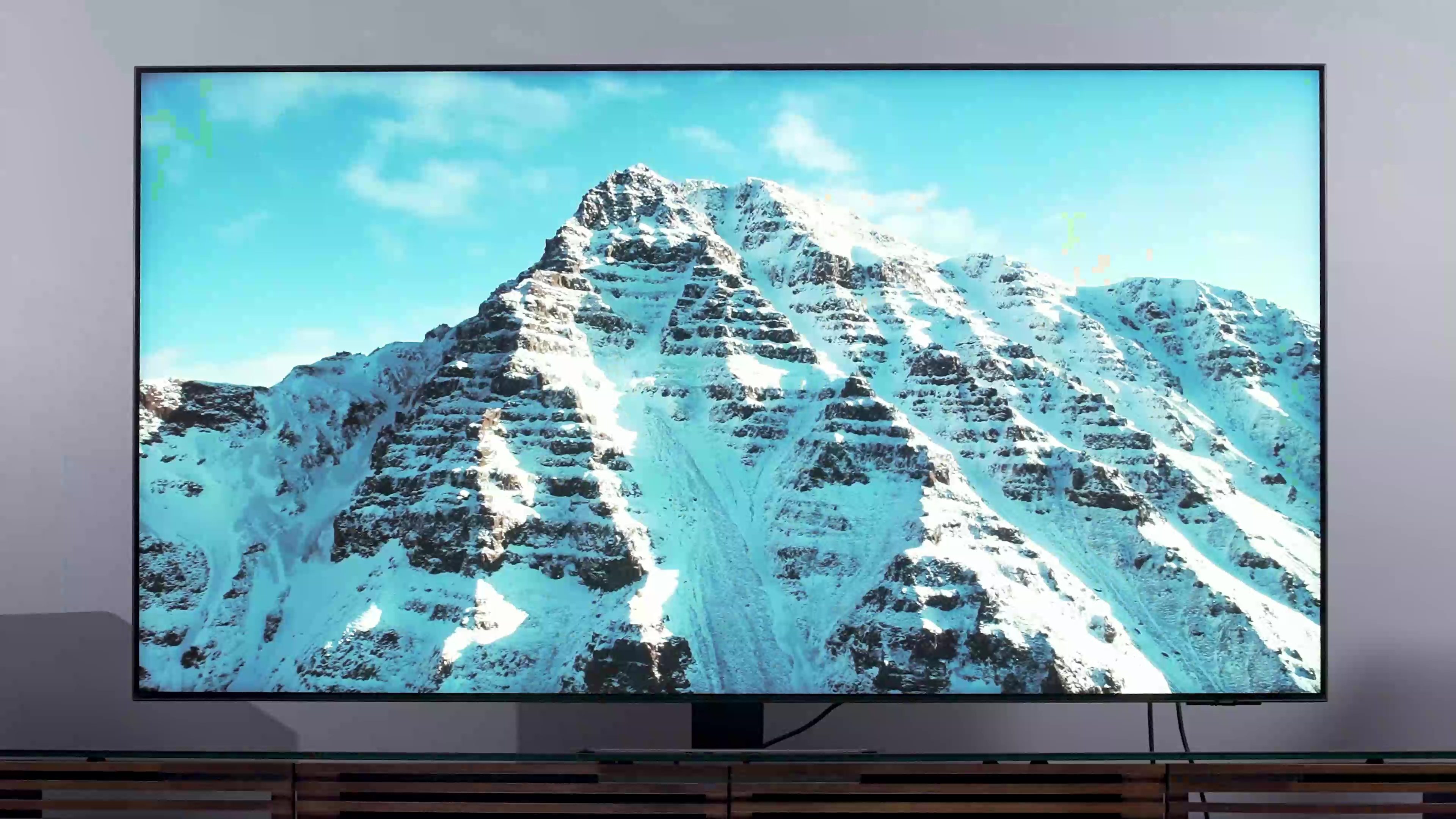
Personally, I’ve had a Samsung QN90C at home for a couple of years, and I haven’t noticed any drastic dips in brightness or performance, even though I’ve had brightness maxed out in both SDR and HDR. But that’s just two years of use, and I don’t watch a ton of TV—mainly YouTube, some reality TV, sports when I have time, and movies late at night after our toddler goes to bed. If your use case is similar, I’d expect good TV performance for years without a second thought.
I’d also assume that part of what you pay for when buying top-tier, flagship-level TVs is better build quality. These manufacturers have outstanding engineers who know the products inside and out. Year after year, brightness gets pushed from the marketing side, so the components need to handle everything that comes with it.
Still, if you’re worried about running your TV at max brightness but aren’t sure what level to set it at, try turning on some of the ambient light features that sense how much light is in the room and adjust brightness accordingly. The risk is that if the sensor is too sensitive, it may adjust brightness too often and hurt the viewing experience. If that’s the case, just use whatever brightness level the sensor sets as a reference point.
If the best and brightest TVs had a bad reputation for durability, we’d hear about it.
Sony A80J vs 2025 TVs: what’s actually better?

Darren asks: I currently have a Sony Bravia A80J. I’m perfectly happy with it, but I like to keep up on technology. Are there any TVs worth upgrading to? Two OLEDs—the Sony Bravia 8 Mark II and Samsung S95F—and the TCL QM8K QD Mini LED have piqued my interest. Are any of them worth upgrading to, or is there another TV I should consider?
Glad to hear you’re still happy with the A80J—it’s a great TV that still checks a lot of boxes we see in newer offerings. You’ve got a 4K 120Hz refresh rate and two HDMI 2.1 ports, the same as the Bravia 8 Mark II, and it’s a beautiful OLED. If you’re still perfectly happy with it, I’m assuming it’s bright enough for your room and performing well.
One of the big advantages of buying a great OLED from Sony, Samsung, or LG is knowing that picture quality will hold up for years, like yours has.
I will note that our content director here at Digital Trends uses the A80J as his main TV and says it could use a little more pop in HDR highlights. That might be a reason to upgrade if you feel the same. Maybe check out the TVs you mentioned in person in a showroom.
What stood out to me about your question is that you didn’t ask, “Are any of them worth upgrading to, or should I stick with the A80J?” You asked, “Are any of them worth upgrading to, or is there another TV I should be considering?” That makes me think you’re planning to upgrade either way.

If I were you, I’d stick with the A80J. You still love it, and there don’t seem to be any glaring issues. If you put it side-by-side with the Bravia 8 Mark II, you’d probably notice a difference, but when you consider the cost of upgrading, it may not be worth it.
As for the TVs you mentioned, each has unique features. The Bravia 8 Mark II is classic Sony OLED quality, with slightly better color thanks to QD-OLED.
The Samsung S95F, while an OLED, has a divisive anti-glare panel that gives it a matte look in bright light. It’s great for eliminating reflections, and in a dark room, it has all the contrast and vibrance you’d expect from OLED, but that matte effect is still noticeable. It also runs Samsung’s Tizen OS instead of Google TV and lacks Dolby Vision, opting for HDR10+. If you prefer Dolby Vision, that’s a factor to consider.

The TCL QM8K gives you higher overall brightness but loses the infinite contrast of OLED. Honestly, I think you’d be taking a step back, and if you don’t need more brightness (see our first question), I’d stay with your A80J.
The only other TV I’d suggest, if you had to upgrade, would be the LG G5. Its four-stack tandem RGB OLED competes with QD-OLED in brightness and color volume. But again, unless you’re missing some HDR pop, it’s probably not worth the cost when you already have a great OLED.
Bottom line, Darren: you’re set on picture quality. If you want to go up in size, that might justify an upgrade. Otherwise, the A80J remains an excellent choice.
83” LG C5 vs. 65″ Bravia 9

@GOLFADDICT65 asks: LG C5 in 83 inches or Sony Bravia 9 in 65 inches? Same price in Canada. It’s for a 12×12 room with no windows, sitting 6–8 feet away. Would a 98-inch TCL QM7K be overkill? No gaming, just sports and 4K Blu-rays/streaming.
Thanks for another great question. Starting with the last one: yes, 98 inches is overkill at 6–8 feet away. That’s a massive screen, and you’ll get more value with the LG C5 or Sony Bravia 9 in terms of picture quality.

With no windows to fight against, I’d go OLED. I’ve long been a fan of LG’s C-Series. It’s not at the LG G5 level or QD-OLED like some Sony and Samsung models, but it’s a fantastic-looking TV. So is the Bravia 9, which is arguably the best Mini LED TV available. But if you can get a great OLED that’s bright enough for your setup, go for it.
The main consideration is LG’s webOS vs. Sony’s Google TV. But with brightness not being a factor, plus OLED’s advantages, four HDMI ports, and excellent all-around performance, the C5 gets my vote.


