
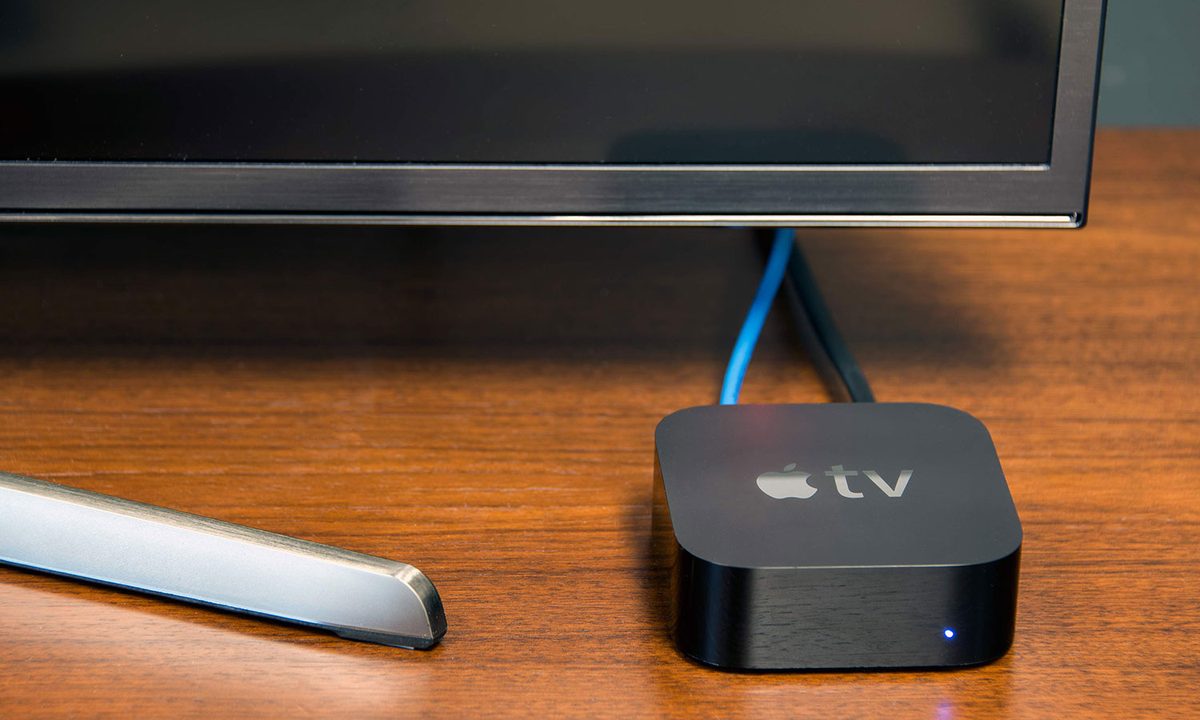

“Apple lovers will swoon over the Apple TV.”
- Easy and fun to use
- Fantastic remote control
- Zippy operation
- tvOS versions of apps are great
- AirPlay mirroring
- Does not support 4K
- No optical digital audio port
- Lacks some key apps
- No expandable storage
“Why you can trust Digital Trends – We have a 20-year history of testing, reviewing, and rating products, services and apps to help you make a sound buying decision. Find out more about how we test and score products.“
If you prefer iPhoto to Google photos, Apple Music to Spotify, and AirPlay to Bluetooth, then the Apple TV is aimed squarely at you. You are heavily invested in the Apple universe, and the Apple TV has been designed to carry the Apple experience right over to your big screen. And in that case, if you’re looking for a streaming set-top box with a gorgeous user interface, a fun remote, and all the Apple integration you could ask for, by all means, buy an Apple TV.
If you are more like this reviewer, however, who owns an iPad and and iPhone but prefers the services of Spotify and Google, then you should seriously consider looking elsewhere. The Apple TV is a fine device indeed, but despite the fact that Apple waited over three years to cough up this latest version, it remains, in a few key ways, behind the times.
Out of the box
Apple has the out-of-box experience on lock. Those Cupertino cats really know how to make you feel great about the product you just purchased, and the Apple TV’s packaging may be its greatest achievement in this regard yet.
Once you lift the box’s lid, a glossy Apple TV box and gleaming remote greet you, both covered in protective plastic. Apple likes to use premium materials, and so those materials tend to have just the right amount of heft. The new Apple TV and Apple TV remote are even heavier than we anticipated, though – in a good way.
You may be pleased to see that, although the new Apple TV is quite a bit chunkier than its predecessor, there’s no wall-wart power block to cram into your already over-stuffed power strip. Instead, the Apple TV comes with a simple black AC power cable covered in that grippy silicone stuff everyone loves to coat their products with these days.


Along with the Apple TV and remote control, you’ll find a Lightning cable for charging the remote. What you won’t find in the box is an HDMI cable, which would have been a welcome addition considering the Apple TV’s premium price.
Setup
If you’re an iPhone owner, Apple is prepared to save you a little set-up hassle. Once you’ve fed power to the set-top box and connected it to your TV via the HDMI cable you had to buy, the Apple TV will run you through a set-up wizard. The most notable part of this process is setting up your Wi-Fi connection, provided you’re going the wireless route (the Apple TV does have an Ethernet port, which we recommend using if a line is available at your installation location).
If you have an iPhone running iOS 9.1 or later, make sure you have it handy and have Bluetooth turned on. When prompted you can simply hold your device in proximity to the Apple TV; doing so will prompt your phone to share your Wi-Fi settings. This is far easier than selecting the correct access point and pecking your password out on a virtual keyboard, especially if your password is long, complicated, or easily forgotten.
From here, the Apple TV will ask whether you want to enable Siri, whether you want to enable location services, and whether you want to share diagnostic data with Apple – that sort of thing. At this point you are set up most of the way, but we do recommend enabling Home Sharing if you want to share content across your Apple devices.
Side note: The Apple TV uses 802.11ac Wi-Fi, which is great if you have a router that supports the standard but does nothing to help you out if you use wireless profiles N or below. The Apple TV’s reception isn’t especially powerful, so don’t expect it to solve any problems you might have with other devices in the same location.
The Hardware
We’ll get to the Apple TV box itself in a moment. It’s the remote that really sets the Apple TV apart from its competition.
The Apple TV remote’s best feature is its touchpad. Not only does it speed up navigation considerably, but it also reduces wear and tear from repeated button pressing. In some cases, it allows for game play, though that sort of limited interface isn’t super compelling.
Aside from the touchpad, the few buttons Apple provides are quite useful too. A menu button effectively serves as a “back” button, backing you out of whatever you dove into, one screen at a time. There’s also a “home” button of sorts – it looks like a TV – which pulls you out of whatever you were doing and plunks you down in the home screen.
If the touchpad doesn’t impress you, dig this: The Apple TV is designed to automatically detect the make and model of the TV or A/V receiver it is connected to, then program the remote to control the volume of the device. You can program it manually if needed, but for the vast majority of people, it will just work — like so many of Apple’s products.
We have less to rave about when it comes to the box itself. It packs a powerful A8 chip, and you can opt for either a 32GB or 64GB version. Once again, Apple refuses to make its device’s storage capacity expandable. You’ll find no Micro SD card slot here. Also, don’t expect an optical digital audio port, either. Apple ditched it, just as Amazon did with its Fire TV box. This is a shame, since that connection makes integrating a sound bar, A/V receiver, or self-powered speakers much easier.
The biggest hardware disappointment, however, is the Apple TV’s lack of 4K Ultra HD support. We understand Apple’s tendency to play to the masses, and 4K Ultra HD has hardly had time to enjoy mass adoption, but it isn’t a fad, either. Many consumers will likely buy a new TV after buying an Apple TV and find themselves wishing for 4K support. Amazon’s Fire TV, the Roku 4, and Nvidia Shield all offer 4K resolution, with Amazon, Netflix, Vudu, UltraFlix, and others offering increasingly large catalogs of 4K content to watch. It’s hard not to call this one a miss.
Siri search and control
Amazon’s Alexa may be a more capable digital voice assistant on the whole, but when taken within the context of Apple TV, Siri rules, and there’s plenty of room for her to get even better.

Siri covers the basics, as you would expect. You can ask to see a list of available movies featuring a certain actor, or a list of available sci-fi TV shows, for example. Go ahead, get specific – it will help you learn where Siri’s capabilities come to an end.
What you may not expect is to be able to drill down to a more granular level within those searches. For instance, you can say “Show me movies with Robert Duvall,” then later add, “Only the ones from the ’90s,” or “Only the good ones.” Pretty slick.
It’s the remote that really sets the Apple TV apart from its competition.
Siri will search your iTunes library for music, movies, and TV shows if you are in the iTunes app. But if you search from the home screen, Siri will also return results from Netflix. This is a nice start, but we wish Siri polled more apps. Perhaps in time she will.
Outside of providing sports scores, weather information, or stock information, Siri can also control what you’re watching. For instance, you can turn on closed captions, rewind or fast forward a specified amount of time, find out who stars in a movie or sings a song, and even ask “What did he say?” to have Siri back up and replay the last segment you just watched.
How fun is this?
We’ll admit it, the Apple TV is a ton of fun to use – this coming from an unabashed Roku and Amazon Fire TV fan. Apple knows user interfaces, and it shows with tvOS. The entire screen is used to its maximum potential, colors are beautiful, icons have that rounded Apple shape, and even apps created for Apple TV tend to be superior to their Roku and Android counterparts. Plex, for instance, has a refreshingly different look and feel on the Apple TV.
There’s not much more to say about the user interface. It’s pretty great, and we think even tech novices would find it easy to get around. Well done (again), Apple.
One serious roadblock
Amazon Prime Video is quickly making itself a cord-cutter staple. Amazon has solid original TV series, exclusive deals on some highly desirable HBO content, and a wealth of movies to enjoy. Unfortunately, despite being available on iPhones and iPads, the Amazon Prime Video app isn’t available for Apple TV. Not good.

Granted, there’s a workaround. You just have to start the show you want to watch on your iPhone or iPad, then AirPlay it to the Apple TV. The Apple TV will pull the content from the cloud so your mobile device doesn’t die. But this workaround is a major hassle – take it from someone who uses Amazon Prime Video every day.
Spotify is also not an option, which is another potential deal breaker. Again, AirPlay can force it, but it’s a lot more hassle.
Eventually, we ended up disconnecting the Apple TV and replacing it with a Roku for easier access to these popular services.
Conclusion
If you’re a fan of all things Apple, the Apple TV is sure to be a delight in your entertainment system. It’s quick, fun and easy to use, and it brings the entire Apple content universe to your big screen.
If, however, you aren’t so heavily invested in all things Apple, we recommend considering a Roku 4 or Amazon Fire TV. The competition offers 4K resolution, better content search, expandable storage, and costs less.
The Apple TV may be a wonderful device, but it’s not the best choice for everyone.


