1. Home
  2. Audio / Video
  3. News

The Super Bowl is finally in Dolby Vision – if you have Comcast

Add as a preferred source on Google

Last year, Comcast Xfinity customers got to brag about their FIFA World Cup 2022 viewing experience. It was the first time the soccer tournament was broadcast using Dolby Vision —  a dynamic version of HDR TV — and Comcast had the exclusive on it. If that wasn’t enough to drive up new subscriptions for Comcast, perhaps this will: the cable company now has the Dolby Vision exclusive for the biggest game of the year in the other football universe — Super Bowl LVII.

When Fox Sports’ coverage begins on February 12, Comcast Xfinity subscribers will be able to watch all the gridiron action in 4K with Dolby Vision HDR.

Recommended Videos

Dolby Labs says it’s the first time the big game will be available in the company’s dynamic HDR format. To experience the broadcast in Dolby Vision, you’ll need a Dolby Vision-capable TV, a Comcast Xfinity subscription, and the company’s Xi6 cable box.
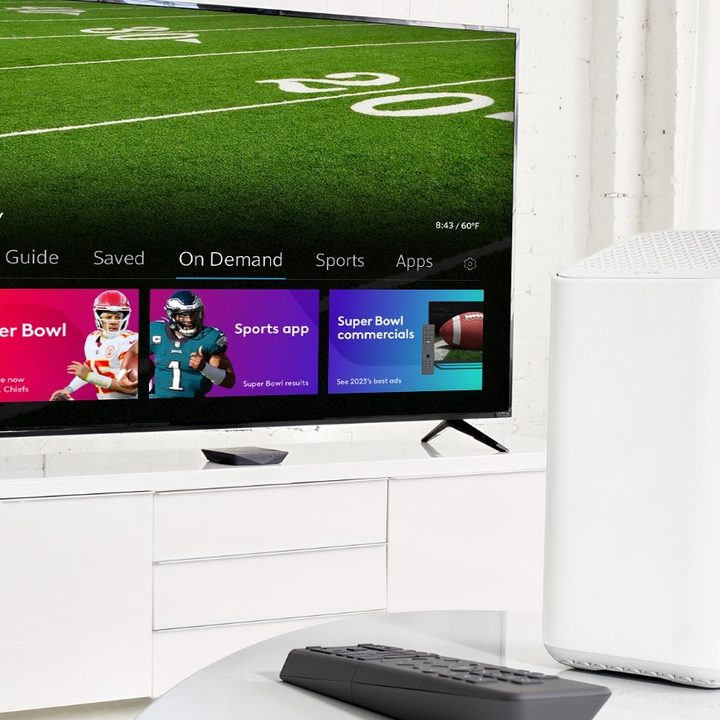
A Comcast cable box, remote, and TV.
Comcast

The game will still be broadcast by Fox in 4K where available, but instead of presenting that feed directly to its subscribers, Comcast will be applying the Dolby Vision format on a frame-by-frame basis, before sending that newly encoded video to Xfinity viewers.

The result? “When experienced in Dolby Vision,” a Dolby Labs spokesperson told Digital Trends via email, “football fans will feel as if they’ve been transported to State Farm Stadium as they watch every heart-stopping, nail-biting moment of the Kansas City Chiefs versus Philadelphia Eagles game with lifelike colors, sharp contrast, and rich details.”

If your TV isn’t Dolby Vision-capable (currently, no Samsung TVs support the format), you’ll still be able to see the game in HDR (if your TV supports HDR), but it will be presented in HDR10, which is not a dynamic version of HDR. In other words, it will still look pretty great, but the colors, contrast, and brightness may not be as accurate a reflection of the real-life event.

Simon Cohen
Former Contributing Editor, A/V
Simon Cohen obsesses over the latest wireless headphones, earbuds, soundbars, and all manner of related devices and…
DJI Osmo Pocket 4 takes aim at low-light video and fast action
The new model combines a 1-inch sensor, 4K slow motion, and updated controls in a compact body
Camera, Electronics, Video Camera

DJI has unveiled the Osmo Pocket 4 with a familiar goal, better video from a camera small enough to carry anywhere. The standout upgrade is a 1-inch CMOS sensor, which should help it hold onto more detail in dim scenes while also giving fast-moving footage a cleaner look.

DJI also says the Osmo Pocket 4 can shoot 4K video at up to 240fps, while adding 14 stops of dynamic range and 10-bit D-Log support. That gives solo shooters a stronger mix of slow motion, highlight control, and grading headroom without moving up to a much larger setup.

Read more
Amazon reveals slimmest Fire TV Stick HD that no longer needs a wall adapter
Amazon made its best budget streaming stick even better at $35.
amazon-fire-tv-stick-hd

Amazon just refreshed one of its most popular streaming devices. The new Fire TV Stick HD is officially here, and it is the slimmest Fire TV device Amazon has ever made. At $34.99, it is available for preorder right now and ships April 29.

What's new with the Fire TV Stick HD and how is it different?

Read more
These camera-equipped earbuds offer a wild glimpse at the future of AirPods
These experimental earbuds show how AirPods could get a lot smarter
A team of researchers at Washington University built VueBuds TWS with a built-in camera

Wireless earbuds have already become the default wearable for a lot of people. This is why this new research feels more interesting than yet another smart glasses demo. Researchers at the University of Washington have developed VueBuds, a prototype system that adds tiny cameras to off-the-shelf wireless earbuds so users can ask an AI model about whatever is in front of them.

How does this work?

Read more