

On today’s episode of You Asked, what did we learn about Dolby Vision 2? Quite a lot. Enough, in fact, to dedicate an entire episode to it. We are talking TV model availability, including models you may already have, what we were dead wrong about assuming before, and some side-by-side looks at the original Dolby Vision versus the new format. You will be impressed. Also, sorry in advance for how many times you are going to hear me say the words Dolby Vision.
Dolby at CES 2026
The experience with Dolby at CES 2026 was awesome. It was my first time getting to experience Dolby Atmos in a vehicle, and some very premium vehicles, I should say, and it was spectacular. Elton John’s Rocket Man and Pink Floyd’s Money were perfect examples of what immersive audio can do.

But what I, and many others who got a chance to meet with Dolby’s engineers and the brilliant minds behind the technology, were really curious about was Dolby Vision 2 and what else we could learn as it gets ready to roll out in 2026.
When it was announced, we learned a little, but naturally we wanted to learn more, especially about how it was going to work and how it was going to be better than an already very good HDR format.
How much better is Dolby Vision 2?
In one word, significantly. When we met with Dolby, we were able to see this across different levels of TV quality. We were not told the exact models, but the first was a 100-inch premium TV with around 5,000 dimming zones and, I believe, 5,000 nits of brightness. It was a stunner, so it was no surprise to see Dolby Vision 2 look great.

We were then shown two identical models that sit at about $700, placing them in the mid to high tier range of TVs. The display on the left played Dolby Vision, and the one on the right played the same content in Dolby Vision 2. In person, it was easy to see the difference. There was more punch and depth to the color. I do not like using the term saturation because I think of that as over-processing, and this was not that. It was simply more lifelike and real, especially when viewing sports. Greens and skin tones especially stood out.

Even gaming looked significantly better.
The surprise on budget TVs
What really impressed me was the difference between Dolby Vision and Dolby Vision 2 on budget TVs. These were two- or three-hundred-dollar TVs that lack full-array local dimming and often get overlooked because they do not stack up to Mini LED TVs on paper or in performance.
With Dolby Vision 2, if I did not tell you these were budget TVs, I do not think you would be able to tell. Side by side with a TV playing standard Dolby Vision content, the difference was striking.
A lower-tier TV capable of playing Dolby Vision 2 content suddenly becomes a much more viable option for anyone who wants great picture quality on a budget. You still need access to Dolby Vision 2, which may mean paying for certain streaming services or premium tiers, but the result is that great-looking HDR content becomes more attainable. That is a big win for consumers.
What Content Intelligence actually means
The next question is Content Intelligence. What does that really mean, and is it a form of AI?
Straight up, no. If anything, it is the opposite of artificial intelligence, and this was something I was completely wrong about. As a creator, when I see something that sounds like it could be AI, my radar goes off. I need to chill.
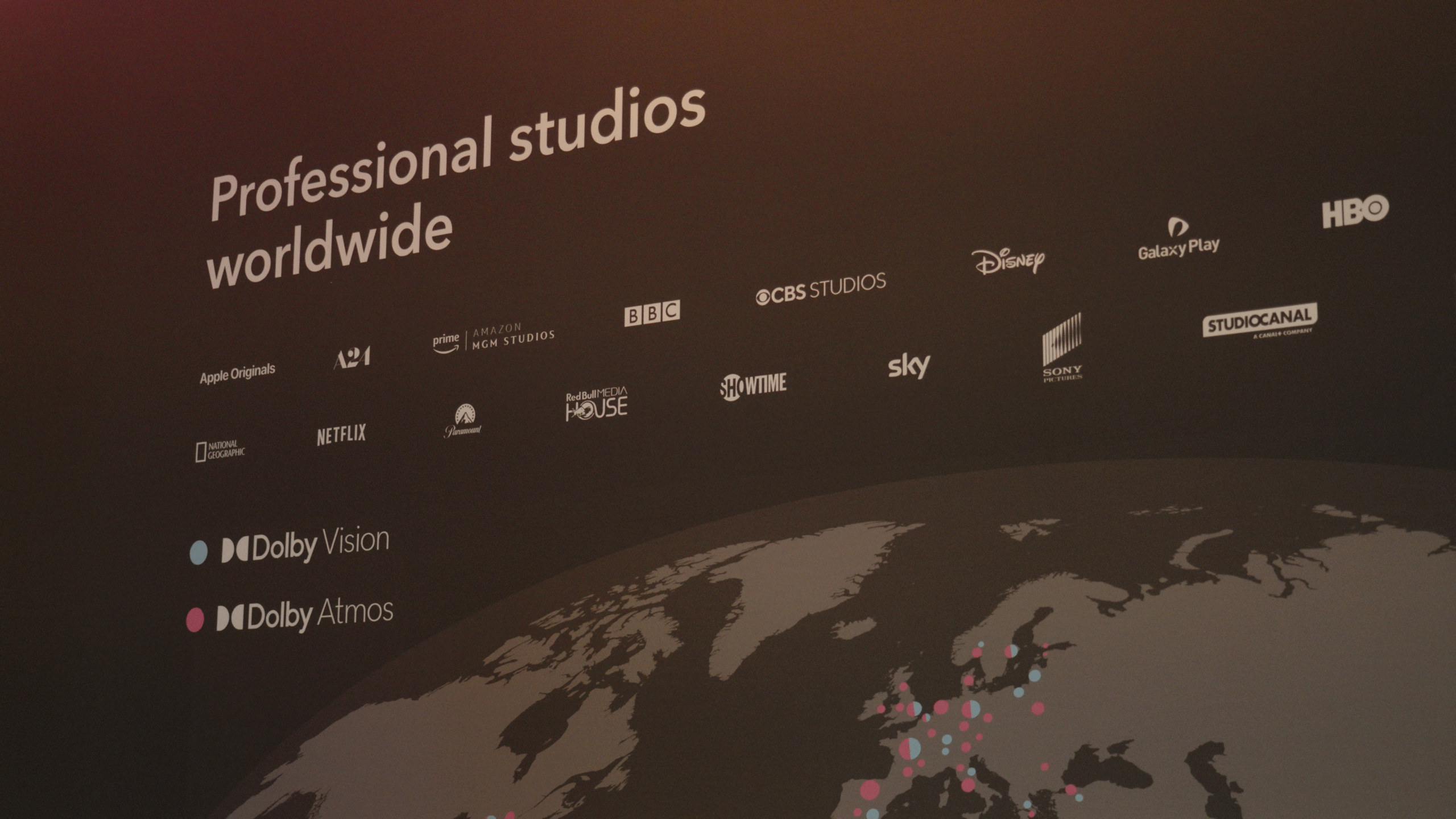
Content Intelligence feels more like a partnership with the creator. Dolby calls what they do an ecosystem, not just output formats for audio and video. They work with studios, filmmakers, editors, and creators across film, TV, and music.
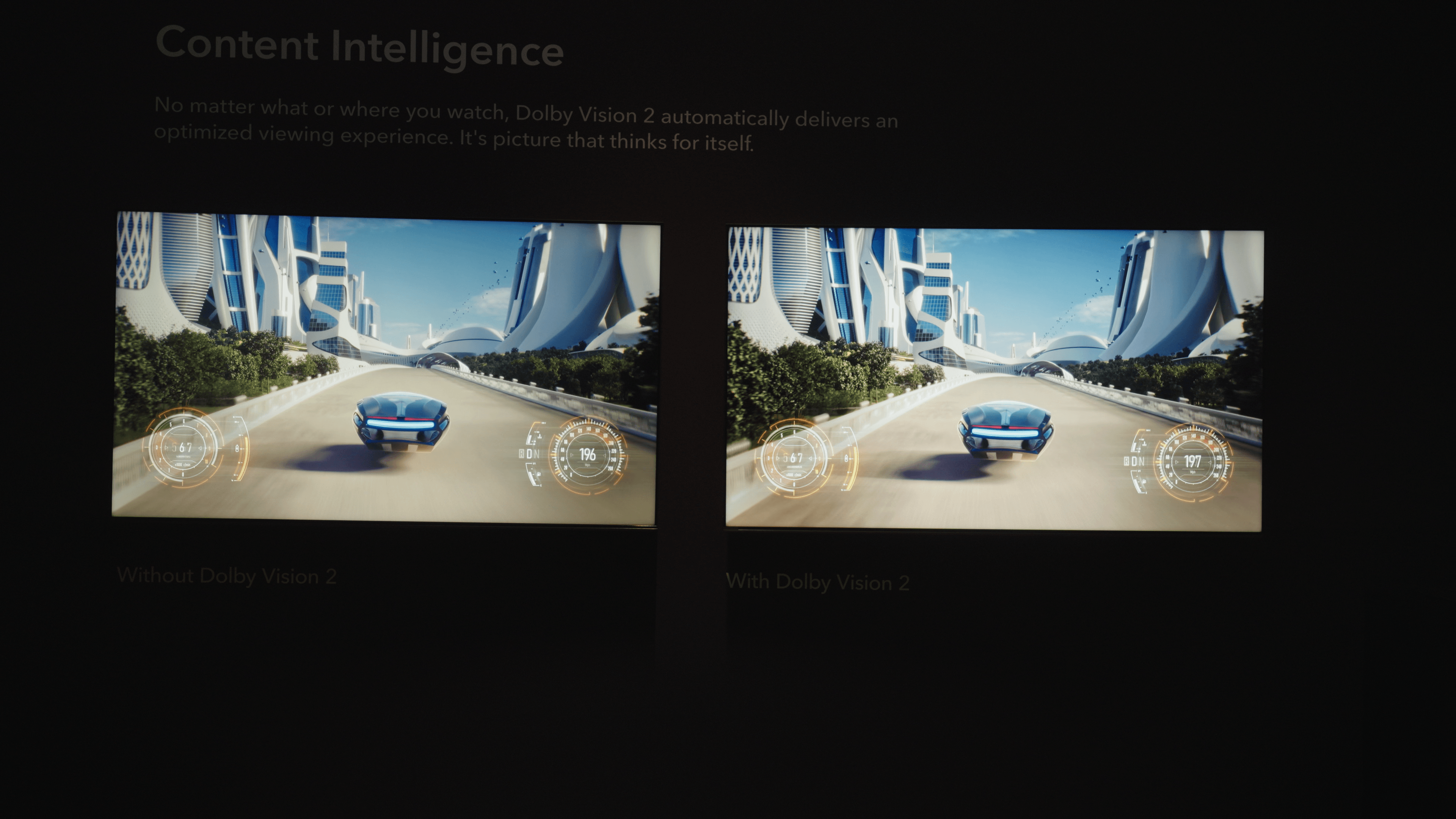
Dolby Vision 2 allows much more metadata to be used with content. I prefer to look at this as a better way for the director, cinematographer, and editor to communicate their intent. The creator knows how the final grade should look, but the viewer may be watching on any number of different TV models.
Dolby Vision 2 allows creators to send more information, such as highlight and shadow detail, with the content. On the TV side, that data can be interpreted and translated based on the specific TV and panel. The creator packages how the film should look, and the TV can better unpack it and keep that look intact.
Motion, judder, and creator intent
The same idea applies to motion smoothing and judder reduction, which Dolby calls Authentic Motion. Scenes are analyzed for what might cause unwanted judder, and the amount of correction can change in real time. From what we were shown, this avoids the soap opera effect and unnecessary smoothing, applying correction only when needed.
This naturally leads to a question. If Dolby Vision 2 and the creator are making all these decisions, what control does the viewer have?
You can still make adjustments, but there is a trade-off. You can adjust brightness, motion clarity, contrast, and other settings, but doing so disables the benefits of Dolby Vision 2. It is one or the other.
There is, however, an intensity slider that changes how much of the Dolby Vision 2 look you are getting. Adjusting it affects brightness, contrast, and the overall Dolby Vision presentation at once. Some people may not like that, but creator intent is a core principle for Dolby, and there are many professionals involved in making content look its best.
TV support and availability
So which TVs will support Dolby Vision 2, and can some already-released models handle it?
Yes, there are already TVs capable of supporting the new format. Dolby explained that some system-on-chip hardware was available before they were ready to announce Dolby Vision 2, meaning certain models can receive over-the-air updates.
Hisense plans to feature Dolby Vision 2 on its 2026 RGB Mini LED TVs and bring it to more Mini LED models via updates. TCL’s 2026 X QD-Mini LED TVs and C Series should also support it through updates. TP Vision’s Philips 2026 OLED TVs are also planning support.
Dolby Vision 2 and live sports
Another standout was Dolby’s work with NBC’s Peacock and live sports. With increased Dolby Vision and Dolby Atmos availability for live events, sports can now benefit from the same premium presentation as movies and TV shows.
Dolby AC-4 also adds a feature that lets viewers adjust the balance between stadium sound and commentators. If you want to feel more like you are at the game, you can turn down the commentary and boost the crowd. This will be available during live broadcasts in real time.
Final thoughts
That is everything I have for now, though I am probably forgetting something. I was legitimately impressed by Dolby Vision 2, as were many veterans in the TV and audio space. The improvements are real, and in some cases, genuinely surprising.


