It’s not even Christmas yet, and LG is already unwrapping its biggest present. On Wednesday evening, LG announced it will be bringing a massive 105-inch curved 4K Ultra HD TV to CES 2014. And before you start imagining just how huge a 105-inch TV might look in your living room, keep this in mind: It is not the standard 16:9 aspect ratio you are used to seeing. Instead, this set features an ultra-wide 21:9 aspect ratio, designed for displaying cinematic releases with little to no letterboxing (black bars).
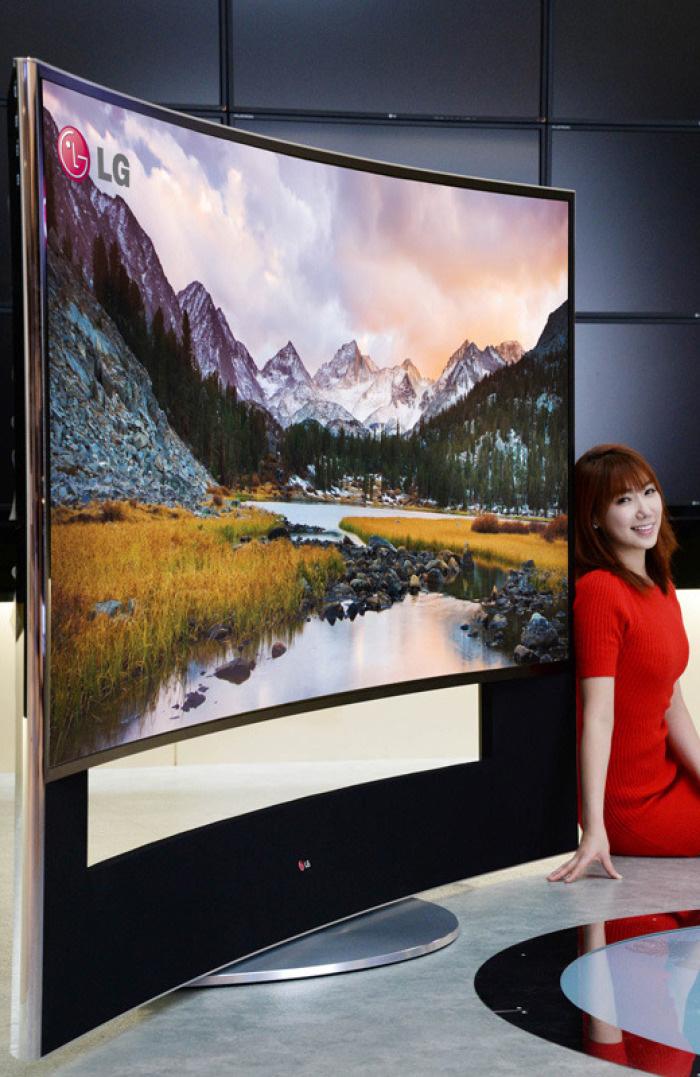 LG is billing the display as the world’s first 105-inch curved Ultra HD TV, which is not a far-fetched notion since the set is basically a combination of all the latest and rarest in TV tech. The only way this TV could be any more outrageous is if it featured an OLED panel. Alas, it doesn’t. But let’s not get greedy here; we still have LG’s 77-inch curved 4K OLED to look forward to seeing at CES 2014, and let’s face it: A 105-inch Cinemawide screen is going to be awesome to behold.
Here’s the run-down of the details we can disclose at this time: The TV’s model number is 105UB9 and it boasts an 11-million-pixel, 5,120 x 2,160 screen resolution. The TV will also be 3D capable with 240Hz motion-smoothing technology. It is also safe to assume that it will be a smart TV. The rest will have to wait for CES. Pricing details haven’t been disclosed, but we imagine it will be a lofty figure.
Apparently, developing a curved LCD screen at this size was a challenge. To pull it off, LG put its TV division and display division’s collective heads together. What they came up with was a tweaked out version of the company’s TFT (thin film trasistor) display technology, which is said to ensure even backlighting and no color bleeding issues.
LG is clearly flexing its design and manufacturing muscle here. To date, TVs with 21:9 aspect ratios have been a hard sell. That’s likely because they appeal to a very slim market of home-cinema enthusiasts who, for one reason or another, prefer a projector and screen over a TV with a cinematic aspect ratio. The average consumer is more likely to be focused on the fact that, outside of certain Blu-ray movies, no content is formatted for 21:9 screens. In fact, for the time being, owning this kind of TV means that you trade horizontal black bars at the top and bottom of the screen during some movies for vertical black bars at the right and left for virtually everything else (see graphic at right).
Still, we can’t help but marvel at the sheer scale and spectacle this TV offers, and we can’t wait to see it in person in just a few short weeks.