

As someone who reviews Bluetooth headphones, earbuds, and speakers for a living, I get to try a lot of the newest audio tech first. Not gonna lie — it’s one of the best parts of the job.
And sometimes I get swept up in the hype for these new technologies, which is arguably one of the worst parts of the job, because I can end up giving my readers the wrong impression.
Let’s take lossless audio as an example. Statistically speaking, you probably can’t hear it when using Bluetooth wireless headphones or earbuds.
I don’t mean you can’t get lossless audio. Plenty of people have their own library of lossless FLAC tracks, several streaming music services provide lossless audio (some in hi-res audio, too), and if you own any CDs, well, they’re the original lossless audio format.
What I mean is that one of the coolest recent changes to the wireless audio landscape — the ability to play lossless audio over a Bluetooth connection — is something that most of you can’t experience yet, and may not be able to experience for some time to come.
Bluetooth lossless? Who cares?

But before I get to why you can’t hear it, a quick recap of why you should (maybe) care.
We all love the convenience of going wire-free, whether it’s greater freedom of movement during workouts, or being able to walk from our living room to our kitchen without removing our headphones, or simply never needing to wrestle with tangled cables. But as convenient as Bluetooth is, it can alter audio quality.
If you’ve ever wondered why some folks (mostly those who claim to be audiophiles) are still obsessed with wired headphones and in-ear monitors (IEMs), it has a lot to do with the loss of quality that limited Bluetooth bandwidth has historically meant for wireless audio.
So when Qualcomm announced it had finally solved the quality problem thanks to aptX Lossless — a new Bluetooth codec that promises bit-perfect preservation of CD-quality lossless audio — it was kind of a big deal.
For the first time, it was possible to buy a set of wireless earbuds and know that whether you enjoyed the way they sounded or not, the fact that they were wireless was no longer a concern. In theory, as long as you only listened to CD-quality audio (as opposed to hi-res audio), the presence or absence of a wired connection should be irrelevant.
In theory.
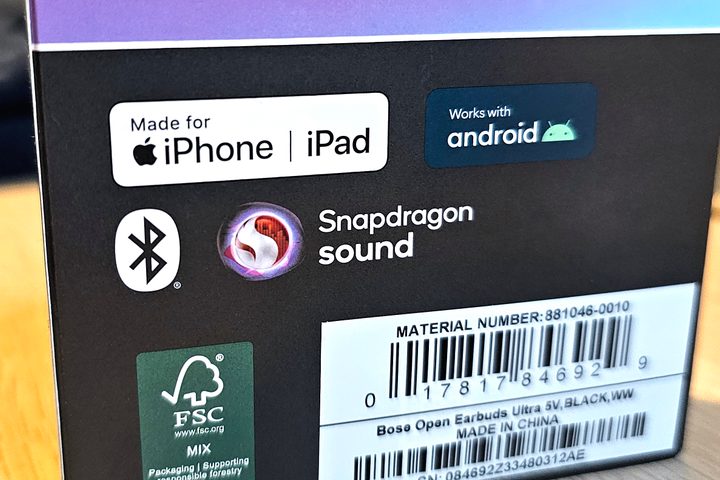
Unfortunately, Qualcomm’s solution to the Bluetooth quality problem is a proprietary one. In order for aptX Lossless to pull off its magic trick of providing bit-perfect audio, both your wireless earbuds (or headphones, or speaker) and your source device (usually a phone) need to be equipped with Qualcomm’s Snapdragon Sound platform.
Snapdragon Sound isn’t just software — it relies on Qualcomm’s system on a on chip. In other words, the earbuds and phones need to have compatible Qualcomm silicon. This is where things get tricky.
While it’s true that a growing number of wireless headphone and earbud makers are integrating Qualcomm’s Snapdragon Sound chips (with some big names like Bose and Sennheiser among them), on the phone side of the equation, adoption has been slow. Worse still, the companies that have added Qualcomm chips to their phones represent the smallest portion of the market, at least in the U.S.
How bad is it?

At the end of March 2024, Apple was the No. 1 U.S. seller of smartphones by a huge margin, and Samsung was No. 2. Between them, they control just over 82% of the market. Neither company uses Qualcomm Snapdragon Sound chips.
Google’s Pixel phones don’t either. Add in its relatively small share as the No. 4 seller, and we’re now around 85%.
According to Qualcomm’s website, the only companies that sell Snapdragon Sound smartphones are Asus, Vivo, Motorola, Sony, Sharp, Xiaomi, and Nubia.
That seems like a decent selection until you take a closer look. Motorola, the No. 3 brand in the U.S., only has three Snapdragon Sound models. And Xiaomi, the No. 5 brand, has just one — the Xiaomi Redmi K70 Pro, which it doesn’t sell in the U.S.
In other words, the vast majority of smartphone users in the U.S. cannot enjoy lossless audio over Bluetooth, even if they bought Snapdragon Sound-compatible wireless earbuds like the Bose QuietComfort Ultra Earbuds or the Sennheiser Momentum True Wireless 4.
This creates a real conundrum for me as a reviewer. It’s tempting to praise wireless headphones and earbuds when they support aptX Lossless — especially when I can hear the improvements the codec promises. But in the back of my mind, there’s always that lingering fear: Why praise something that most buyers can’t hear with their current smartphone? (And likely won’t with their next one, either.)
Thankfully, most of the headphones and earbuds that work with Snapdragon Sound also are genuinely great products even if you ignore Qualcomm’s lossless Bluetooth contribution. So, my ratings are rarely affected by this issue.
Still, I can’t help feeling that whenever I mention lossless Bluetooth audio in a review, I’m perpetuating a form of false advertising. It’s not that these companies are lying, it’s just that they’re emphasizing a benefit that most of their customers will never get.
On the other hand, these things often end up being an “if-you-build-it-they-will-come” scenario. If there are no wireless headphones or earbuds that are aptX Lossless capable, what incentive does a company like Google have to add Qualcomm’s chips to its phones?
I’m not privy to the backroom deals between tech giants, but I’m guessing there’s been more than one conversation around who benefits the most when a phone is Snapdragon Sound-compatible.
So where does this leave you if you’re in the market for new wireless cans or buds and have no intention of trading in your existing phone for one of the few that supports lossless Bluetooth audio? Frankly, it means you’re in the same place as before the advent of aptX Lossless: you should read reviews and ratings and decide based on the features that matter most and which you can use today with your current phone.
It’s just that, for now, that list likely won’t include lossless audio.


