
Samsung is so amped up about its two flagship televisions this year, it couldn’t wait for CES 2018 to start before unleashing them both at its First Look event, held one day before the official press day at the world’s most hyped-up consumer electronics show. Literally dominating the stage were Samsung’s cutting-edge 146-inch MicroLED TV, and an 85-inch 8K version of a new and improved QLED TV.
In case you missed it (and a lot of folks did), Samsung introduced a massive 34-foot cinema display a few months ago intended to replace projectors and screens in commercial theaters. At the core of this effort was a new display technology now being called MicroLED. What we’re seeing with the 146-inch MicroLED TV announced today is a surprisingly early example of this tech trickling down.
As for the 85-inch 8K QLED TV? Well, that’s another instance of Samsung flexing. The message Samsung aimed to deliver today: We’re on the bleeding edge of the future of TV.
Message received.
What is MicroLED?
Like OLED, MicroLED creates its own light — it is an emissive display — so it isn’t subject to the pitfalls of conventional LED televisions, which are really just LCD TVs with LED backlights. You can check out our deeper dive into MicroLED versus OLED TV, but the short version of the story is that, because MicroLED is not organic like OLED, it doesn’t suffer any of OLED’s pitfalls, including limited brightness and potential burn-in under extreme watching conditions.
Is MicroLED better than OLED?
Is MicroLED an instant OLED killer? No. During today’s event, it was clear that the 146-inch 4K MicroLED monster on display was an early prototype. In fact, Samsung had muscle in place to make sure journalists and nosy cameras didn’t get too close. We could see why: Upon closer inspection, we could clearly see individual panels stitched together to make a larger whole. At a distance — which is how you should watch a 146-inch wall-eating beast — the individual panels were almost invisible during bright scenes, but when the picture dimmed, they were apparent at a close distance.

This matters. Though Samsung says the TV’s modular nature will be a boon for creating custom-sized TVs for any viewing situation, it shows engineers have a bit of work to do before the dream of delivering MicroLED to living rooms across the world becomes a reality.
Still, in keeping with Samsung’s theme for the evening, this is a TV technology that looks to the future, and is a sign that shrinking prices and screen sizes could make MicroLED a serious OLED competitor. We saw some beautiful imagery on display, with deep blacks, blazing brightness, intense detail, and near-perfect off-angle viewing. If Samsung can parlay this early-stage tech into readily available TVs on store shelves, it will continue to dominate the U.S. TV market.
85-inch Q9S
When there’s a 146-inch MicroLED elephant in the room, it can be difficult to see anything else, but it would be a mistake to overlook Samsung’s 85-inch 8K Q9S QLED TV.
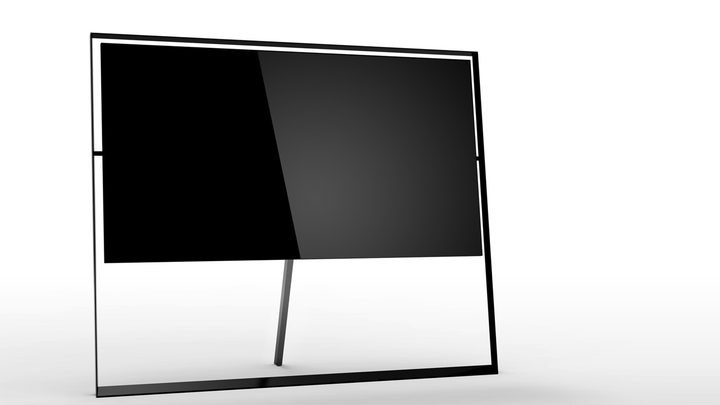
The key here is the super-sized TV’s up-scaling capabilities. Samsung knows there’s no 8K content out there, but the company is sure that large screen sizes deserve the kind of pixel density 8K can provide — the bigger the TV, the smaller the pixels need to be so you don’t see them. To prove its point, Samsung showed an 85-inch 4K QLED next to an 85-inch 8K QLED, each upscaling the same content, be it 720P, 1080P, or 4K. No matter the source, the 8K TV looked better. Still, we don’t think this is the most exciting news Samsung has to share this year.
While Samsung promised better picture performance from its 2017 QLED than the year prior, what we saw then were mostly marginal improvements. This year, however, Samsung has incorporated some impressive technology that allows the TV to exhibit OLED-like black levels and off-angle viewing, coupled with the punchy HDR performance best achieved by powerful LED backlights. It’s significantly better picture quality than we expected, and, since these will be the TVs within reach to most consumers this year, it’s really more important.
There are new features coming to an improved Samsung Smart TV experience as well, including an out-of-box set-up experience that will rival virtually every other smart TV platform out there today. Imagine un-boxing your new TV and having a phone app automatically share Wi-Fi settings and instantly log you into your favorite streaming apps.
That’s just the beginning of what we can expect from Samsung smart TVs in 2018.
All in all, it’s a strong coming out for Samsung TV in 2018. Be sure to follow all of DT’s coverage of CES at our website and through live broadcasts at our YouTube channel.


