
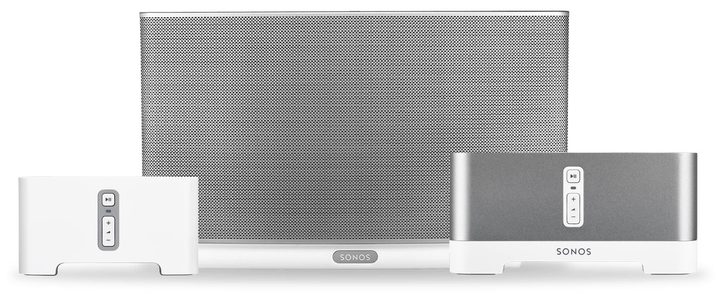
Sonos has one of the best reputations in the audio hardware business for its long-term commitment to supporting its older products. However, that approach looks like it’s about to change. For the first time, the company is actively encouraging its customers to stop using older Sonos products and recycle them responsibly. As an incentive, Sonos is offering a 30% discount on the purchase of new products.
The products that are now considered old are the Connect, Connect:Amp, ZP80, ZP90, ZP100, ZP120, and the first-generation Play:5. Some of these products, like the Connect and Connect:Amp were available for purchase on Sonos’ site as recently as one year ago, and both are still for sale on Amazon.com. Why is Sonos asking customers to discontinue use of these devices? On its website FAQ it says, “these products lack certain capabilities and enhancements due to the limitations of the computer hardware.”
That statement appears to be a bit at odds with what Sonos has said about its policy on product support: “Once a product stops being sold, it is guaranteed to receive software updates for five years.” In other words, a Connect or Connect:Amp bought in 2018 should theoretically still be fully supported with new software until 2023.
In an email, a Sonos spokesperson pointed out that the upgrade program is entirely optional. “We are not expecting everyone to trade up,” they said. They further acknowledged that recently purchased devices like the Connect and Connect:Amp “are later, more powerful editions.” Nonetheless, Sonos feels that some of the older and newer products are visually very similar, and wanted to offer an easy way for owners to upgrade if they wished.
The conditions of the deal are rigorous. You must first identify which of your Sonos products are eligible and then formally put these devices into a “recycle mode.” Twenty-one days after recycle mode has been activated, all of your personal data and settings will be wiped from the device and it will no longer work at all. You won’t be able to sell it because it will effectively be bricked. Sonos is encouraging its customers to recycle these deactivated products responsibly by using local facilities or a prepaid shipping label to send them back to Sonos.
The 30% discount covers the purchase of a replacement device only. In other words, if you register one Connect:Amp for recycling, you’ll get 30% off one new Sonos product to replace it. If you recycle more eligible devices, you get additional discounts. One you’ve successfully recycled a product, the discount remains on your account until you use it — Sonos says there is no expiration date.
Sonos recently debuted several new products including the portable Sonos Move and the Sonos Port, which is intended to replace the older Connect. It updated the Connect:Amp with the Sonos Amp in 2018.


