

On today’s episode of You Asked: What’s on the way from Sony to replace the Bravia 9, and should you still consider buying one in 2026 versus more recent competition? And why does picture quality take a dip in game mode?
What’s replacing the Sony Bravia 9 in 2026?

@willgatlin8229 asks: What’s taking the Sony Bravia 9’s place in 2026?
That would be whatever Sony has up their sleeve for their RGB backlit TV. The term OLED killer gets thrown around a lot, and who knows if this could fit that description, but I’d bet it’ll be among the top Mini LED options we see this year, presumably named the Bravia 10.
Will it actually match or get that close to OLED black levels? We’ll see. But what gives me confidence is how much time Sony’s had to work on it.
For the last few years, they’ve staggered their big releases. We saw the A95L QD-OLED in 2023, and they didn’t follow that up with their next QD-OLED until the Bravia 8 Mark TWO in 2025. Same with Mini LED. The Bravia 9 came out back in 2024, and its successor won’t arrive until this year, 2026. And honestly, with how much we’re constantly hit in the face with new things, I don’t mind it. Not to mention, Sony’s TVs, and really every brand’s higher-end TVs, are so good now that we probably DON’T need new releases in every category every year. But I guess that would be boring.
Anyway, got off topic. I think Sony’s been able to take their time, kinda study the field, and see how they can make the Bravia 10 another banger. At least that’s what I’m hoping for. In the meantime, though, the Bravia 9 is no slouch and remains one of the best TVs available. It’s also at a much more relatively affordable price than when it was released. If I was in the market for a new TV and it fit my budget, it would be on my short list.
Why picture quality drops in game mode

@tonygicz8 asks: Why do we lose picture quality in game mode? I tried everything and the colors pop more in other TV picture modes vs. game mode on a console or PC. I have a TCL QM6K.
So one of the things that makes game mode optimal for gaming is a fast input lag. You want to see what’s coming from the console or PC on the TV as lightning fast as possible, especially for first person shooters and online gaming. In order to do that and send the video signal quickly, the TV turns off a bit of its picture processing.
If you want the very best in terms of color and image quality, the TV needs to do a little more work to make it shine. But those precious milliseconds can be fatal for gamers. Fatal in a sense of their character online.
If you’re finding the picture not to your liking and probably a bit cooler than you like, I’d recommend making a few changes within game mode yourself. You can adjust the color by making changes to the color temperature, hue and saturation within the calibration settings. You could also make some adjustments to brightness and contrast. Just be sure not to push things too far so you don’t get an overly sharpened, overly saturated bright and crunchy image.

Sometimes you’ll even find that games have different modes that affect the picture quality as well. Spiderman 2, for example, can be played in fidelity or performance mode. Fidelity gives you a more detailed image with more clarity and some nuances in different surfaces in the game. Performance mode, on the other hand, prioritizes frame rate stability, which can make for smoother action scenes in combat and moving across the city.
So whatever game you’re playing, maybe check those settings and your console settings to see what will work best for you.
Choosing between TCL, Hisense, and Sony TVs

@JustStay16 asks: I’m trying to decide between the 85-inch TCL QM8K at 2,000 dollars, the 98-inch TCL QM7K for 2,500, or the 100-inch Hisense U8Q or 85-inch Sony Bravia 9, both of which come in at 3,000 dollars. They say: Between those four, which would you go with? I’m torn. I want bigger as I’m coming from an 77-inch LG CX. However, my concern with Hisense and TCL, especially at 98 inches, is the loss in picture quality and detail. Is there a noticeable difference from those to the Bravia 9?
I think there is a little bit of a noticeable difference if you put them all side-by-side. But by themselves, they’re all gorgeous TVs.
But speaking of what’s noticeable, I’m more concerned with you noticing the difference between 77 and 85. You mention wanting to go bigger, but will the jump to an 85-inch TV be as impactful as going to 98 or 100? Probably not.
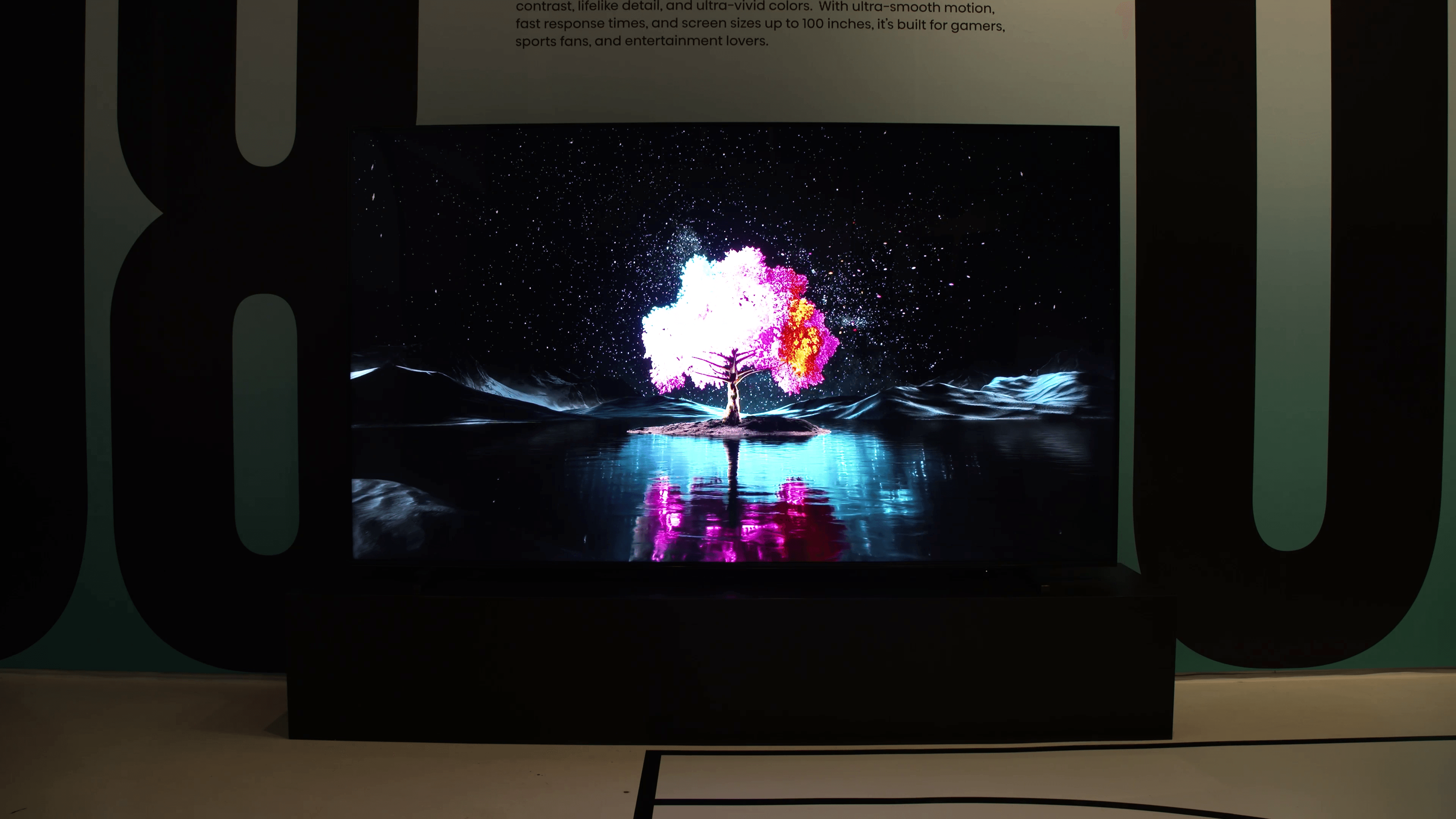
As long as you’ve got the room for it and can handle a TV dominating the space with its size, those extra large TVs are a lot of fun, and I think you’d enjoy it. I’d say go for the Hisense U8QG. Its picture quality, contrast and brightness are a step above the QM7K.
The only thing that gives me pause is that you’re coming from an OLED TV, and in that case, I think the Bravia 9 gets close to that level of contrast and picture processing.
Otherwise, go big. You’ll be blown away by everything you watch. And a TV of the U8QG’s caliber does a great job processing and upscaling. So even at that extra large size, you’re getting a clean image.


