  1. Home
  2. Audio / Video
  3. News

Spotify’s new controls bring order to the chaos in your music library

Playlists now adjust to the tune of your mood, genre of choice, or activities.

Add as a preferred source on Google
Smart controls on Spotify.
Spotify

Spotify is rolling out a bunch of new filtering tools and playlist controls that will bring some much respite to the hassles of managing a crowded library and landing at just the right kind of tracks for the current mood. For years, Spotify users have yearned for more granular controls over music discovery and the playback experience. The latest tweaks address some of those demands pretty well.

What’s changing for users?

Spotify is introducing a feature called Smart Filters that will essentially adjust the track layout in your music library based on your requirements. These new filters are divided across three broad categories, each with their own subcategories.

Recommended Videos

Broadly, you will be able to select from activities, moods, and genres, each with over half a dozen options to pick from. They vary from party and calm to romantic and R&B presets.

To use these filters, open Your Library page, tap on the filter icon in the top-left corner, and make your pick. These filters have started rolling out for Premium users and will be available on the mobile platform for users in the US, the UK, Australia, Canada, Ireland, New Zealand, and South Africa.

At last, meaningful controls

Spotify is adding small, but meaningful, changes to how you control the playback experience. While playing a song, if you select the new “Hide in this playlist” option, that particular track will be automatically skipped the next time you open a playlist.

Premium users will also get access to a new Snooze feature that will “pause tracks from appearing in your recommendations for 30 days.” Spotify will also keep an eye on your listening history, and the next time you land on the Discover Weekly page, tapping a genre button will generate a personalized library of 30 tracks.

Spotify is addressing the stiff playback system, too. Users will now be able to Add, Sort, and Edit their playback sequence, while also being able to tweak the name and cover art of their playlists. And based on a liked track, users will have the option to create a whole playlist fitting a particular genre.

Nadeem Sarwar
Nadeem is the Managing Editor at Digital Trends.
DJI Osmo Pocket 4 takes aim at low-light video and fast action
The new model combines a 1-inch sensor, 4K slow motion, and updated controls in a compact body
Camera, Electronics, Video Camera

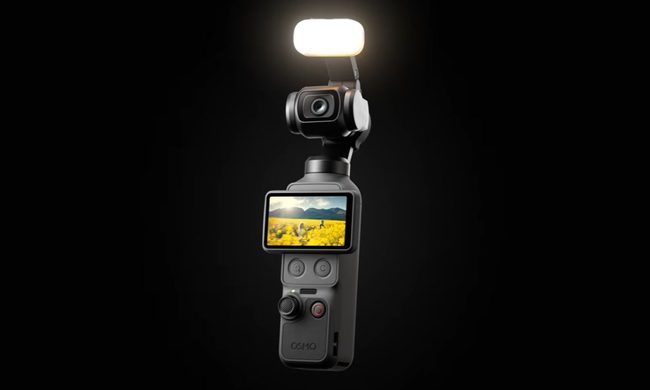
DJI has unveiled the Osmo Pocket 4 with a familiar goal, better video from a camera small enough to carry anywhere. The standout upgrade is a 1-inch CMOS sensor, which should help it hold onto more detail in dim scenes while also giving fast-moving footage a cleaner look.

DJI also says the Osmo Pocket 4 can shoot 4K video at up to 240fps, while adding 14 stops of dynamic range and 10-bit D-Log support. That gives solo shooters a stronger mix of slow motion, highlight control, and grading headroom without moving up to a much larger setup.

Read more
Amazon reveals slimmest Fire TV Stick HD that no longer needs a wall adapter
Amazon made its best budget streaming stick even better at $35.
amazon-fire-tv-stick-hd

Amazon just refreshed one of its most popular streaming devices. The new Fire TV Stick HD is officially here, and it is the slimmest Fire TV device Amazon has ever made. At $34.99, it is available for preorder right now and ships April 29.

What's new with the Fire TV Stick HD and how is it different?

Read more
These camera-equipped earbuds offer a wild glimpse at the future of AirPods
These experimental earbuds show how AirPods could get a lot smarter
A team of researchers at Washington University built VueBuds TWS with a built-in camera

Wireless earbuds have already become the default wearable for a lot of people. This is why this new research feels more interesting than yet another smart glasses demo. Researchers at the University of Washington have developed VueBuds, a prototype system that adds tiny cameras to off-the-shelf wireless earbuds so users can ask an AI model about whatever is in front of them.

How does this work?

Read more