

“The Crossfade 3 ups the stamina and drops the price, but that might not be enough.”
- Excellent build quality
- Very good sound quality
- Much improved battery life
- Optional EQ settings
- Pricey for what you get
- No noise cancellation

“Why you can trust Digital Trends – We have a 20-year history of testing, reviewing, and rating products, services and apps to help you make a sound buying decision. Find out more about how we test and score products.“
When V-Moda released its Crossfade 2 Wireless in 2017 as a follow-up to its original Crossfade Wireless, it did what any company with a successful formula would do — it kept what worked and improved on the things that needed some tweaking. But along with those tweaks came a price increase. For the best version of the Crossfade 2 (the one with aptX support), V-Moda charged a hefty $350.
Now, in 2022, with its third-generation Crossfade 3 Wireless, V-Moda once again has made small but worthwhile improvements. But this time, one of those improvements is the price — they cost $300.
No one is going to complain about a better price (at least not on the consumer side of the equation). But in the five years since the debut of the Crossfade 2 Wireless, the wireless headphones landscape has seen seismic shifts, especially in areas like active noise cancellation, transparency modes, wear sensors, and call quality.
And that raises the question: Are small but worthwhile improvements enough to keep the cans in consideration?
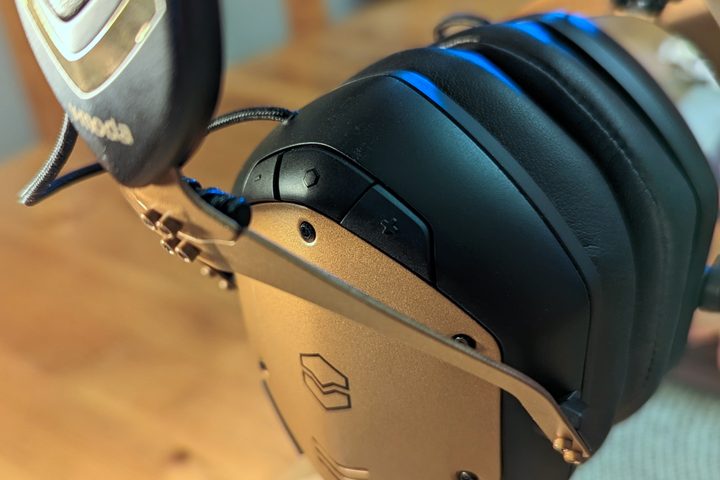
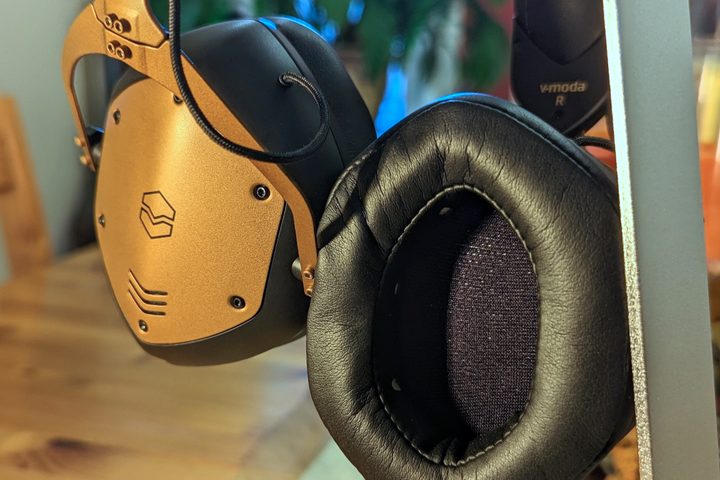
V-Moda is nothing if not consistent. The Crossfade 3 Wireless are the spitting image of the second-gen model, right down to the V-shaped mirrored accents on the headband. They keep the same controls — a set of three buttons that sit flush with the top of the right earcup — the same unique swappable metal “shields” that screw into the earcups so you can customize their look, and the same ultra-durable and flexible metal headband.
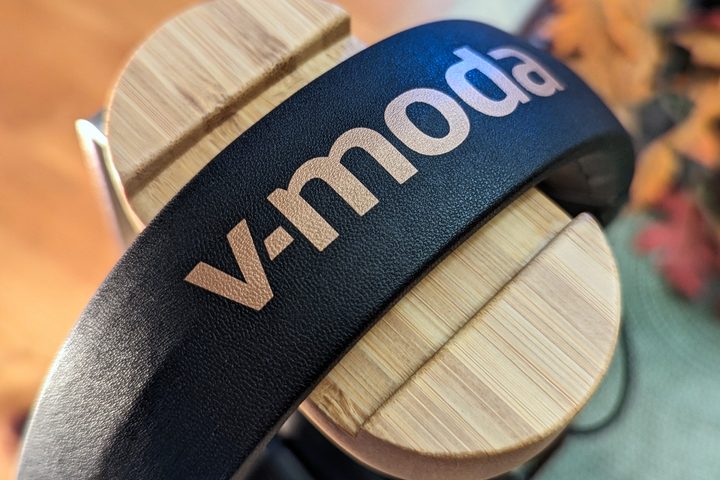
Despite having very shallow ear cushions, they’re very comfortable. V-Moda’s cans have always had excellent balance and clamping force, which provide a secure fit, and the Crossfade 3 continue this tradition. Not that I want to encourage wearing these headphones to the gym or while running — they aren’t designed for that at all — but if you did, I suspect they’d be more than capable of staying with you as you moved around.
They might even survive the abuse: Invisible to the eye (but slightly plasticky to the touch) is a new synthetic leather material covering the headband that the company says is more sweat-resistant — something V-Moda’s DJ audience had apparently asked for.
The excellent power switch/Bluetooth button also makes a return, as does the 3.5mm analog input.
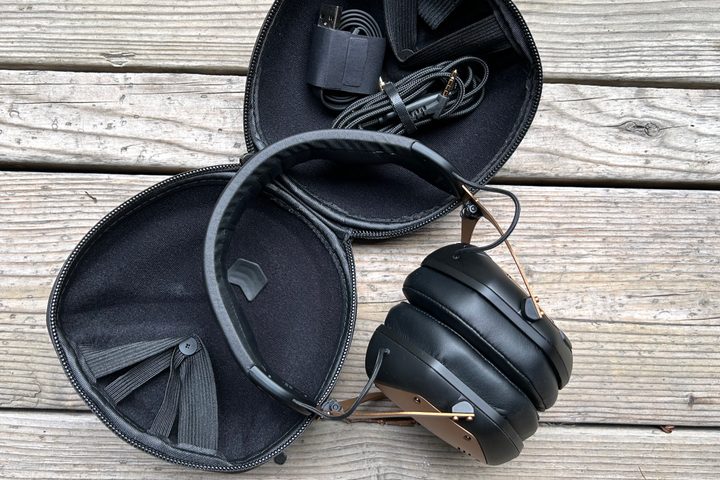
They continue to use V-Moda’s cliq-fold mechanism so that they can pack themselves into their included tiny, meatball-shaped hardshell carry case, and inside that case, you’ll find a USB-C charging cable, an analog cable with inline mic and remote control, and a 3.5mm-to-¼-inch adapter. You can attach the case to a bag with the included carabiner, but V-Moda is increasingly an outlier as far as portability goes — most other wireless headphones now fold flat to make it easier to slide them into a backpack beside a laptop.
In fact, the only significant physical difference is the move from a MicroUSB charging port on the left earcup to the now nearly ubiquitous USB-C standard.
For V-Moda fans, this is mostly good news — that unmistakable, classic hexagonal, low-profile shape has been maintained. But it also means that the top controls are still a bit tricky to find with your fingers and they still produce a loud, crunchy-sounding click when you press them. I’m no DJ, but I’ve never really understood the appeal of V-Moda’s designs to this crowd — to get an earcup fully turned around for single-ear monitoring you need to twist the headband aggressively, or risk damaging the connecting wire, which isn’t quite long enough to let the earcup sping 180 degrees on its hinge.

Inside, V-Moda has stuck with the same dual-diaphragm 50mm drivers as before, but this time, their sound is modified by new material choices within the earcups. The company says these changes enhance the already bass-forward tuning of the Crossfade series while deepening reverb. Sound-wise, the only other changes are support for Qualcomm’s aptX HD codec (Android only), and the inclusion of five EQ presets and a manual tuning option within the V-Moda Headphone Editor companion app for iOS and Android.
But perhaps the most noticeable change V-Moda has made in five years is a massive increase in battery life. At up to 30 hours, the Crossfade 3 Wireless now last twice as long as their predecessors. Unfortunately, they’re still missing valuable features like wear sensors for auto-pausing music, and the ability to pipe digital audio directly into the USB port from a computer or phone.
After using these new cans for a few days, I reviewed what we said about the Crossfade 2 Wireless in 2017, and honestly, I echo Ryan Waniata’s sentiments for the Crossfade 3 Wireless. They have an impressively clear sound signature and a very potent low-end punch. It’s a heady mix that energizes any genre with a vibrancy that has been clearly inspired by the Crossfade’s EDM/club DNA. The soundstage is pleasingly wide, but not so wide that you lose the intimacy of the instruments in a surplus of airiness.
From Dire Straits to The Weeknd, to Bach, and Eminem, these cans provide a consistently great listen.
I also dug the $500 V-Moda M-200 ANC out of my headphone closet (what, doesn’t everyone have one of these?) to see how the Crossfade 3 compare to their much more expensive siblings. As far as I’m concerned, save yourself the extra $200 — the Crossfade 3 will sound better to most listeners.
Having the EQ settings in the Headphone Editor app is a nice touch, but I never felt the need to depart from the factory settings. Plus, on Android 13 at least, the app proved to be quite buggy.


You might not buy a set of wireless cans like the Crossfade 3 Wireless for doing phone calls, but if you’re spending this kind of cash, they should be equal to the task. Indoors, they certainly are — your voice will come through nice and clear for your callers — but outdoors, or in noisy situations, not so much. The built-in mics don’t offer a lot in the way of background noise cancellation, so sometimes callers will hear you, and sometimes they’ll just hear that loud truck as it rolls by. Ordinarily, that would be the end of the story, but if you don’t mind going wired, the inline mic on the included analog cable lets you go old-school by holding it closer to your mouth when things are noisy. Not too many wireless headphones can say that.


So where does that leave us? The V-Moda Crossfade 3 Wireless are every bit the premium cans that V-Moda is known for making, with excellent sound quality and superb construction. But despite a few nice improvements, they feel overpriced for what they offer. For $300 or less, you can get excellent wireless headphones that have ANC, plus the ability to get lossless digital audio from a USB connection. The Sennheiser Momentum Wireless 3 and Shure Aonic 40 are just two examples of headphones with these features.
It’s also worth noting that V-Moda still sells several versions of the Buy at Newegg — with prices ranging from $130-$250. They may not have the Crossfade 3’s stamina or its aptX HD compatibility, but if you’re an iPhone user, only one of those features matters anyway.


