Arlo announced a new Arlo Pro 4 spotlight security cam to join its substantial list of smart security cameras. This adds another layer of complexity for buyers — is the Pro 4 a significant improvement? Should everyone choose it over the Arlo Pro 3? How much more does it cost, anyway?
With so many Arlo outdoor security cameras on the market, clarification is important: We’re going over all the key details of the Arlo Pro 4 and Arlo Pro 3, so you know exactly which is worth your time.
Pricing and availability

The Arlo Pro 4 is available for pre-order now and will start shipping in the latter half of October 2020. One cam starts at $200 (Arlo also sells kits with three cams). You can select either black or white depending on your design preference.
The Arlo Pro 3 offers different bundles: It comes in a two, three, or four kit option with the smart hub included, but there’s also the ability to purchase a single camera “add-on” for $200 — the reason behind this is that the Pro 3 requires a $150 Arlo base station/smart hub to work with, so there’s not much point in selling a single cam separately. The camera is occasionally back-ordered, so availability may depend on when exactly you order it (this will probably also be true of the Pro 4 when it reaches the release date). Both white and black models are available.
Winner: Arlo Pro 4. With both cameras at the same price and the Pro 4’s release date coming so soon, it may not look like there’s a clear winner. However, since the Pro 3 requires a smart hub to work, this significantly raises the cost for new users.
Design
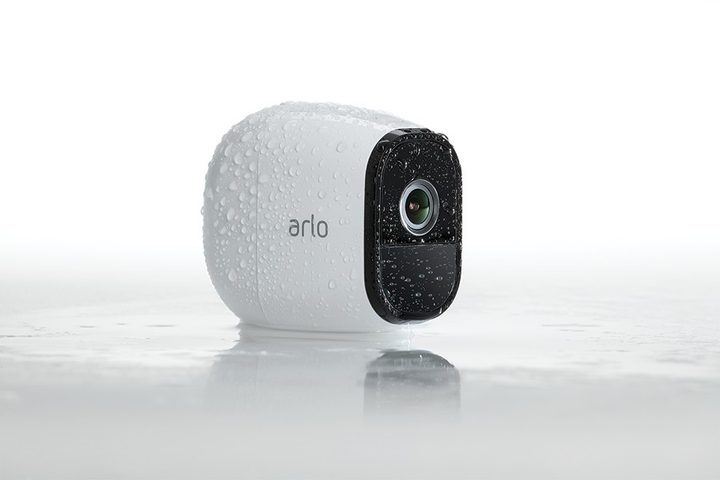
Based on appearance alone, it’s almost impossible to tell the difference between the Arlo Pro 4 and the Pro 3. From the rounded casing to the camera lens and mic placement, the two are essentially identical. As our other comparisons will show, most differences between the two models lie in their operation and smart support, so design is a moot point.
Winner: N/A
Cam and security features
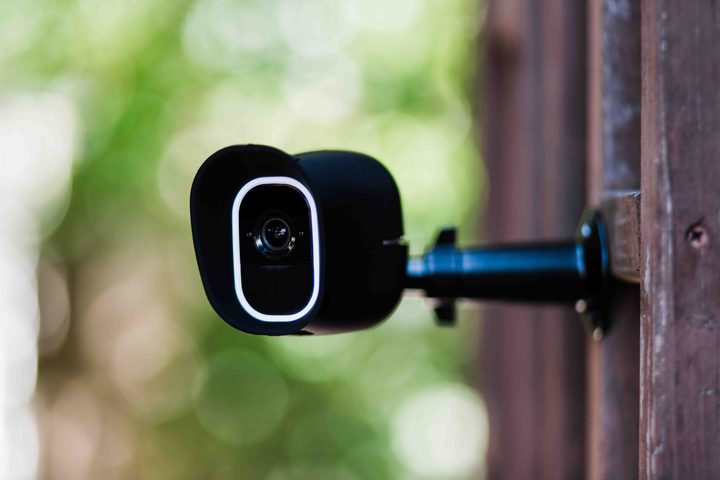
The Arlo Pro 4 comes with a 2560 x 1440 resolution camera. The four-megapixel cam is equipped with a digital zoom up to 12x, and three video mode options (2K, 1080p, and 720p, with higher resolutions taking up far more storage space). The cam has infrared LEDs and an infrared cut filter for night vision. The cam functions via a 130-degree motion detector, and when on, it can auto-track and zoom with its 160-degree diagonal field of view. There’s also a spotlight feature to light up the space when something is detected, day or night. A smart siren can be set to trigger automatically or remotely, too. All in all, a great combination of features for a modern security cam.
The Arlo Pro 3 is equipped with exactly the same camera hardware and software, including the same resolution options, same image sensor, same motion detecting, and same night vision. Functionally, there’s no difference here.
Winner: N/A
Network and battery life
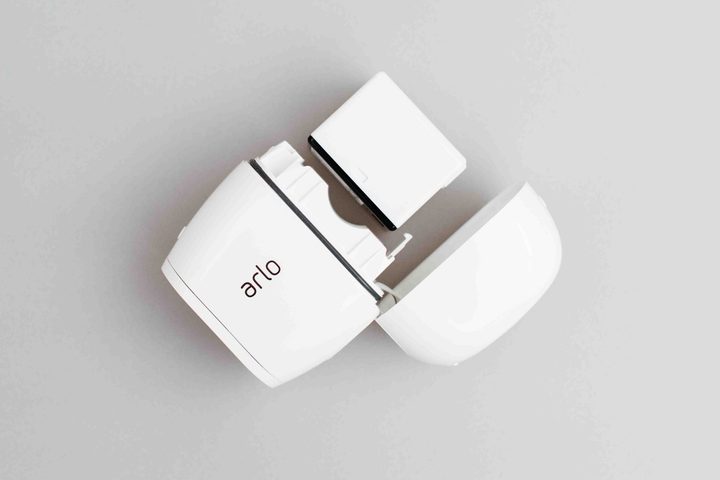
Both cams are entirely wireless, which makes them easy to place where you want them and install with a DIY project instead of relying on professionals. Wi-Fi connections require a broadband connection with at least a 1Mbps upload speed, and 802.11 b/g/n Wi-Fi is supported (Arlo does not yet offer support for Wi-Fi 6 though).
But when security cams are wireless, their battery life becomes very important for busy homeowners who want to know just when they will have to recharge. We can’t test both batteries quite yet, but Arlo’s descriptions have undergone a slight change. The Arlo Pro 3 is rated for three to six months before needing a recharge, while the Arlo Pro 4 is rated up to six months, with the caveat that settings and usage can affect battery life. Arlo hasn’t talked about any specific changes to the battery, and until we can directly test battery life on the Pro 4, we’re treating this like a change in phrasing, not performance.
Winner: N/A
Smart home features
Both the Arlo Pro 4 and the Pro 3 come with two-way audio options with a microphone that includes noise and echo cancellation. That means, in addition to viewing live video through compatible devices like an Echo Show or Nest Home Hub, you can also talk to people on the end — one of the things that makes these cams great for the porch or doorway. Everything is controlled through the Arlo app, including the ability to play live video, talk, record clips, and arm or disarm the system, as well as choosing to get alerts if the cameras detect motion.
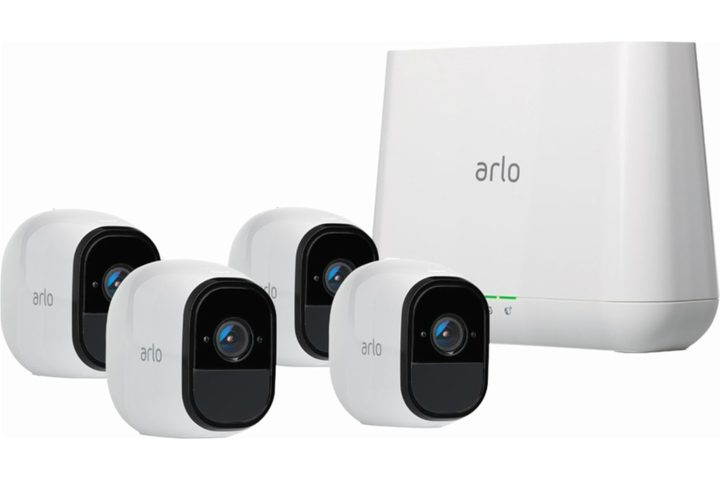
But here is where we come to the really important difference between the two cam models. As we mentioned before, the Arlo Pro 3 requires the Arlo smart hub to properly connect to Wi-Fi and offer all these features. The Arlo Pro 4 does not require the smart hub, and can instead connect directly to Wi-Fi.
Not only is this more affordable, but it makes the cam easier to manage and means you don’t have to find a spot to place the smart hub in your home. This is a very significant upgrade. However, it does mean that local storage is not included, so you will have to connect a USB 2.0 storage device if you want to record any video right from the cam.
Winner: Arlo Pro 4
App compatibility
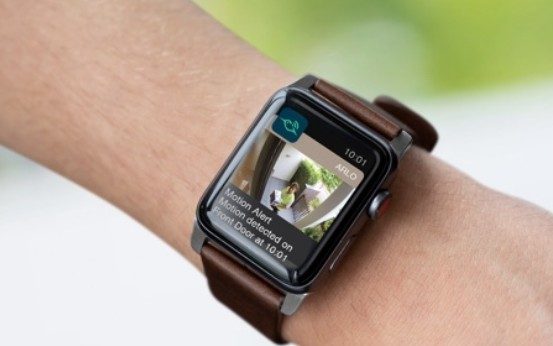
Both cams are compatible with Alexa, Google Assistant, and IFTTT. However, Arlo does not offer HomeKit compatibility for the Pro cams, although it’s working on it, and the Arlo Ultra cam does already include HomeKit support, so it’s probably on its way. However, both cams do work with the Apple Watch, so you can get alerts from the Watch.
Winner: N/A
Subscriptions

Arlo’s subscription is called Arlo Smart, and it allows you to 1) set up security sensor zones to help the motion sensor and cam target the right spots and reduce mistakes, and 2) save video to the cloud for up to 30 days, for further review and transfer to other devices. Without this service, you can only save and view video on limited local storage. Other bonus features include smart alerts, package detection, and more.
Both cams come with a 30-day trial of Arlo Smart, and then you pay a monthly fee to continue the subscription. The lower tier costs $3 for a single camera, and the higher tier costs $5. The Arlo Pro 4 offers 30 free days for the higher tier, which includes 4K cloud recording, while the Arlo Pro 3 offers access to the lower tier, which doesn’t. But since both cams have the same 2K hardware, this doesn’t really make a difference.
Winner: N/A
Which should you buy?
Are you an owner who already has an Arlo system set up with a smart hub? Both cams will function the same, and there are no defining features that make them different. There’s also no price difference. However, Arlo Pro 3 cams may be a better choice if you want to set up many different cams at once to watch over a larger space (especially since the Pro 3 is bundled with higher numbers of cams).
Is this your first Arlo security cam? Then the Arlo Pro 4 is a better choice, especially if you are only interested in one or two cams. It doesn’t require a smart hub, and if you are willing to use a secondary storage device or pay for Arlo Smart, you can still record videos for later use.