

Smart speakers are showing up everywhere, even in hotel rooms. In many cases, using voice commands is more convenient than pulling out your phone, and the Google Home or Amazon Echo can make tasks like turning off lights easier for those with mobility issues. But anything with a microphone comes with privacy concerns. Digital Trends asked Mark Spates, Google’s product lead for smart home, about how speakers and other artificial-intelligence-driven products will fit into the smart home.
DT: You mentioned in your 2018 Connections Conference keynote the heated debate about how much of the smart home should be user driven versus automatic. Where do you come down in the debate?
Mark Spates: We believe both are extremely important, and the decision should be driven by the use case and value delivered to the user. As we progress, I think you’ll see more actions becoming automatic, things like lights responding when you enter the room or the thermostat adjusting.
You point out that voice doesn’t solve everything. What else do you see playing a role in the future smart home? Gesture? Proximity sensors?

At Google we’re lucky to have teams working on so many different technologies, so it’s safe to say we’re exploring what’s next. While I don’t have anything concrete to share, I think you’ll definitely see things like gestures, proximity, and others.
Google Assistant is coming to devices with screens from other manufacturers. Does Google plan on making its own?
We continue to innovate across the Google Home family and you can expect new devices to join the product family, but nothing specific to share at this point.
Google Assistant can differentiate between users, but what are some future scenarios you see, like changing a response based on a user’s tone?
“You can expect new devices to join the product family.”
The goal of the Google Assistant is to give users the own person version of Google. We believe there are many ways that users will see this vision come to life in the home.
What role do you see these devices playing in safety, like if it overhears that someone is in danger?
Smart speakers can do a lot, and I won’t say that down the line they won’t be able to play a role in safety without a specific query, but currently these devices are here to offer assistance when you specifically request it.
What effect will GDPR (the EU’s new privacy law) have on the smart home?
Users can control their data permissions for their Google Assistant. They can choose whether to turn on Web and App Activity (WAA), Device Information (DI), and/or Voice and Audio Activity (VAA) either through myaccount.google.com/activitycontrols, or while setting up the Assistant for the first time, a user can choose ‘No Thanks’ when prompted to grant these permissions during the setup flow. These are Google-wide account settings and are enabled across Google products, including all Assistant surfaces.
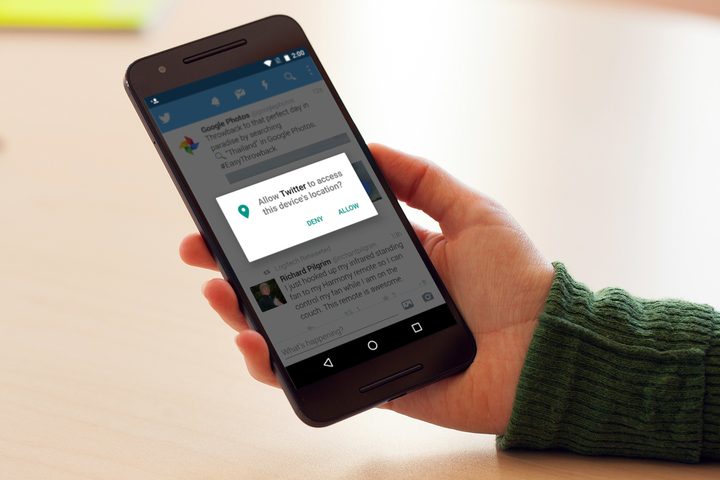
Turning off data permissions removes functionality dependent on that permission (e.g. personalization such as navigate home/work, call Jane, reminders, play my Spotify playlist, Voice Match, etc). Users can control their permissions in all languages and locales where the Google Assistant has launched.
We have not made any on-device changes to Google Home.
A.I. is still human-driven. You mentioned bringing people in from the outside for some discussions. Is that true for questions about A.I. bias and potential ethical concerns?
Yes, we collaborate with outside researchers and care deeply about developing this technology responsibly.
We collaborate with outside researchers and care deeply about developing this technology responsibly.
Every year we give large grants to over 250 academic research projects, host over 30 visiting faculty, support dozens of PhD students, and host thousands of interns. Many faculty work at Google and then return to academia, such as Dr. Andrew Moore (who built up our Pittsburgh office and is now dean of computer science at CMU). We openly publish our research papers on arXiv and at all the major A.I. conferences so other researchers can build on our work. And we open-sourced TensorFlow, so researchers around the world can collaborate on machine learning projects more easily.
Can you talk a little about the reaction people had to Duplex and how that will affect the project in the future?
The reaction was definitely varied. Duplex isn’t a project that I work on directly so I don’t have anything to share on that subject.


