
Smart thermostats are quickly becoming a staple of the modern household, offering more versatility and control when compared to traditional thermostats. But how exactly do they work? And are there any disadvantages to upgrading to the fancy new technology? Here’s a closer look at how smart thermometers work, how they can streamline your heating and cooling needs, and how they can save you money.
How does a thermostat work?
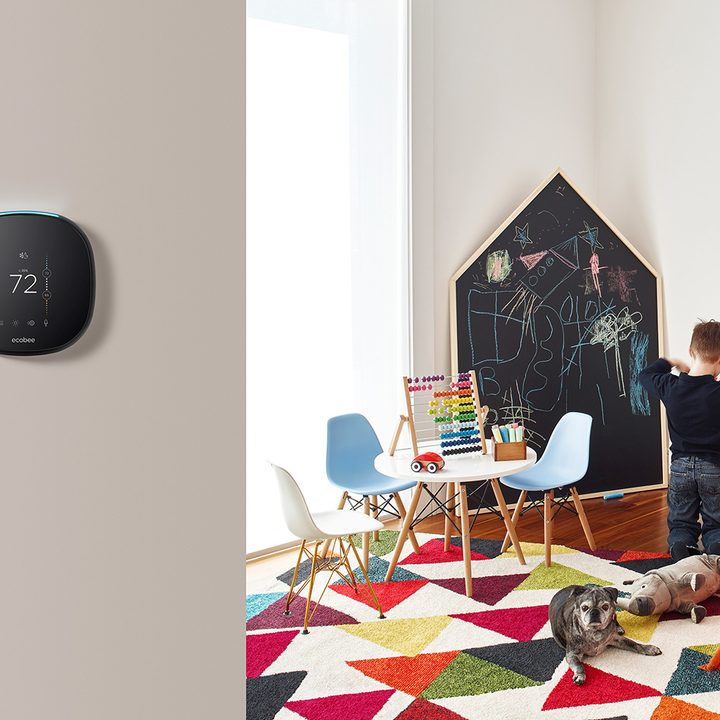
Thermostats control how hot or cold your home gets. Before we explain the “smart” part of a smart thermostat, let’s look at the basics of thermostat operation.
Thermostats are built in one of two ways. Mechanical thermostats rely on the expansion of metal strips as the temperature rises and lowers. As the metal expands with heat, it completes an electrical circuit, which then activates your home cooling system. Similarly, your home heating can turn on when that strip gets cool, contracts, and activates a different circuit.
Digital thermostats operate under a similar mechanism. While metals physically expand with heat, they also reduce their ability to conduct electricity. Digital thermostats can accurately measure that change in conductivity with a special resistor and then activate or deactivate your home climate system accordingly.
What makes a thermostat smart?
Smart thermostats are able to communicate with more than just your home heating and cooling system. Common features include smartphone apps for remote control, internet connectivity to adjust for weather, and compatibility with voice assistants for hands-free activation. Over time, smart thermostats can learn the best time to heat and cool, which saves power by avoiding excessive usage and ultimately saves homeowners a little money on their monthly electric bills.
How do smart thermometers work?
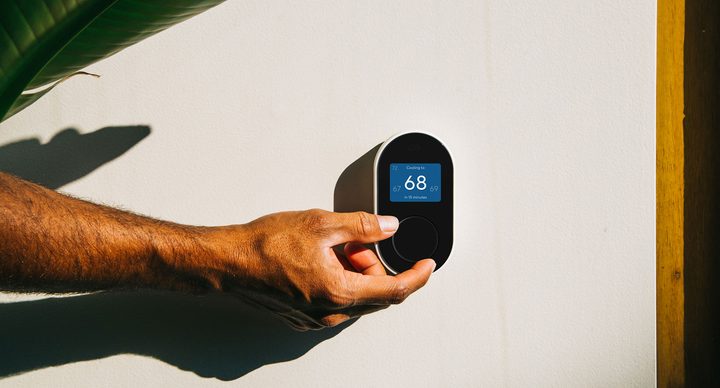
These extra functions require some additional hardware built into the thermostat. Smart thermostats require memory to store more information, antennae to communicate wirelessly, USB ports to communicate over a cable if need be, and a processor to handle input. This hardware will tend to be installed on a unified motherboard, similar to desktop computers. Smart thermostats typically require a common wire in the wall for power since they have many functions active in the background. The device also sports a lithium-ion battery in case of an outage or for preinstallation.
Displays will generally be higher quality on smart thermostats and integrate a touchscreen. Motion sensors are often included so the smart thermostat can detect if anyone is home and adjust the temperature of the house. Maintaining that comfort level is less necessary when nobody is home to trip the motion sensor. A microphone and speaker are sometimes present to enable voice assistants without needing to go through another device.
On the software side, mobile apps provide full remote control. Just download the app for your brand of smart thermostat from either the Google Play Store or the App Store, and follow the setup instructions. From here, you can usually set the target temperature, change presets, adjust the climate schedule, view usage history, and lots more.
Many smart thermostats are also expected to get Matter support in the coming year. This will allow them to interact with products outside of their normal ecosystem and give you additional control of your smart home. Google, for example, has already brought Matter to several devices and plans to extend its support to the Nest Thermostat in 2023.
What are the disadvantages of a smart thermostat?
The disadvantages of smart thermostats are few and far between. It used to be that cost created a significant barrier to entry, but now Amazon is offering smart thermostats for less than $100. The biggest challenge is education. Traditional thermostats only required users to turn a knob, but smart thermostats require additional setup and longer tutorials on how to take advantage of advanced functions (through apps, for example).
Older homes might also require a bit of rewiring if their current setup doesn’t include a C-wire, which can be a cumbersome process and could require a professional. Beyond those few drawbacks, there’s little reason to avoid upgrading to a smart thermostat.
Now that you know how smart thermostats work, you’re ready to start shopping for your first one.


