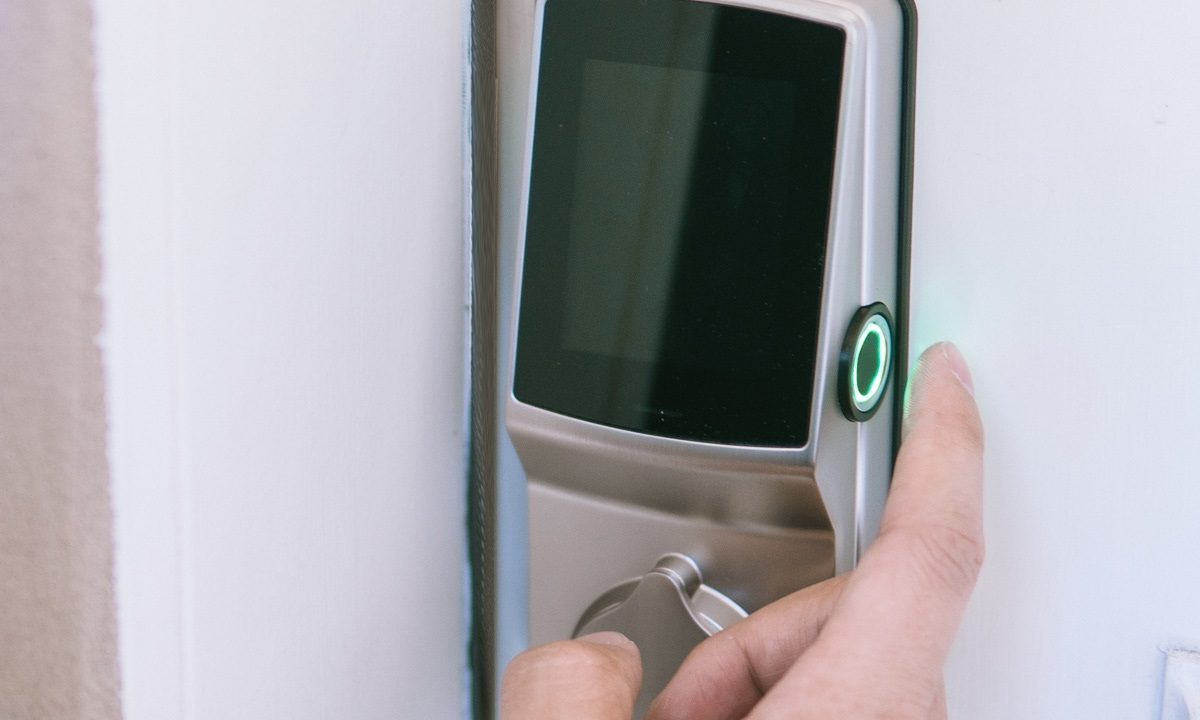

“Stylish and feature-rich, the Lockly Secure Pro solves all the problems a smart lock is supposed to solve.”
- Has a fingerprint sensor and a touchscreen keypad
- Has multiple security features
- Alexa- and Google Home-compatible
- Comes with a hub and door sensor
- Fingerprint reader can be finicky
- Requires additional stability due to large size
“Why you can trust Digital Trends – We have a 20-year history of testing, reviewing, and rating products, services and apps to help you make a sound buying decision. Find out more about how we test and score products.“
When you have your hands full, it’s a pain in the butt to try and wrestle with keys so you can unlock the front door. A smart lock provides added convenience and functionality, while also helping to prevent you from getting locked out of your house. There are a number of different smart lock options to choose from these days. Lockly, the makers of the Lockly Secure Series, recently added a Pro version to its lineup of smart locks. It offers more features than any other smart lock in the series.
The Lockly Secure Pro comes in either a deadbolt or latch version, and each version comes in three different color choices: Satin nickel, Venetian bronze, or matte black. I tested the deadbolt version of the Lockly Secure Pro smart lock in the satin nickel color to see how it performed. Here’s what I thought:
What you get
The Lockly Secure Pro comes with the smart lock itself (which is separated into an interior assembly with a battery cover, an exterior assembly, a mounting plate, and all the necessary screws and adhesives for mounting). It also comes with a new deadbolt lock, set of keys, new door strike, door sensor, Wi-Fi hub, and an initial code card for the lock.
The only thing you need to provide in order to install the lock is a Phillips head screwdriver. However, it may help to have a drill nearby too.
Easy DIY install … sort of
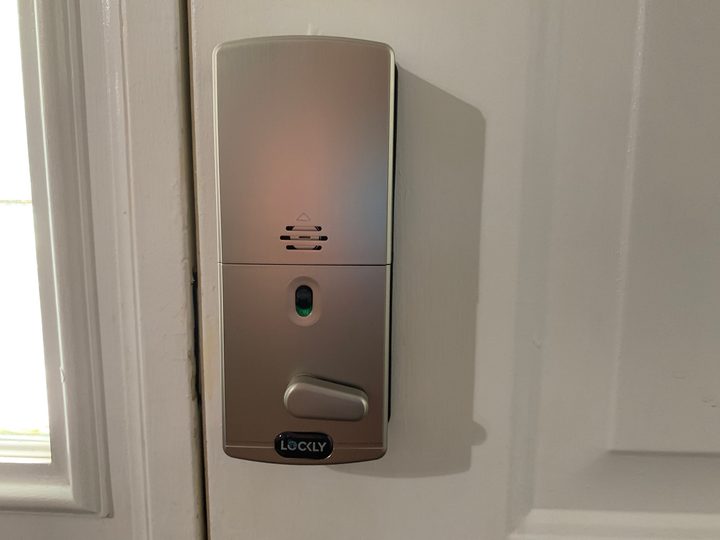
If you’re handy (you can perform basic fixes around the house and install a basic lock or doorknob), then you can install the Lockly Secure Pro. From start to finish, it took me three-and-a-half hours to remove my old deadbolt, install the Lockly Secure Pro deadbolt, install the door sensor, set up the Wi-Fi hub, program the code, and program my family’s fingerprints into the lock.
The Lockly Pro deadbolt has features like a deadbolt extender, so it will fit on door setups of various sizes. To secure the lock assembly into place, you can use the included adhesives, or you can drill a hole through your door. Drilling a hole isn’t necessary (because you can use the adhesives instead), but it will provide added stability, and the kit comes with a measuring guide to make things a bit easier.
The one hiccup I experienced during install was attempting to install the new door strike (the metal piece on the doorjamb that the deadbolt extends into when you lock the the door). It didn’t fit properly, but I was able to keep my old door strike in place, and the lock still worked perfectly fine.
An attractive biometric lock
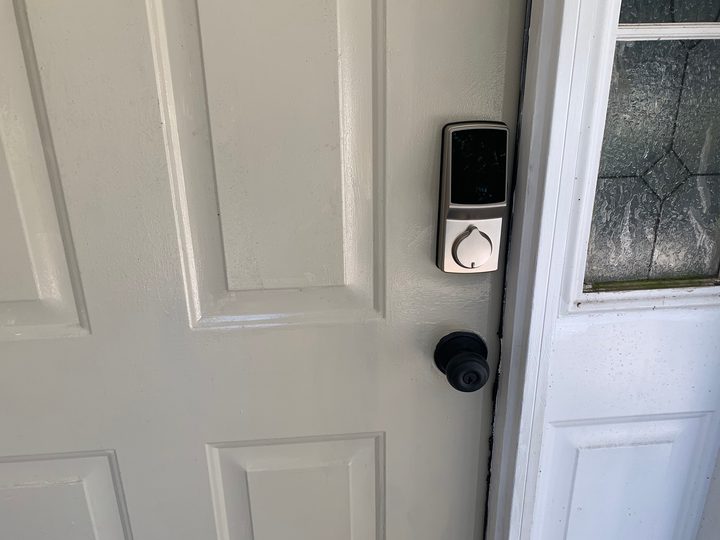
This is an extremely attractive smart lock. The exterior touchscreen display screen is sleek, and the lock has an overall stylish look. The fingerprint reader is discreetly located on the side of the lock. The Lockly Pro deadbolt is large, as it sits at almost 8-inches tall and nearly 3.5-inches wide. Although the lock is large and bulky when you compare it to smaller options like the August Lock, the larger size doesn’t take away from the aesthetic.
Thanks to the included hub, I can control the lock via Bluetooth or Wi-Fi. The included door sensor is required for compatibility with Alexa or Google Home, and it also gives me the ability to receive push notifications to my phone about the status of my door (when someone opens or closes it). In the app, I can look back at the history and find out exactly when my door was opened.
Fingerprint, keypad, key, and voice control

When I unlock the front door using my fingerprint, it kind of makes me feel like James Bond. The fingerprint sensor on the side of the lock stores up to 99 fingerprints, and each user simply places their stored index fingerprint on the sensor to unlock the door. If I don’t want to use my fingerprint, I can use the keypad instead by entering in my code.
The touchscreen keypad changes the location of the numbers to promote security. Therefore, if the code is “12345678,” the location of those numbers on the keypad will be different each time, so someone standing behind me won’t see my code based on the location of the numbers. (Although the code “12345678” is probably the worst code ever anyway, and doesn’t really need to be protected).
If you connect the Lockly Pro to Alexa or Google Home, you can use voice commands to do things like lock the door, check the status of the door, or unlock the door (if you create a secure four-digit voice code). The deadbolt also comes with a physical key, which can serve as a backup. You simply slide the keyhole cover over, and then place your key into the keyhole.
Auto-lock and smart security features
I can set the Lockly Pro to auto-lock on a timer. Initially, I set it to lock automatically after 30 seconds, but I didn’t want to have to enter in my fingerprint every time I took out the trash or went out to the mailbox. So, I changed the auto-lock time to five minutes, and I felt a sense of security knowing that I couldn’t forget to lock my front door because the Lockly Pro would eventually do it by itself.
Tthe Lockly Pro has a variety of other security features. The capacitive fingerprint reader helps prevent the use of lifted prints, while the Pin Genie keypad technology keeps people from seeing the keypad code.
Granting guest access
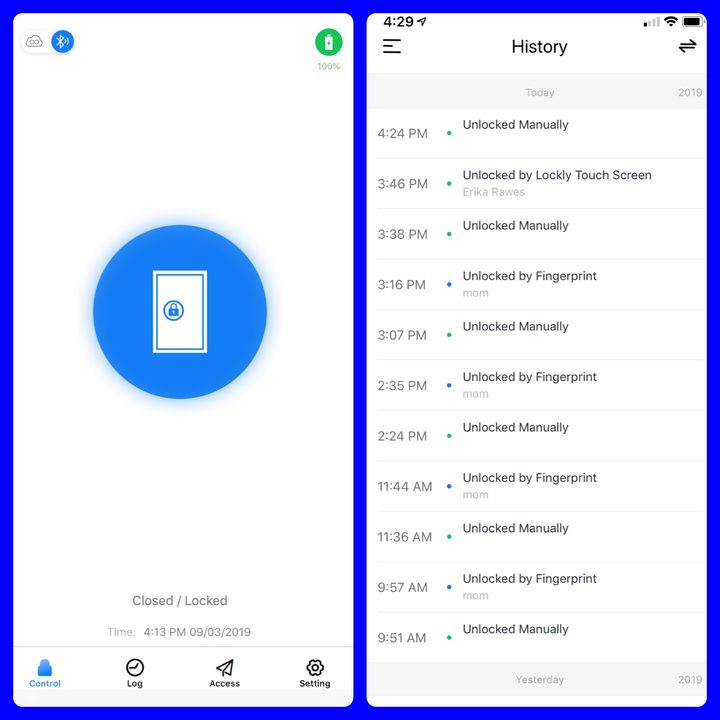
For an Airbnb host or anyone who regularly has guests visiting their home, the Lockly Pro has options for allowing visitors temporary access. You can set a temporary code, and then send that code to your guest with instructions. You can also set up an offline access code, which is generated with a set of encrypted numbers, and the offline code lasts for the duration period you set (one-time use, one hour, or up to 60 days). You can look in the app to check the status of your lock, and to see when your door was unlocked and how it was unlocked (fingerprint, code, manually with a key, etc.).
A few finicky features
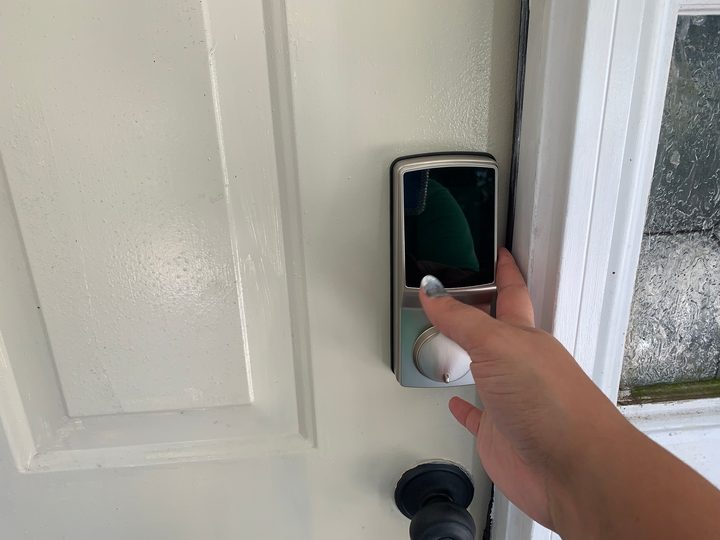
Like most smart home products, the Lockly Secure Pro isn’t perfect. The fingerprint reader sometimes acts up, requiring me to place my finger on the sensor just right to get a good read. If I hold my finger on the reader for too long or for too little time, it sometimes doesn’t register. I have to lift and release my finger just right to get it to work correctly. If I enter my fingerprint incorrectly, I typically have to use the code to unlock the door instead, as the sensor won’t accept another try immediately after a failed attempt. After a few days, I got the hang of using the fingerprint sensor, and now I seldom have any issues using the fingerprint reader. However, it did frustrate me a bit at first.
Of course, the door must be closed completely for the lock to function properly. If the door is even the slightest bit misaligned with the door strike, the auto-lock feature will continue to try and lock over and over again (unsuccessfully), then the lock will start frantically beeping. Sure, it’s great that the lock is telling me something is amiss, but even after I correct the problem and fully shut the door, the lock seems to act funny for a moment afterwards.
The only other minor complaints I have about the Lockly Pro pertain to the app. The app is a bit slow to connect to the lock, and some features (like entering in a fingerprint) require a Bluetooth connection, while others (like Alexa and Google Home connectivity) use Wi-Fi. This requires me to switch back and forth between Wi-Fi and Bluetooth in the app, which takes a moment and could be a bit more streamlined.
Warranty information
The Lockly Secure Pro comes with a two-year limited warranty.
Our take
A stylish and feature-rich device, the Lockly Secure Pro solves a lot of problems a smart lock is supposed to solve, while also providing convenience and security. I am impressed with the device overall, as it’s a good buy for an Airbnb host or an everyday person who wants a higher-tier smart lock for their home.
Is there a better alternative?
The Lockly Pro retails for $300 for the deadbolt version and $330 for the latch version. But, you get a lot for that price tag — advanced security features, a touch keypad, a fingerprint sensor, a Wi-Fi hub, and even a door sensor. If you want a cheaper option, you could go with another model in the Lockly Secure series, like the Lockly Secure Plus, which retails for $250. However, the Plus doesn’t include the Wi-Fi hub. If you want something easier to install, the August Smart Lock Pro Plus Connect is one of the best smart locks you can buy. It retails for $229 and retrofits right over your existing deadbolt.
How long will it last?
The Lockly Pro is a well-made, quality smart lock that should last for years to come. Although it does require a hub to connect to Wi-Fi, its ability to connect to Alexa and Google Home is a big plus. In some ways, the lock is technologically ahead of many alternatives, given its keypad and fingerprint security features.
Should you buy it?
Yes, absolutely. If you want to deck out your door with one of the nicest-looking smart locks available, the Lockly Pro is an excellent choice.